mooring buoy manufacturer

ISO 9001, ISO 14001, and ISO 45001 Certified Infrastructure Fabricating Compliance-Verified Offshore, Harbor, and Deepwater Mooring Buoy Systems.

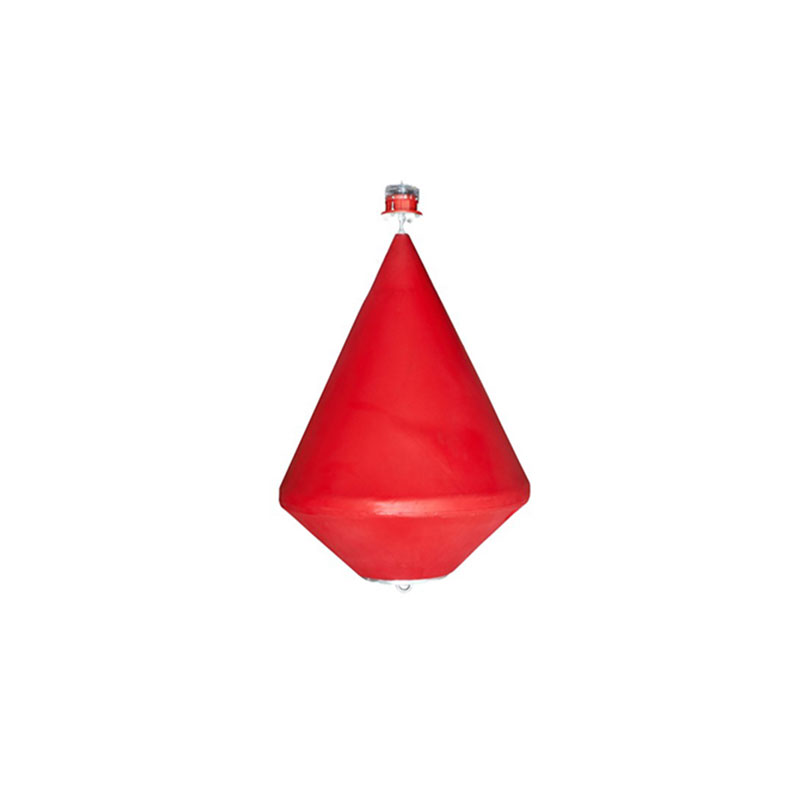
Our mooring buoy configurations eliminate the sudden subsea slippage and hawser parting failures that jeopardize deepwater asset tethering. We engineer each solid-cast steel central mooring eye to distribute crushing hawser tension evenly across the solid-foamed core, preventing internal chassis deformation during rough 360-degree vessel weather-vaning. By optimizing the underwater draft-to-freeboard ratio of our single point mooring arrays, we eliminate violent buoy bobbing and roll in heavy swells, providing an unyielding anchorage connection that shields subsurface fluid risers and umbilical cords from dynamic fatigue.

Botai Marine Mooring Buoy Technical Parameters and Specifications

Our technical specifications define the mechanical limits and material benchmarks of every product leaving our facility. This data covers the exact physical properties of the rotomolded polyethylene outer hull, the density metrics of the internal closed-cell polyurethane core, and the structural load-bearing components built into our floating mooring buoy units and commercial anchor buoy systems.

Core Physical and Mechanical Properties of the Mooring Buoy Hull

The external LLDPE shell of each heavy-duty mooring buoy model is engineered to survive continuous hull-to-buoy friction, severe open-ocean wave action, and high-energy impacts under extreme weather conditions. Whether these heavy-duty assets are deployed in deep-sea offshore oil terminals, high-latitude wind farms, or high-traffic commercial waterways, this thick, UV-15 stabilized polymer skin maintains high tensile compliance without cracking under decades of environmental fatigue or solar degradation. Supported by an internal closed-cell polyurethane matrix, this structural shell provides non-absorbent flotation, preserving stable line tension and predictable hydrostatic buoyancy even under severe dynamic loading from mega-vessels during critical ship mooring buoy operations.
Technical Parameter Standard Metric Value Test Compliance / Functional Purpose
Tensile Strength Greater than or equal to 16 MPa Outer LLDPE hull impact and tear resistance
Shore Hardness D55 Hardness Resistance to continuous hull abrasion and puncture
Polyurethane Foam Density 40-45 kg/m³ Unsinkable, high-density closed-cell core structure
UV Stabilization Level UV-15 Grade Integrated protection against polymer molecular degradation
Water Absorption Rate Less than or equal to 1% Non-absorbent matrix preventing buoyancy loss over decades

Structural Component Specifications for Deep Sea Mooring Buoy Systems

We route all vessel pulling forces and mooring chain line tensions directly through an internal, heavy-duty galvanized steel central column rather than relying on the polymer shell itself, entirely preventing shell cracking during high-surge anchoring operations. This integrated load-bearing core directly connects the upper and lower hardware assemblies, allowing our boat mooring floats to safely absorb the continuous kinetic jerks and heavy tension demands of single point mooring spm applications.

  • Hull Raw Material: 100% Virgin ExxonMobil™ LLDPE compound formulated for high-strength marine floating systems

  • Internal Structural Core: Heavy-gauge steel skeleton with hot-dip galvanization to international marine anti-corrosion standards

  • Mooring Hardware Options: Through-chain design, single point mooring (SPM) eye-links, or heavy-duty top/bottom swivels

  • Buoyancy Retention Matrix: High-grade cross-linked polyurethane injection filling the entire internal cavity

High-Performance Floating Mooring Buoy Classifications by Botai

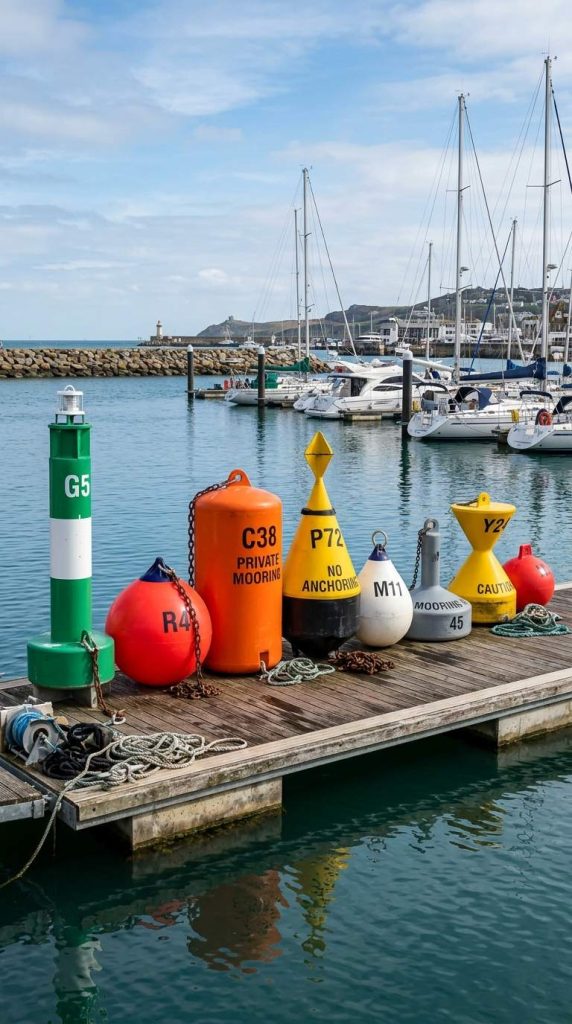
Selecting a mooring buoy float system requires a rigorous evaluation of unified physical shapes and standardized geometric profiles. We organize our factory production lines and heavy-duty molding assets into five distinct form-factor classifications to match your structural wave-drag limits, deck handling setups, and harbor utility requirements.

Cylindrical and Barrel Mooring Buoys

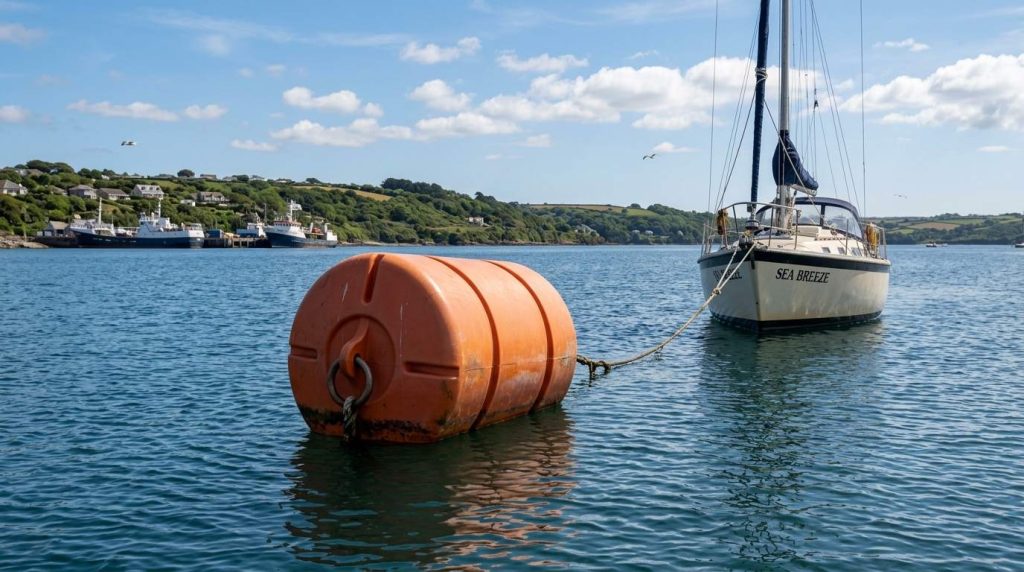
We engineer this straight-walled, high-displacement volumetric profile to deliver maximum buoyancy at the water line, establishing the structural backbone of heavy industrial anchoring. We widely deploy this specific geometry as our standard marine mooring buoy for daily commercial ship mooring buoy operations and heavy-duty large mooring buoy projects, and we offer full customization for heavy-gauge through chain mooring buoy center pipes based on your internal chain data.

Spherical and Ring Mooring Buoys

We develop these optimized hydrodynamic profiles to minimize dynamic wave drag in high-current zones. Our specialized spherical mooring buoy configurations isolate rotational stress, while our heavy-duty ring mooring buoy options provide an omnidirectional, low-stress connection point to ensure rapid, secure vessel attachment under severe surge conditions.

Pole and Mast Mooring Buoys

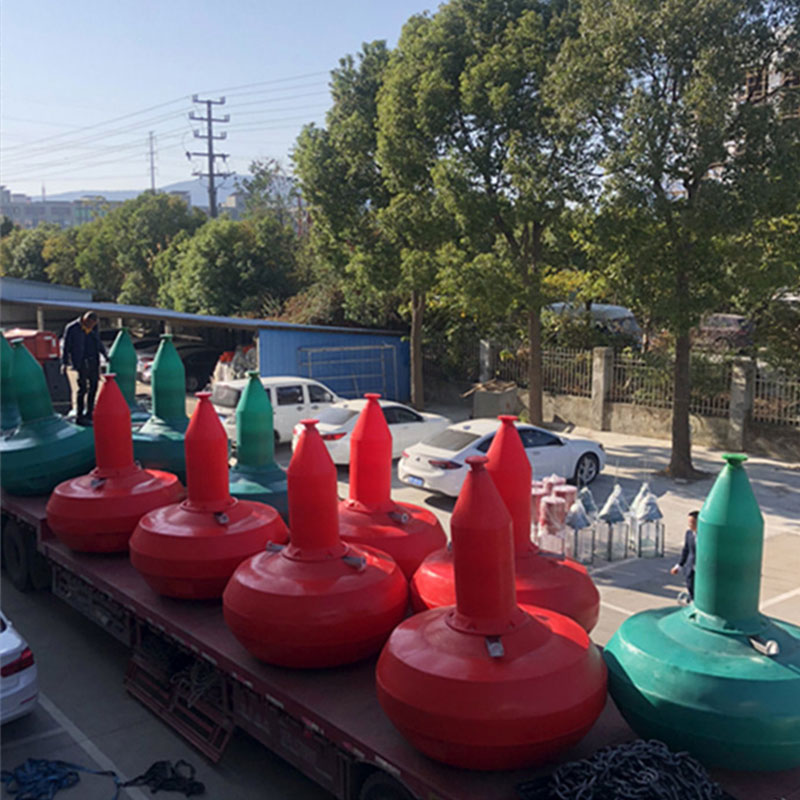
We build these high-visibility mooring buoy with pole units and elongated mooring mast buoy configurations with internal, calibrated counterweights to guarantee a strict vertical profile for rapid visual detection. We complement this range with our standard round mooring ball and reinforced boat mooring ball profiles to assist your deck crews during critical vessel approach.

Oblate and Low-Profile Mooring Buoys

We introduce these flattened, low-drag disk profiles to eliminate impact energy and ride lower in the water column under tension. Within this precise geometry, we supply our high-impact polyethylene mooring buoy series for extreme environments, alongside our resilient soft mooring buoy assets lined with flexible, energy-absorbing skins to eliminate contact abrasion against sensitive vessel hulls.

Compact and Miniature Mooring Floats

We manufacture these small-scale, lower-displacement configurations to handle targeted, close-quarter hardware management. We round out our technical catalog with these heavy-gauge mooring line buoy units, long-lasting mooring float elements, specialized mooring pendant floats, and high-visibility mooring marker buoy systems to maintain your link tension and accurately trace subsea terminal layouts.

Industrial Mooring Buoy Applications Engineered by Botai

Deploying an anchor pendant buoy field requires exact matching with a heavy-duty mooring buoy infrastructure, local wave loads, and specific vessel displacements. We classify our commercial floats and buoys deployments by real-world marine buoys environments to ensure our floating buoy arrays survive intense open-ocean currents. From a deep-sea single point mooring buoy terminal to a sheltered lake buoy grid, we align each marine marker buoy setup with your project’s exact operational depths to absorb continuous vessel impacts across five major industrial applications.

Deepwater Oil Fields and FPSO Terminals

We engineer these ultra-heavy buoyancy assets to survive extreme structural tension within offshore oil fields and subsea extraction zones. Our production lines directly output the deep sea mooring buoy and reinforced subsea buoy configurations required to interface with floating production storage and offloading systems. These units function as high-load permanent links, providing stable vertical tension to protect sensitive underwater risers from continuous deepwater currents.

Open Ocean Single Point Mooring Hubs

We construct our largest offshore buoyancy arrays to serve as the critical mechanical links for open-ocean fluid transfer stations. We supply comprehensive single buoy mooring frameworks, high-tonnage single point mooring buoy setups, and reinforced single point mooring spm terminals. Each heavy-duty spm buoy is engineered to allow ultra-large crude carriers to safely weather-vane 360 degrees around the mooring point under relentless offshore storm loads.

Commercial Harbors and Multi Buoy Anchorages

We design these high-density layouts to maximize restricted port waters and manage commercial traffic within structured harbor basins. We supply specialized components optimized for multi-point configurations, including the conventional buoy mooring array and heavy-duty multi buoy mooring installations. These setups integrate our rugged spider mooring buoys to eliminate vessel swinging radiuses, allowing cargo ships to tether securely from bow and stern during extended port berthing.

Designated Anchorage Zones and Waterway Demarcations

We deploy these highly visible tracking arrays to establish safe waiting zones, boundary restrictions, and regulatory corridors before ships enter commercial ports. We secure these transit lines by configuring a heavy-duty anchorage buoy infrastructure that serves as a reliable temporary holding station while simultaneously providing clear navigation markers for boats. These layouts ensure heavy vessels maintain exact spatial positions within designated waterway buoys zones without anchor dragging.

Heavy Cargo Ship and Commercial Vessel Berthing

We scale these rugged, high-impact mooring configurations to handle the aggressive berthing dynamics of industrial shipyards and loading terminals. We configure each heavy-duty ship mooring buoy and industrial marine mooring buoy to absorb the massive kinetic energy generated by large cargo liners. By deploying our specialized yacht mooring buoys and commercial ship tethers parallel to the wharf, we mitigate continuous hull-to-dock abrasion under turbulent tidal fluctuations.

Inland Waterways and Yacht Marina Basins

We customize these streamlined, responsive buoyancy systems to meet the high-frequency demands of inland waters, river channels, and private waterfronts. We protect these recreational areas by deploying our specialized boat mooring buoy layouts, compact lake mooring buoy markers, low-drag sailboat mooring buoy models, and agile jet ski mooring buoy tethers. These responsive units provide secure, rapid-tethering stations that eliminate hull contact abrasion within narrow transit zones.

Mooring Buoy Manufacturing and Engineering Strengths by Botai

Our technical and operational capacities eliminate your procurement risks through our direct management of engineering schematics, strict compliance with international maritime quality benchmarks under ISO and IALA frameworks, and a 16,000 square meter production floor equipped for heavy-duty polymer fabrication. By matching our specialized rotomolding machinery and raw materials with your exact project load parameters, we deliver rugged, high-buoyancy systems engineered to survive the mechanical impacts and environmental stresses of commercial marine fields.

ISO 9001, ISO 14001, ISO 45001, and IALA Certified Quality

We manufacture our mooring buoy and marine container lines under strict international compliance. Our operations are fully certified to ISO 9001:2015, ISO 14001:2015, and ISO 45001:2018 standards. Furthermore, as an active Affiliate Industrial member of IALA, we enforce precise quality control benchmarks to guarantee that our physical products reliably withstand long-term open-ocean deployment.

R&D Innovations Led by 8 Top-Tier Marine Engineers

Our in-house R&D team consists of 8 specialized engineers who deliver customized solutions for complex maritime environments. We execute a rapid development loop—spanning custom design, engineering validation, and physical sampling—allowing us to quickly optimize internal configurations for specialized single point mooring spm systems or heavy-duty deep sea mooring buoy arrays.

Custom Scheme Design and Direct Factory Mass Production

We synchronize our engineering department with our production floor to translate your project blueprints directly into finished products. Our process covers initial technical consultation, structural scheme design, sample molding, and final mass production in-house. This centralized control eliminates independent design-house markup fees and engineering translation errors, ensuring the final mooring buoy dimensions match your exact deployment drawings.

Over 15 Years of Large-Scale Polyethylene Rotomolding Production

We operate a specialized 16,000 square meter industrial manufacturing facility dedicated to heavy-duty polymer marine production. As China’s pioneering high-tech enterprise to implement large-scale rotomolding for polyethylene marine buoys, our 14 years of continuous factory scaling has built an extensive deployment history across hundreds of successful waterborne installations. This physical infrastructure guarantees stable container-loading capacities, predictable production lead times, and continuous high-volume output for global boat mooring floats and commercial ship mooring buoy procurement contracts.

product knowledge and technical FAQ articles by Botai

Our technical team routinely compiles direct answers to the most frequent technical definitions, configuration sizing, and operational questions raised by project contractors and technical operations teams. This unified resource hub aggregates basic product explanations, material testing walkthroughs, routine maintenance protocols, and step-by-step assembly guides covering our entire manufacturing portfolio, engineering components, and specialized hardware. These articles address immediate queries regarding raw material performance, structural definitions, hardware compatibility, field installation steps, and long-term asset maintenance, providing clear procurement clarity to help you select, deploy, and manage the correct configuration for your project requirements.

news

Can you repair dock floats?

You can usually fix dock floats, based on the damage. First, look at the float to see its shape. Many fixes use marine-grade sealants, plastic welding, or epoxy. Botai Floating Dock Systems use high-density polyethylene. This material stands up to sunlight and does not wear out fast. Be careful and

Read More »
news

How to maintain a floating dock?

You keep your floating dock in top shape by cleaning it often, checking for damage, and protecting it from the elements. Using quality products like Botai Floating Dock Systems helps your dock last longer. Regular care can extend dock life by many years, as shown below: Dock Type Lifespan (Years)

Read More »
news

How does a floating dredge work?

You see a floating dredge working on a river or lake. This machine moves on the water and picks up sediment from the bottom. You notice it helps keep waterways clear. It also supports important projects. Many industries use this technology to stay safe and work well. Key Takeaways Floating

Read More »
news

What are the buoys in the ocean for?

Ocean buoys help keep people safe on the water. They float in the ocean and show ships where to go. They warn about dangers and gather information about the environment. There are many kinds of buoys. Each one has its own job. Ocean buoys check water temperature. They watch for

Read More »

FAQ about our mooring buoy engineering

What data does Botai need to quote a deep sea mooring buoy or large mooring buoy?

To provide you with a precise engineering quote for our deep sea mooring buoy or large mooring buoy, we require your target net buoyancy, installation water depth, and connection hardware sizes. If you are deploying for commercial ship mooring buoy operations, please provide us with the vessel deadweight tonnage (DWT) so our technical team can calculate exact load tolerances.

Yes, we fully customize all structural parameters using our internal rotomolding tooling. We can modify the wall thickness and physical dimensions of our anchor buoy float, our through chain mooring buoy, or a standard boat mooring ball. We regularly scale our production from compact yacht mooring buoys up to industrial-grade single point mooring spm systems based directly on your engineering drawings.

Yes, we manufacture every marine mooring buoy, anchor retrieval buoy, and polyethylene mooring buoy in strict compliance with ISO quality management standards and IALA guidelines for marine aids to navigation. We verify all physical parameters in-house before dispatch, guaranteeing a certified tensile strength of ≥16 MPa and an internal closed-cell polyurethane structure with a precise foam density of 40-45 kg/m³.

We maintain standard sizes for our boat mooring floats, mooring pendant floats, and floating anchor marker buoy lines in our active factory inventory for immediate dispatch. For bulk commercial orders or customized mooring buoy with pole configurations, we typically complete factory production within 3 to 5 weeks from technical drawing sign-off to port loading.

To maximize your container payload and lower your ocean freight costs, we design our sailboat mooring buoy, lake mooring buoy, and anchor float marker orders for optimized nesting arrangements. We wrap the smooth LLDPE exterior surfaces of every mooring buoy float and anchor marker float in protective multi-layer film to completely prevent transit friction damage.

request a technical quote for your floating mooring buoy project

Contact Us