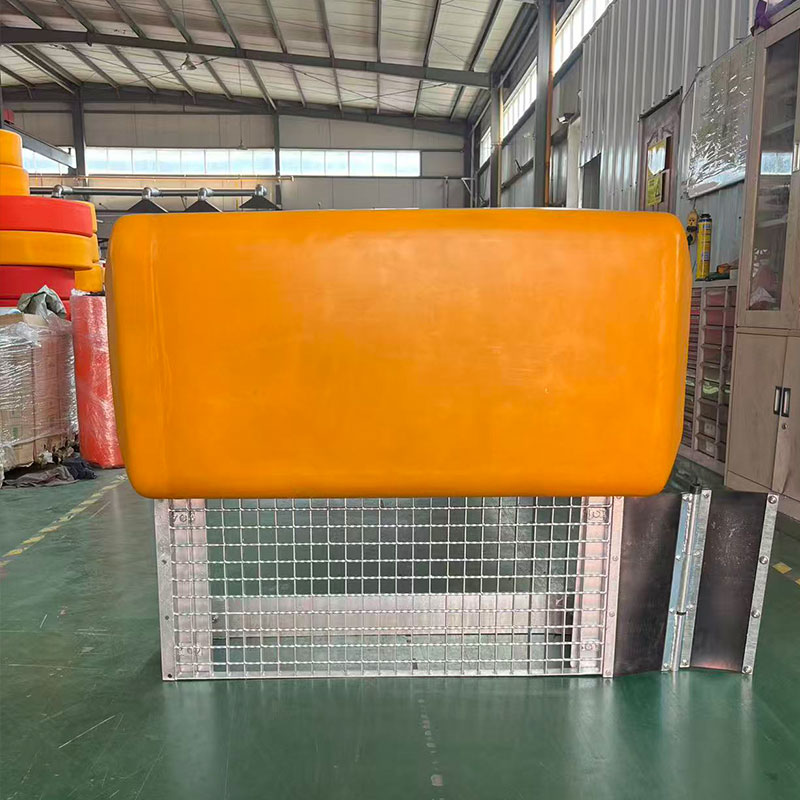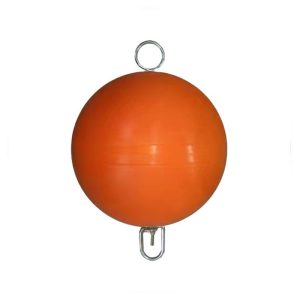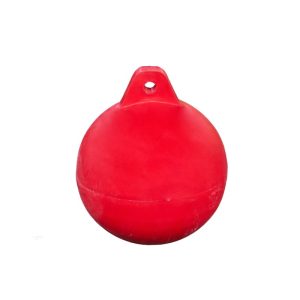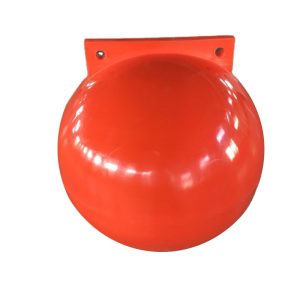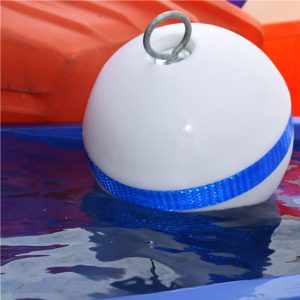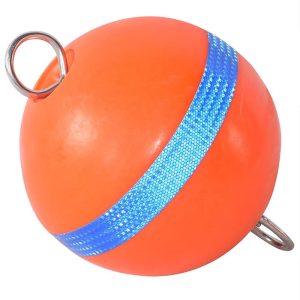
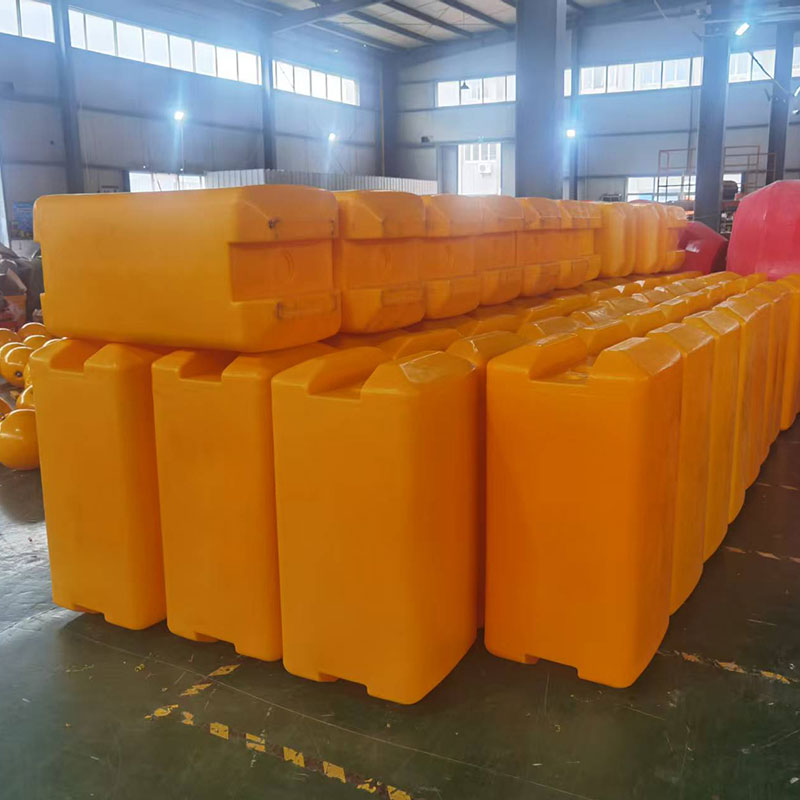
We manufacture cross-linked polyethylene water safety line floats and specialized markers engineered with a Xenon-arc weathering resistance rating of Delta E ≤ 3.0 after 3000 hours. Our custom rotomolding achieves a low-temperature impact strength of ≥20 kJ/m² at -30°C, eliminating brittle fracturing in freezing waters. Formulated with precise colorimetry matching IALA Recommendation E-108, each high-visibility hull provides an exact buoyancy-to-weight ratio, ensuring stable waterline tracking.
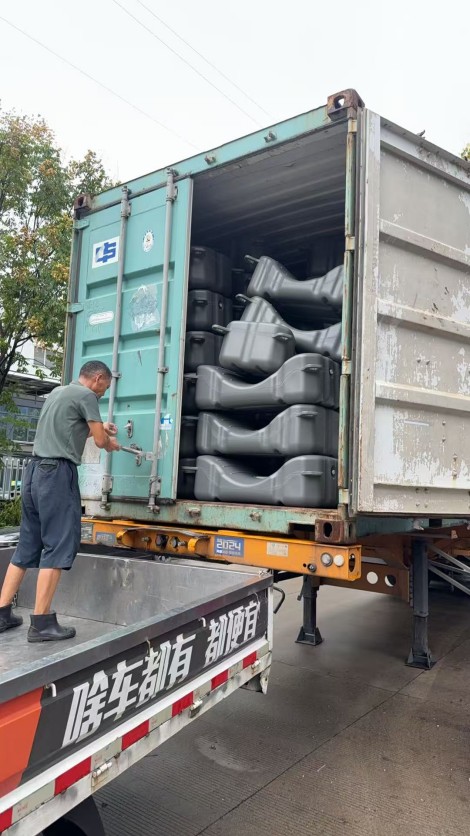
Our 15-year heavy-industrial manufacturing capacity directly empowers engineering contractors to deploy water safety line floats capable of withstanding extreme hydraulic tension and constant rigging friction. Over a decade of industrial rotomolding mastery allows us to transform enterprise scale into verifiable field advantages, delivering custom-thickened internal channels and precise cable configurations tailored to your specific site parameters. Supported by 8 top-tier engineers and hundreds of water conservancy infrastructure executions, we manage everything from custom tooling to high-capacity mass production internally, guaranteeing your bulk safety barrier networks are delivered strictly on schedule.
We mold pure ExxonMobil LLDPE into a seamless polymer hull with UV-15 stabilization, ensuring every water safety line float eliminates structural cracking under severe hydraulic wave friction.
Leveraging profound maritime engineering practice, our top-tier technical specialists calculate exact fluid dynamics and cable tensile limits, customizing complex core wall geometry to match your specific rigging configurations perfectly.
By managing custom CNC mold fabrication and high-volume raw material compounding completely internally, we eliminate third-party supply chain variables to guarantee your bulk safety barrier deployment delivers on schedule.
Our factory provides certified 40-45 kg/m³ closed-cell foam data from verified water safety line floats deployed across Southeast Asian hydropower reservoirs, Middle Eastern marine terminals, and European river management networks.
Our technical team routinely compiles direct answers to the most frequent technical definitions, configuration sizing, and operational questions raised by project contractors and technical operations teams. This unified resource hub aggregates basic product explanations, material testing walkthroughs, routine maintenance protocols, and step-by-step assembly guides covering our entire manufacturing portfolio, engineering components, and specialized hardware. These articles address immediate queries regarding raw material performance, structural definitions, hardware compatibility, field installation steps, and long-term asset maintenance, providing clear procurement clarity to help you select, deploy, and manage the correct configuration for your project requirements.

Mooring systems keep ships, floating platforms, offshore structures, and other marine assets within an acceptable operating area by resisting environmental loads from wind, waves, and current. The three commonly discussed mooring configurations are catenary mooring, taut-leg mooring, and single-point mooring (SPM). These systems differ primarily in mooring-line geometry, restoring-force mechanism,

Evaluating the longevity of a floating dock requires a precise understanding of material science, environmental stressors, and standardized maintenance. According to commercial marine engineering standards, a high-quality floating dock provides a functional lifespan of 20 to 30 years under typical conditions. However, this baseline fluctuates significantly based on the materials

You might see Botai Floating Dock Systems as a top example of a floating platform. These structures help marinas, data centers, and renewable energy projects. In the last ten years, the market value went from $4.2 billion in 2018 to $6.8 billion in 2023. This shows there is strong demand

A water boom is an engineered floating barrier deployed across aquatic environments to intercept, contain, or divert surface pollutants like solid waste, organic debris, and hydrocarbons. As a primary countermeasure for surface contamination, water booms concentrate pollutants for efficient remediation. This technical guide outlines the hydrodynamic capabilities, material specifications, and
Our standard manufacturing baseline requires a minimum order quantity of 500 units for custom color matching or logo molding. However, for specialized engineering projects or initial testing phases, our factory can adjust production runs to accommodate smaller initial batch requirements depending on our current rotomolding schedule.
We manage the entire lifecycle internally, from 3D structural CAD engineering to heavy-industrial aluminum mold fabrication. Because we operate our own dedicated tooling shop, we can develop, test, and calibrate custom molds for your specific diameter requirements within 15 to 21 business days before entering mass production.
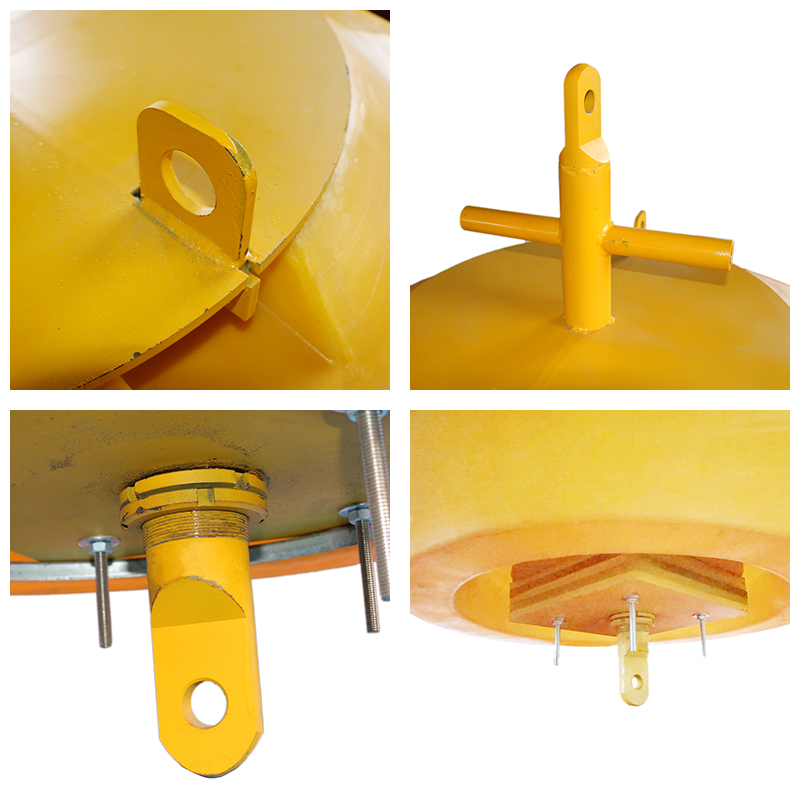
Yes, we frequently modify our internal core designs to accommodate steel wire ropes, heavy chains, or fiber cables ranging from 10mm to over 50mm in diameter. We ensure that the integrated inner walls are reinforced with extra thickness to withstand the constant friction and high tension of heavy-duty industrial marine rigging.
For high-volume municipal or commercial contracts up to 10,000 units, our standard factory lead time is 14 to 30 days from deposit verification and technical drawing approval. Operating multiple advanced, high-capacity rotomolding stations allows us to maintain a highly stable and predictable production rate to meet strict contractor project deadlines without delay.
Because we combine direct factory-level pricing with rigorous quality control, providing full material traceability and documented testing certificates with every bulk shipment. By securing long-term supply agreements for our safety line floats, global buyers bypass low-end trading companies, stabilize their supply chain costs, and receive direct engineering and customization support straight from our technical team.