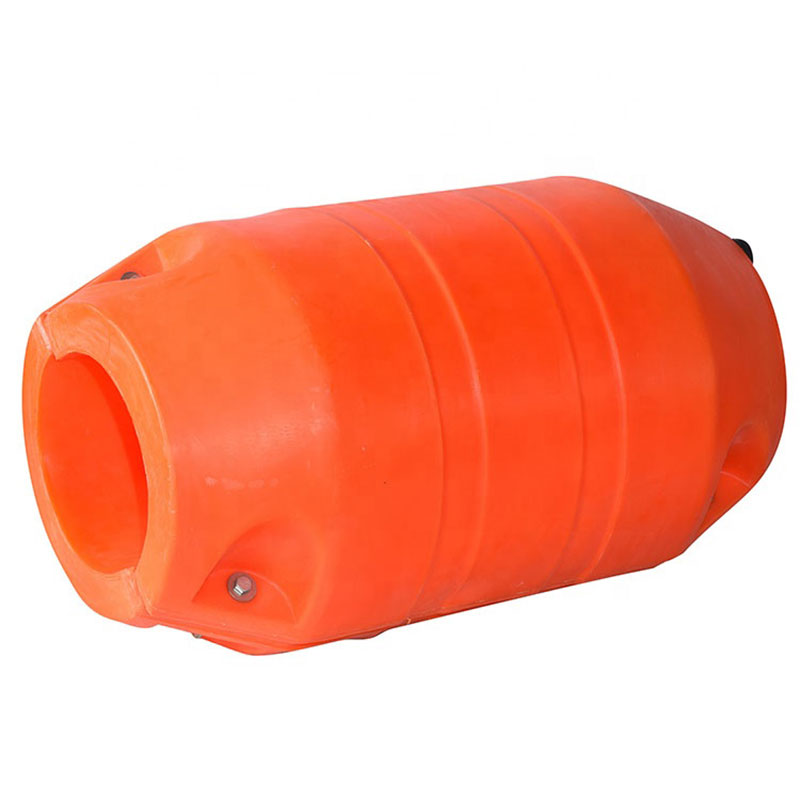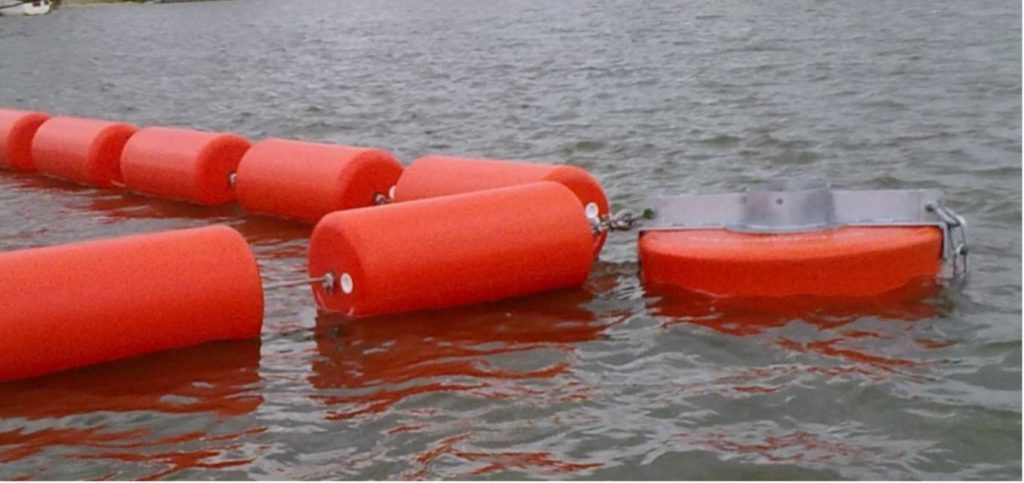
A water boom is a floating barrier used to contain, divert, deflect, or collect floating pollutants and debris on the surface of rivers, lakes, ports, coastal waters, and other water bodies. Depending on its design, a water boom may be used for oil-spill response, floating-trash interception, industrial wastewater protection, marine pollution control, or protection of sensitive water infrastructure.
A water boom is not a single standardized product. Its performance depends on factors such as freeboard, skirt depth, flotation, ballast, tensile strength, connection design, current velocity, wave conditions, and the type of material being contained.
For oil-spill response, the U.S. Environmental Protection Agency (EPA) describes containment booms as equipment used to control the spread of oil, concentrate oil for easier recovery, and divert or channel oil toward collection points. The EPA also identifies freeboard, flotation, a below-water skirt, and longitudinal support as the basic elements shared by most booms.
Key Takeaways
- A water boom creates a floating physical barrier to contain, divert, or intercept material at the water surface.
- Oil-spill booms are designed differently from debris barriers and sorbent booms, so the intended application should be defined before selecting a system.
- The main structural elements include freeboard, flotation, skirt, ballast or longitudinal support, and connection hardware.
- Boom performance is strongly affected by current, waves, wind, water depth, and the characteristics of the material being contained.
- EPA guidance notes that conventional booms become less effective as wave height and current increase, making site conditions an essential part of boom selection.
- International oil-spill preparedness is also addressed through the IMO’s International Convention on Oil Pollution Preparedness, Response and Co-operation (OPRC) and related guidance.
What Is a Water Boom?
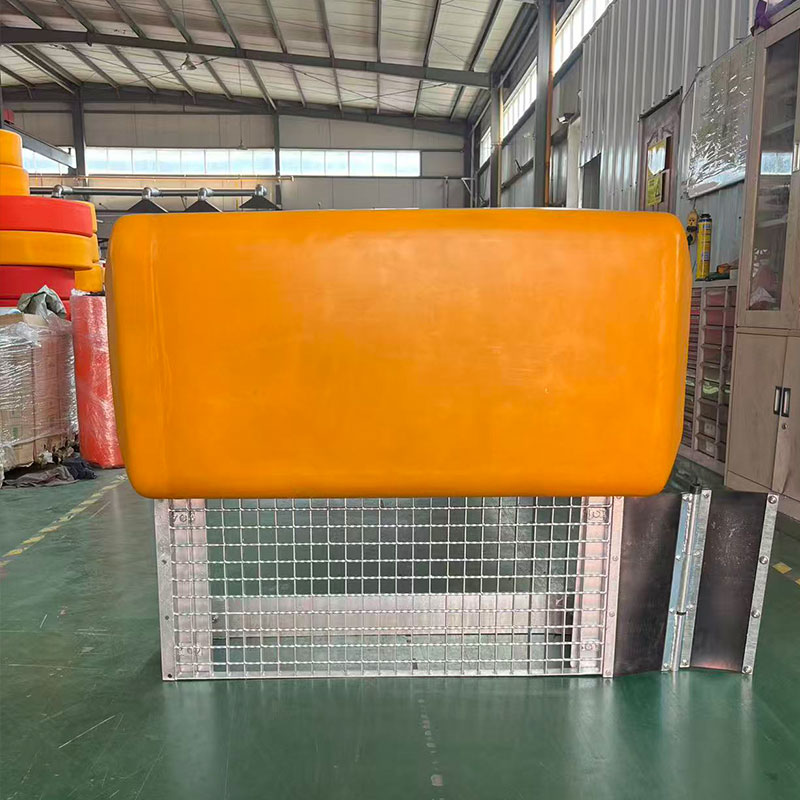
A water boom is a floating barrier system positioned across or around a water area to influence the movement of floating material.
The exact function depends on its design and deployment pattern:
- Containment booming keeps floating oil or other material within a defined area.
- Deflection booming redirects floating pollutants toward a selected recovery or collection point.
- Exclusion booming protects sensitive areas, such as water intakes or shorelines, from incoming pollutants.
- Debris interception prevents logs, branches, plastics, and other floating waste from reaching downstream infrastructure.
- Sorbent booming combines physical containment with an absorbent material designed to take up oil from the water surface.
This distinction is important because a conventional containment boom does not automatically absorb oil. Mechanical containment and recovery are recognized by the EPA as a primary response approach for oil spills, while sorbent materials are a separate category of response equipment.
How Does a Water Boom Work?
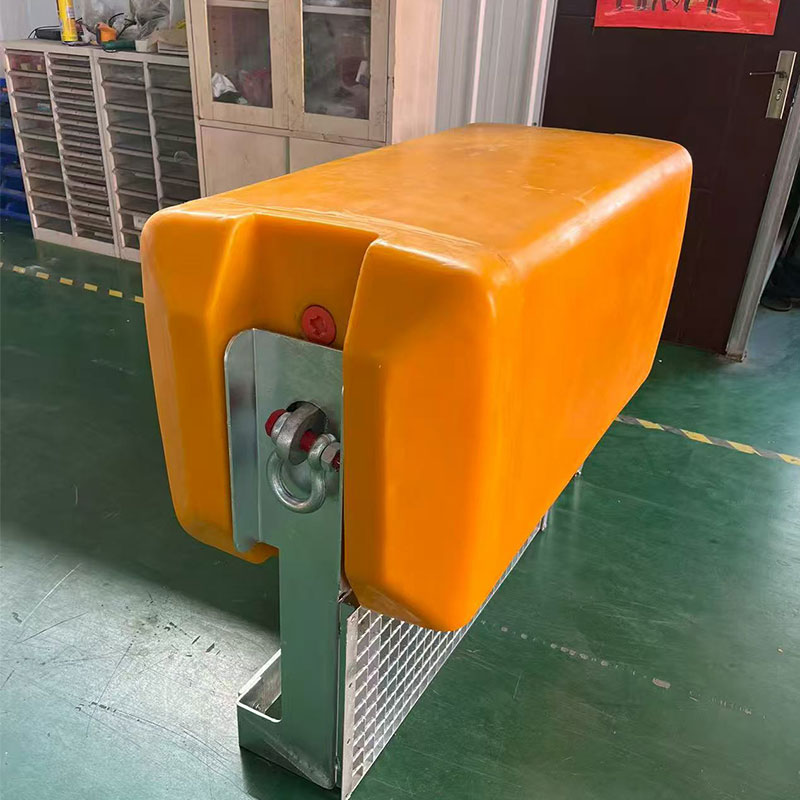
A typical floating boom works by maintaining a controlled barrier between the water surface and the material being contained.
Its effectiveness depends on keeping the boom sufficiently stable while allowing it to follow changes in the water surface.
Freeboard
Freeboard is the portion of the boom that remains above the waterline.
Its primary purpose is to help retain floating material and reduce the amount of oil or debris that passes over the top of the barrier. Higher freeboard can be useful where splash-over is a concern, but freeboard must be considered together with flotation, structural strength, and water conditions.
Flotation
Flotation keeps the upper section of the boom at the water surface.
Different designs use different flotation systems, including external floats, cylindrical flotation chambers, or integrated buoyant materials. The required buoyancy depends on the boom’s weight, freeboard, skirt configuration, and expected water conditions.
Skirt
The skirt is the portion of an oil-spill boom that extends below the water surface.
It helps reduce the amount of oil passing underneath the boom. Skirt depth must be selected according to the application and local water conditions rather than simply maximizing depth.
Ballast and Longitudinal Support
A ballast chain, cable, or other longitudinal support system is normally positioned along the lower part of the boom.
These components can:
- Maintain the vertical position of the skirt
- Improve stability
- Add resistance against wind and wave forces
- Help distribute tensile loads along the boom
- Reduce deformation during deployment
The EPA identifies longitudinal support, usually a chain or cable, as one of the basic components of a containment boom.
Connectors and Anchoring Points
Boom sections need reliable connection hardware to form a continuous barrier.
Depending on the application, the system may also use anchors, tow points, shoreline attachments, buoys, or vessel connections. These components are particularly important when the boom is deployed in moving water or exposed to wind and waves.
Main Types of Water Booms
Water booms should be classified according to their intended operating environment and function rather than treated as interchangeable products.
| Water Boom Type | Typical Application | Main Characteristics | Suitable Conditions |
|---|---|---|---|
| Fence Boom | Oil containment, protected waters | High freeboard with relatively flat flotation | Calm or protected waters |
| Curtain Boom | Oil-spill response | Continuous skirt with cylindrical or rounded flotation | More variable water conditions |
| Inflatable Boom | Emergency oil-spill response | Compact storage and rapid deployment | Ports, vessels, offshore response |
| Sorbent Boom | Oil absorption and containment | Absorbent material incorporated into the barrier | Small spills and localized contamination |
| Debris Boom | Floating trash and logs | Heavy-duty structure and impact resistance | Rivers, canals, dams, ports |
| Exclusion Boom | Protecting sensitive areas | Designed to isolate an intake, shoreline, or restricted zone | Water intakes and protected areas |
The EPA notes that fence booms are generally less effective in rough water, while round or curtain booms can perform better in rougher conditions. Inflatable and non-rigid designs can also offer advantages in storage and deployment, although they introduce different operational considerations.
Water Boom Applications
The correct boom configuration depends on what needs to be contained and what the surrounding water conditions are.
Oil Spill Containment
Oil-spill booms are commonly deployed to restrict the movement of oil across the water surface.
A boom can be used to:
- Surround an oil spill
- Protect a shoreline
- Divert oil toward a recovery point
- Concentrate oil for skimmer recovery
- Protect sensitive habitats or water intakes
The EPA explains that booms can both control the spread of oil and concentrate it into thicker surface layers, making recovery easier.
Floating Debris Control
Debris barriers address a different problem.
Instead of primarily retaining liquid hydrocarbons, heavy-duty debris booms are designed to intercept:
- Floating logs
- Branches
- Plastic waste
- Municipal debris
- Industrial floating waste
- Other large objects transported by rivers or drainage channels
These applications can require substantially greater impact resistance and tensile capacity than a lightweight oil-spill boom.
Water Intake Protection
Water booms can be deployed upstream or around vulnerable infrastructure to reduce the risk of floating debris entering:
- Hydroelectric facilities
- Municipal water intakes
- Industrial cooling-water systems
- Pump stations
- Drainage infrastructure
For these applications, the boom must be designed around the site’s hydraulic conditions rather than selected solely according to its dimensions.
Port and Marina Protection
Ports and marinas may use floating barriers to isolate contaminated areas, control floating debris, or protect sensitive zones.
The boom system may be attached to fixed structures, anchored to the seabed, or connected to vessels depending on the deployment requirements.
Water Boom Environmental and Operational Factors
A water boom cannot be evaluated independently from its operating environment.
The same boom may perform effectively in a protected harbor but become unsuitable in a fast-moving river or exposed offshore location.
Current Velocity
Current creates hydrodynamic force against the boom and the material being contained.
As current velocity increases, the boom can experience:
- Increased drag
- Greater tensile loads
- Skirt deformation
- Increased risk of material passing underneath
- Greater loads on anchors and connectors
The EPA notes that stationary booms need frequent monitoring because tides, currents, wind, water depth, and changes in the direction and force of water movement can significantly affect their ability to contain oil.
Wave Height
Waves can cause a boom to rise, fall, tilt, or deform.
As wave conditions become more severe, the risk of:
- Splash-over
- Submergence
- Skirt displacement
- Connector loading
- Loss of containment
increases.
For this reason, boom selection should consider actual wave conditions rather than relying only on nominal freeboard or skirt depth.
Wind
Wind can push both the boom and floating pollutants across the water surface.
A strong crosswind may also change the orientation of a deployed barrier and increase loading on anchors and connection points.
Water Depth and Tidal Changes
Changes in water level can alter the relationship between the boom skirt, seabed, and surrounding infrastructure.
Anchored systems should therefore be evaluated for:
- Minimum and maximum water depth
- Tidal range
- Anchor position
- Skirt clearance
- Changes in current direction
Material Characteristics
The physical characteristics of the material being contained also influence boom selection.
Oil, plastic debris, logs, sediment, and industrial floating waste do not behave in the same way.
For example, a boom designed primarily for oil containment may not have sufficient impact resistance for large floating logs. Conversely, a heavy debris barrier may be unnecessary for a small localized oil spill.
Water Boom Deployment Configurations
The boom itself is only one part of a containment system. Deployment geometry can significantly affect performance.
Containment Boom
A boom can be arranged around a spill or floating material to create a controlled containment area.
This configuration is useful when the objective is to prevent the material from spreading further.
Deflection Boom
A deflection configuration uses the angle of the boom and water movement to redirect floating material toward a recovery point.
This can be useful in rivers and channels where attempting to completely block the flow may create excessive loading.
Chevron or V-Shaped Boom
A V-shaped or chevron configuration can guide floating material toward a central collection point.
This approach may be combined with skimmers or other recovery equipment when managing surface oil.
Cascade Boom
Multiple boom sections can be deployed sequentially where a single barrier cannot safely withstand the hydraulic forces.
The objective is to distribute the containment task across several sections rather than placing the entire load on one line.
The appropriate configuration should be determined from site-specific hydraulic conditions and the operational objective.
How to Select the Right Water Boom
A practical water boom selection process should begin with the site rather than the product catalog.
1. Identify the Material
Determine whether the system needs to manage:
- Oil
- Floating plastic
- Logs and branches
- Industrial floating waste
- Mixed debris
- Other surface pollutants
2. Measure Water Conditions
Collect available information about:
- Current velocity
- Wave height
- Wind conditions
- Water depth
- Tidal variation
- Seasonal flooding
- Expected debris loads
3. Define the Objective
Decide whether the primary objective is:
- Containment
- Deflection
- Exclusion
- Absorption
- Debris interception
- Infrastructure protection
4. Select the Boom Configuration
Choose between fence, curtain, inflatable, sorbent, debris, or other specialized designs based on the operating environment.
5. Check Structural Loads
For heavy-duty applications, evaluate:
- Tensile capacity
- Connector strength
- Ballast configuration
- Anchor loads
- Impact resistance
- Joint flexibility
6. Consider Deployment and Maintenance
A technically capable boom is not useful if the response team cannot deploy, retrieve, clean, inspect, or store it efficiently.
Storage volume, deployment equipment, cleaning requirements, replacement parts, and personnel requirements should therefore be considered during procurement.
Manufacturer Case Example: Heavy-Duty Water Boom for Floating Debris
Heavy-duty debris containment requires a different design approach from lightweight oil-spill response.
For example, Botai’s manufacturer-provided specifications describe a Trash Intercepting Float system intended for demanding applications such as river channels, dam intakes, ports, and areas exposed to floating logs and other large debris.
According to the manufacturer’s specifications, the system uses a rotationally molded LLDPE outer structure combined with an internal galvanized steel frame. The manufacturer states a continuous tensile load capacity of up to 25 tons and describes flexible joints designed to accommodate movement between adjacent sections.
The system also uses closed-cell polyurethane foam inside the floats. According to the manufacturer’s stated specifications, the foam-filled structure is intended to maintain flotation even if the outer shell is damaged.
These specifications should be understood as manufacturer-provided product data rather than general industry requirements. Actual performance depends on the final configuration, installation method, water conditions, debris characteristics, and engineering design.
Water Boom Maintenance and Inspection
Regular inspection is essential for any floating barrier exposed to environmental loading.
Operators should check:
- Outer material for cuts, abrasion, and punctures
- Floats for deformation or loss of buoyancy
- Skirts for tearing
- Ballast chains and cables for corrosion or deformation
- Connectors for wear
- Anchoring points for movement
- Accumulated debris
- Changes in water conditions
- Evidence of excessive loading
A damaged boom should not automatically be returned to service simply because it remains afloat. Structural components, connections, and the containment function should also be evaluated.
Environmental Protection and Pollution Response
Water booms are one component of a broader pollution-response system.
The EPA identifies mechanical containment and recovery equipment—including booms, barriers, skimmers, and sorbent materials—as an important response approach for oil spills.
At the international level, the IMO’s OPRC Convention establishes a framework for international cooperation in preparing for and responding to major oil-pollution incidents. Parties are expected to maintain response systems, equipment, training, exercises, and contingency arrangements.
The IMO also emphasizes that marine-pollution response is a highly technical task requiring specialized knowledge, fit-for-purpose equipment, and practical response capacity.
Therefore, selecting a water boom should not be treated as simply purchasing a floating barrier. It should be part of a broader site-specific pollution prevention, containment, recovery, and emergency-response plan.
Water Boom Limitations
No water boom can guarantee complete containment under every environmental condition.
Performance can decline when:
- Current becomes too strong
- Waves become too high
- Wind changes the boom orientation
- The skirt is incorrectly positioned
- Anchoring is inadequate
- The boom is overloaded with debris
- The wrong boom type is selected
- Deployment geometry does not match the water flow
The EPA specifically notes that boom effectiveness is strongly affected by water conditions and that conventional booms generally perform best in relatively gentle conditions.
For this reason, a water boom should always be selected and deployed according to the actual operating environment.
Frequently Asked Questions About Water Booms
What is the main purpose of a water boom?
A water boom is a floating barrier designed to contain, divert, exclude, or intercept floating material on water. The exact function depends on its construction and deployment.
Can a water boom absorb oil?
Some water booms are designed with sorbent materials and can absorb oil. Conventional containment booms primarily restrict the movement of oil rather than absorb it. Sorbent products should therefore be distinguished from conventional containment barriers.
What is the difference between an oil boom and a debris boom?
An oil boom is primarily designed to contain or redirect floating oil, while a debris boom is designed to intercept physical objects such as logs, branches, and plastic waste. Debris barriers generally require greater impact resistance and structural capacity.
How does current affect a water boom?
Increasing current can increase drag and tensile loads, deform the skirt, and allow material to pass underneath the boom. Anchoring, deployment angle, boom design, and site-specific hydraulic conditions must therefore be considered together.
What are the main components of a water boom?
Typical components include flotation, freeboard, a submerged skirt, longitudinal support or ballast, connectors, and anchoring or towing hardware. The exact configuration varies by boom type and application.
How do I choose a water boom for a river?
Start by evaluating the material being contained, current velocity, water depth, seasonal flow changes, expected debris size, required deployment configuration, and structural loads. A heavy-duty debris barrier may be more appropriate than a conventional oil-spill boom when large floating objects are involved.
Are water booms required for oil-spill response?
Requirements depend on the location, facility, vessel, type of operation, and applicable regulations. Internationally, the IMO OPRC framework establishes preparedness and response requirements for countries and relevant operators, while national regulations determine specific obligations.
Conclusion
A water boom is more than a floating fence. It is an engineered containment system whose effectiveness depends on boom design, water conditions, deployment configuration, structural loading, and the material being controlled.
For oil spills, the objective may be to contain and concentrate oil for recovery. For rivers, dams, ports, and industrial facilities, the priority may instead be intercepting floating debris and protecting downstream infrastructure.
The most reliable selection process therefore starts with the operating environment and response objective. By evaluating current, waves, wind, water depth, material characteristics, structural loads, deployment requirements, and maintenance needs, operators can select a water boom that is better matched to the actual conditions of the site.