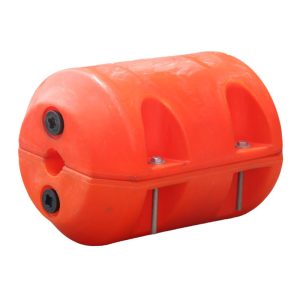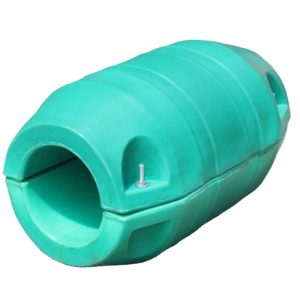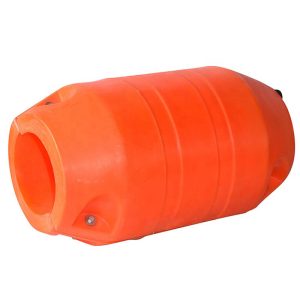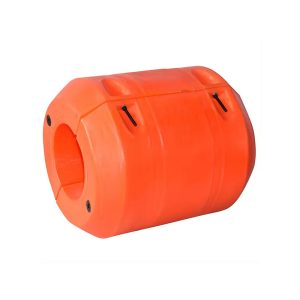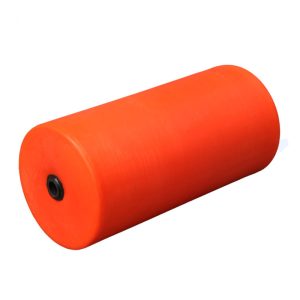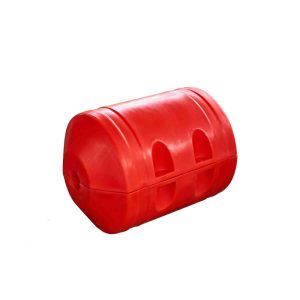
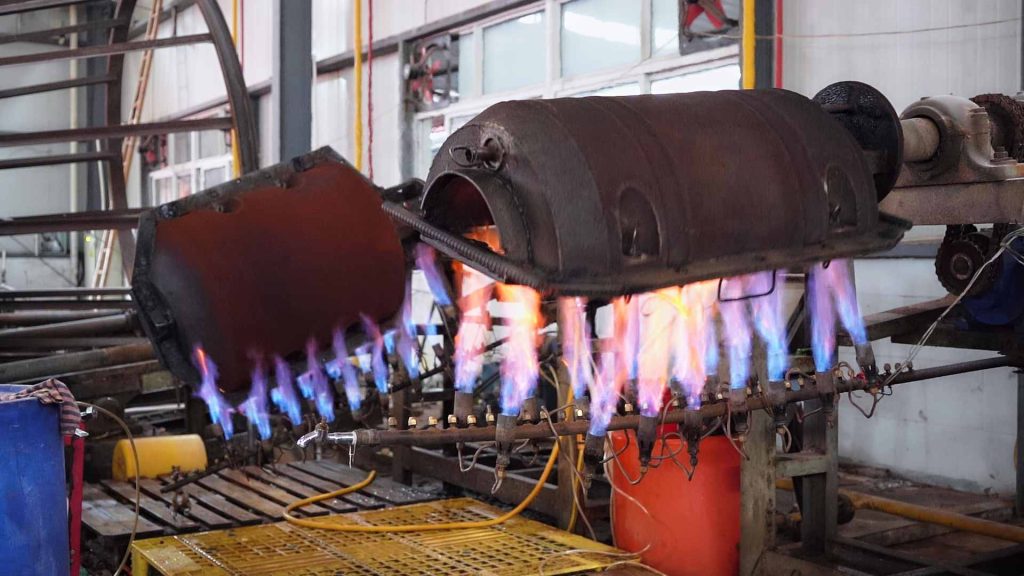
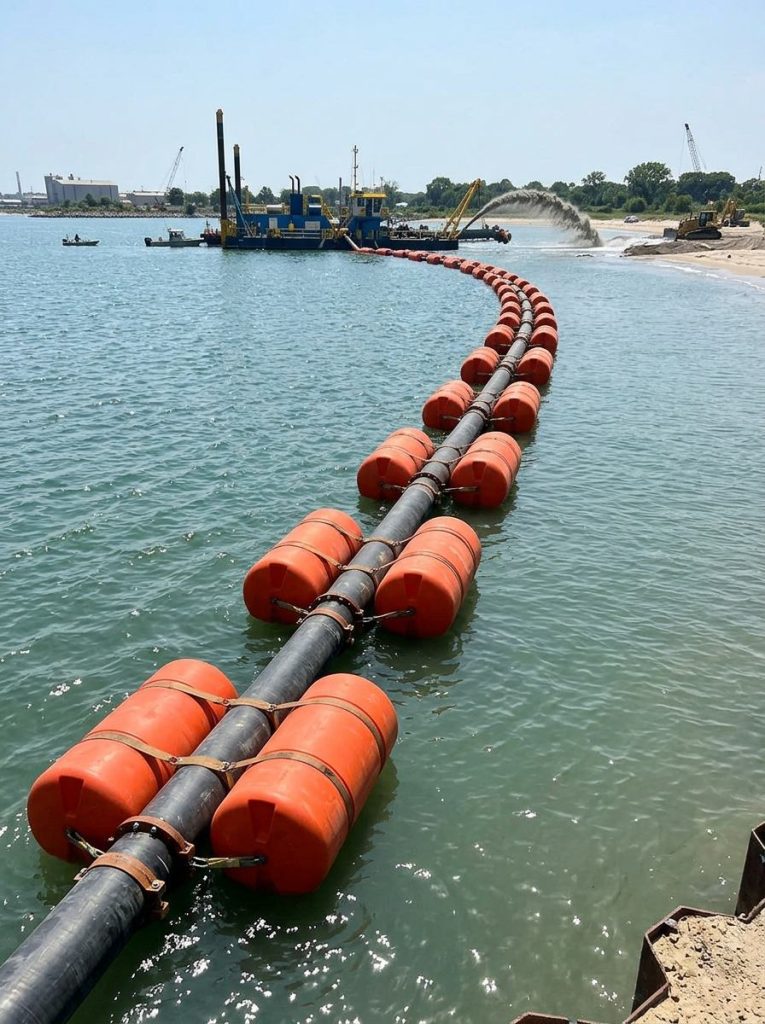
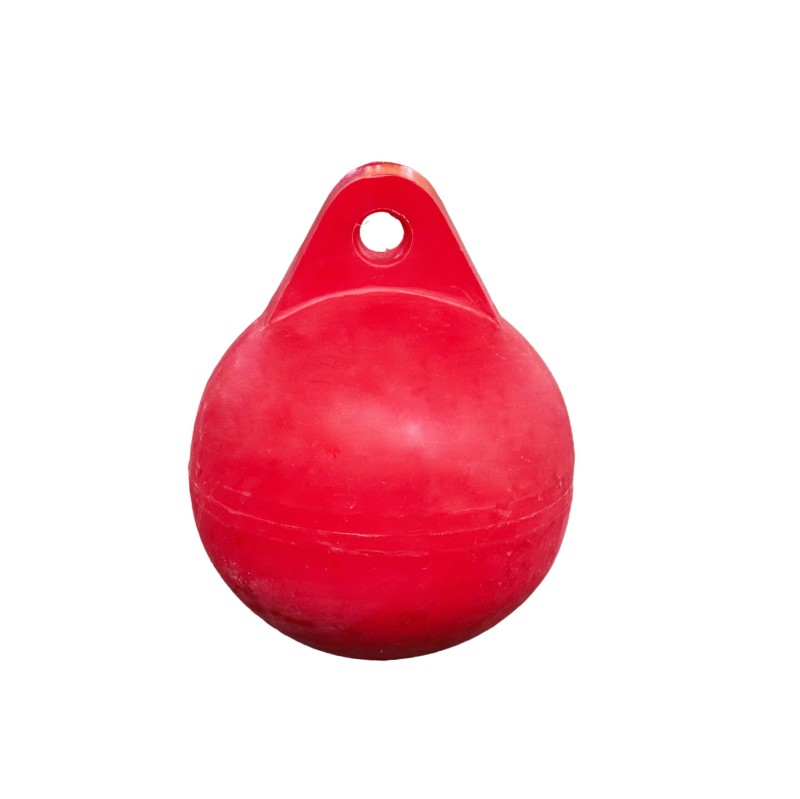
Dredging pipeline floaters built by our factory feature a 10-15mm ultra-thick LLDPE abrasion skin and an injected 40kg/m³ high-density solid polyurethane core. We engineer these rugged HDPE pipe floats specifically for aggressive sand suction, harbor reclamation, and coastal mining operations, delivering absolute, puncture-proof buoyancy for your long-distance floating pipeline networks under punishing marine waves.
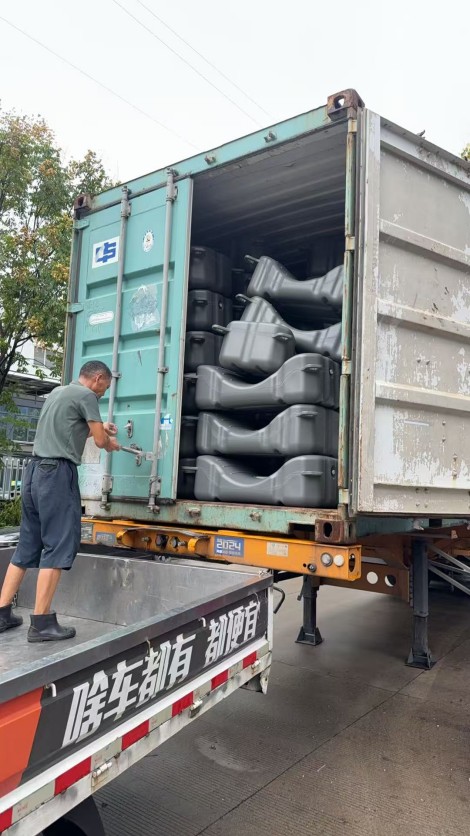
Operating as an ISO 9001:2015 certified factory, we maintain 12 dedicated high-capacity rotomolding production lines capable of manufacturing over 3,000 heavy-duty dredging pipeline floaters per month. We support large-scale marine contractors worldwide with guaranteed 25-day standard container lead times, 100% material batch traceability, and full technical engineering matching for pipelines from OD 110mm to OD 1200mm.
Over our 15-year manufacturing history, we have built a proprietary library of more than 80 sets of high-grade steel rotomolding molds specifically for pipe floater production. This massive physical tooling inventory means zero mold-making delay for clients, allowing us to initiate mass production within 48 hours of order confirmation.
Our in-house technical department consists of 8 veteran maritime engineers who utilize advanced CAD and SolidWorks simulation. We deliver complete, project-specific fluid-dynamic blueprints and custom dimension drawings within 24 hours, ensuring 100% mechanical compatibility with your existing hdpe pipe floats configuration before a single unit is molded.
We bypass third-party manufacturing variables completely by centralizing raw material compounding, molding, and testing under one roof. Every batch undergoes 100% ultrasound wall-thickness verification and polyurethane core density testing in our certified lab. We provide complete, contract-compliant traceability records with every shipment.
We operate a 20,000㎡ industrial warehousing yard that handles high-volume contract staging easily. Strategically aligned with international port logistics, we offer expert container optimization that reduces shipping volume costs by up to 15%, delivering reliable, on-time port delivery that protects your dredge floats deployment schedule from costly project delays.
We fabricate our dredge pipe floats to maintain pipeline geometry under high-velocity slurry discharge. We engineer the LLDPE outer shell to achieve a tensile strength of ≥16 MPa and D55 Shore Hardness to resist abrasive friction. We pressurize the internal cavity with a 40-45 kg/m³ polyurethane matrix, ensuring a closed-cell ratio of ≥95% and water absorption <1.5%. This configuration forces the shell to retain its structural shape against abrasive contact and external hydrostatic pressure, effectively preventing the shell thinning and structural failure commonly observed in standard buoyancy units.
The internal cavity of each floating unit is fully packed with a rigid, high-density hydrophobic core. Utilizing a continuous automated injection process, we apply a 40-45 kg/m³ solid polyurethane (PU) fill that features a ≥95% closed-cell structure. This restricts water absorption to <1.5%, ensuring permanent structural buoyancy even if the outer skin undergoes catastrophic lacerations.
Engineered for rapid on-site assembly and dynamic load sharing, the floater is split into two symmetrical halves featuring a precision male-female interlocking profile. This wrap-around mechanical lock prevents independent axial shifting or twisting under violent offshore crosswinds, ensuring uniform hydrodynamic distribution across your hdpe pipe floats network.
To counteract localized dynamic stress and torque loads, our floaters are engineered with deep-recessed, extra-thick bolt pockets that eliminate external protrusions. Coupled with heavy-duty, corrosion-resistant Hot-Dip Galvanized (HDG) or Marine-Grade Stainless Steel 316 hardware kits, this fastening framework guarantees a secure, slip-free lock on the pipeline during high-velocity slurry discharge.
Manufactured via advanced heavy-industrial rotomolding, our floaters feature a seamlessly molded, 100% virgin ExxonMobil™ LLDPE hull with zero welded seams. Integrated with UV-15 stabilization additives, this monolithic polymer skin delivers a tensile strength at yield of ≥16 MPa and D55 Shore Hardness, allowing the shell to flex and absorb violent physical impacts or reef friction without stress cracking.
We manage the fabrication of dredge pipe floats through a strict ISO 9001:2015 quality protocol. We regulate the multi-axis rotomolding cycle via micro-processor temperature monitoring to secure a wall thickness tolerance within ±1mm. We fix the chemical injection parameters to a specific exothermic profile to hit target density, and we employ ultrasonic metrology to certify the uniformity of the internal closed-cell structure. We validate every production batch against these dimensional and chemical specifications before we clear them for site deployment.
Multi-axis rotational heating infrastructure utilizing microprocessor-controlled temperature ramping and real-time internal cavity thermal monitoring.
We regulate the precise crystallization of raw polymer during the molding cycle. This technical mastery ensures that the shell of our dredge pipe floats achieves zero-stress consolidation. By maintaining uniform wall thickness, we eliminate structural fatigue at stress points, ensuring the product retains dimensional geometry under heavy clamping loads on pipeline networks.
Advanced in-house polymeric blending and chemical compounding, integrating high-molecular-weight linear resins with a proprietary cocktail of hindered amine light stabilizers (HALS).
We re-engineer the molecular matrix to establish an ultra-dense chemical cross-linking lattice. This modification dramatically elevates environmental stress cracking resistance (ESCR) and long-term UV stability, ensuring our pipe floaters remain chemically inert and immune to material degradation during prolonged exposure to intense offshore solar radiation.
Automated, multi-point high-pressure chemical injection coupled with continuous internal volumetric expansion monitoring and exotherm control.
We achieve a highly uniform, high-density 40-45 kg/m³ rigid polyurethane matrix within the floater cavity. Our strict process control ensures a certified ≥95% closed-cell structure, which guarantees permanent hydrophobic integrity and unsinkable buoyancy, even if the external hull sustains significant mechanical impact in extreme hydro-transport environments.
Advanced finite element analysis (FEA) tool design combined with a multi-stage non-destructive testing (NDT) matrix featuring high-frequency ultrasonic scanning.
We maximize the current-drag profiles and hydrodynamic stability of our floaters under extreme hydraulic wave impacts. By subjecting every production batch to our NDT scanning protocols, we verify the structural integrity and void-free consistency of our units, ensuring verifiable performance perfection for global offshore slurry transport projects.
We configure the physical specifications of our dredge pipe floats to match the specific hydrodynamic and mechanical constraints of active dredging sites. For environments involving high-velocity slurry transport (>4 m/s), we calibrate the buoyancy-to-weight ratio to maintain a freeboard height of ≥30%, ensuring equilibrium even under heavy-load conditions. We deploy these units based on site-specific hydraulic load data—accounting for current speeds up to 2.5 m/s and abrasive media concentrations up to 30% solids content—to systematically prevent structural overstress and ensure pipeline alignment across diverse hydraulic profiles.
Operating Parameters: We address environments characterized by wave heights >3m and water depths exceeding 20m.
Engineering Response: We increase the shell wall thickness to 12-15mm to absorb the kinetic energy of wave-induced loading. This configuration prevents structural deformation and maintains shell integrity against the high hydrostatic pressure encountered in deep-water excavation zones.
Operating Parameters: We focus on narrow waterways with flow velocities ranging from 1.5-2.5 m/s.
Engineering Response: We optimize the floater’s exterior profile to achieve a lateral drag coefficient of <0.15. This reduction in hydrodynamic drag minimizes the shear stress exerted on the pipeline, preventing misalignment or joint fatigue during continuous transit.
Operating Parameters: We design for environments where mechanical impact potential exceeds 500 kJ due to vessel traffic and turbulence.
Engineering Response: We incorporate impact-modified polymers to elevate the shell’s impact toughness to ≥45 kJ/m². This technical adjustment allows our floaters to withstand recurring mechanical collisions and turbulent water vortices without cracking or loss of buoyancy.
Operating Parameters: We manage long-distance pipeline configurations often exceeding 3,000m in total length.
Engineering Response: We utilize high-precision molding tolerances of ±0.5mm at the interlocking points to maintain uniform system rigidity. This precision ensures that the cumulative load of the massive slurry pipeline is distributed evenly across the entire buoyancy string, preventing localized structural failure.
Our technical team routinely compiles direct answers to the most frequent technical definitions, configuration sizing, and operational questions raised by project contractors and technical operations teams. This unified resource hub aggregates basic product explanations, material testing walkthroughs, routine maintenance protocols, and step-by-step assembly guides covering our entire manufacturing portfolio, engineering components, and specialized hardware. These articles address immediate queries regarding raw material performance, structural definitions, hardware compatibility, field installation steps, and long-term asset maintenance, providing clear procurement clarity to help you select, deploy, and manage the correct configuration for your project requirements.

A water boom is an engineered floating barrier deployed across aquatic environments to intercept, contain, or divert surface pollutants like solid waste, organic debris, and hydrocarbons. As a primary countermeasure for surface contamination, water booms concentrate pollutants for efficient remediation. This technical guide outlines the hydrodynamic capabilities, material specifications, and

You will find the average cost of a floating dock depends on several factors. Key Takeaways Floating dock cost overview Price range and averages Floating dock prices can be very different. The cost changes based on type, size, and features. Here are some usual prices: Note: Aluminum docks cost $20

You see a floating dredge working on a river or lake. This machine moves on the water and picks up sediment from the bottom. You notice it helps keep waterways clear. It also supports important projects. Many industries use this technology to stay safe and work well. Key Takeaways Floating

You can usually fix dock floats, based on the damage. First, look at the float to see its shape. Many fixes use marine-grade sealants, plastic welding, or epoxy. Botai Floating Dock Systems use high-density polyethylene. This material stands up to sunlight and does not wear out fast. Be careful and
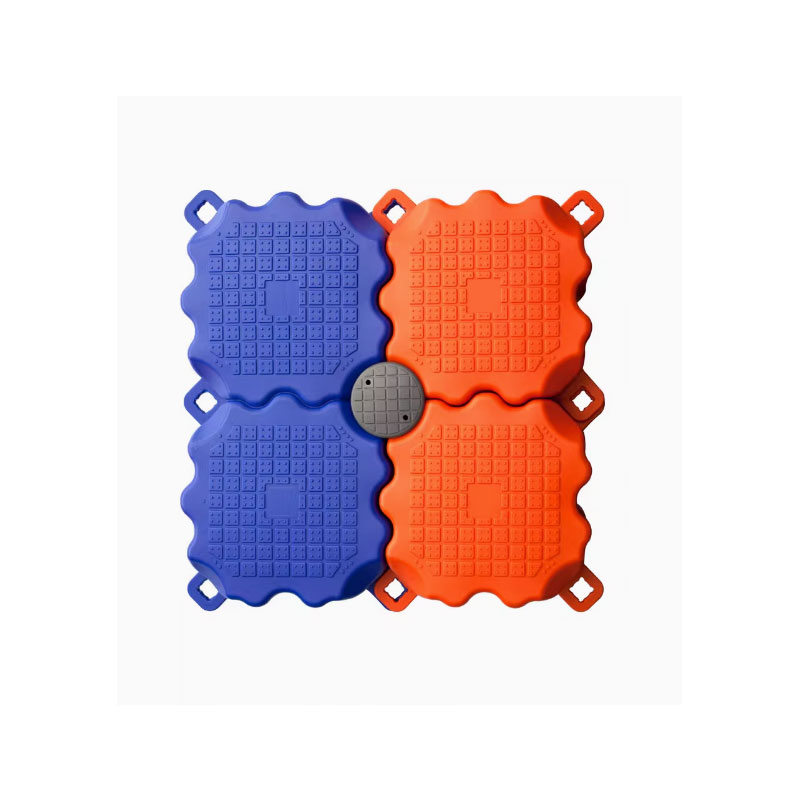
We utilize micro-processor controlled multi-axis heating to ensure uniform wall thickness and zero-stress crystallization. By eliminating localized stress points, our dredge pipe floats maintain rigid geometry even when subjected to the high-compression forces of industrial clamping systems used in dredging floating pipeline assemblies.
We certify our rigid polyurethane foam matrix to a density of 40-45 kg/m³ with a verified ≥95% closed-cell structure. This high-density consolidation prevents internal cellular voids and moisture migration, guaranteeing permanent buoyancy for every pipe floater, even if the exterior hull sustains superficial abrasion during offshore operations.
We do not rely on external coatings; we integrate UV-15 stabilizers directly into the polymer lattice during the high-shear compounding stage. This stabilizes the molecular structure against UV-induced chain scission, maintaining D55 Shore Hardness and impact toughness throughout the service life of our dredge pipe floats.
We employ Finite Element Analysis (FEA) to map stress distribution and verify shell resilience against impact forces exceeding 500 kJ. Every unit undergoes ultrasonic wall-thickness mapping to detect potential thin-wall variances, ensuring our HDPE pipe floats maintain absolute structural continuity during high-velocity slurry transport.
Yes, we engage directly with project engineers to audit hydraulic load data. We review project-specific variables—such as flow velocity, slurry solids content, and wave impact energy—to verify that the pipeline floats and dredge pipe floats we supply will maintain alignment and structural continuity at your specific site.