15+ Years Marine Navigation Buoy & Marine Marker Buoy Manufacturer

IALA-Compliant Polyethylene Navigational Buoys and Channel Marker Buoys for Global Port Authorities.

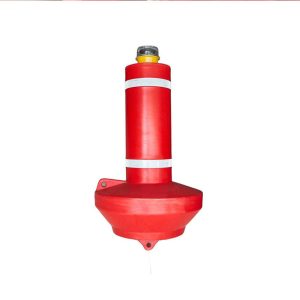
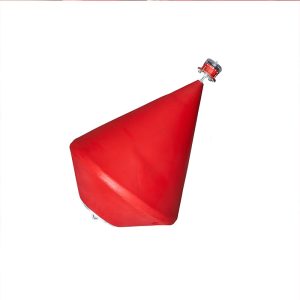
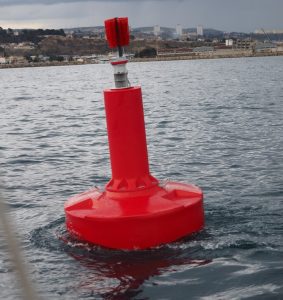
We manufacture heavy-duty navigation buoys and standard channel marker buoys direct from our 15-year industrial rotomolding factory. Built to provide high-visibility guidance for international ports, commercial harbors, and inland rivers, our rugged marine products are engineered from seamless, high-impact polyethylene to withstand extreme offshore wave action and harsh coastal conditions.

Premium Technical Features of Our Navigation Buoys and Markers

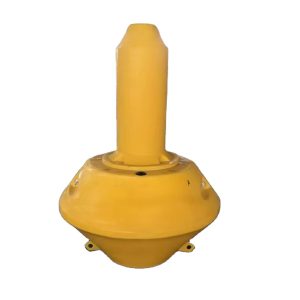
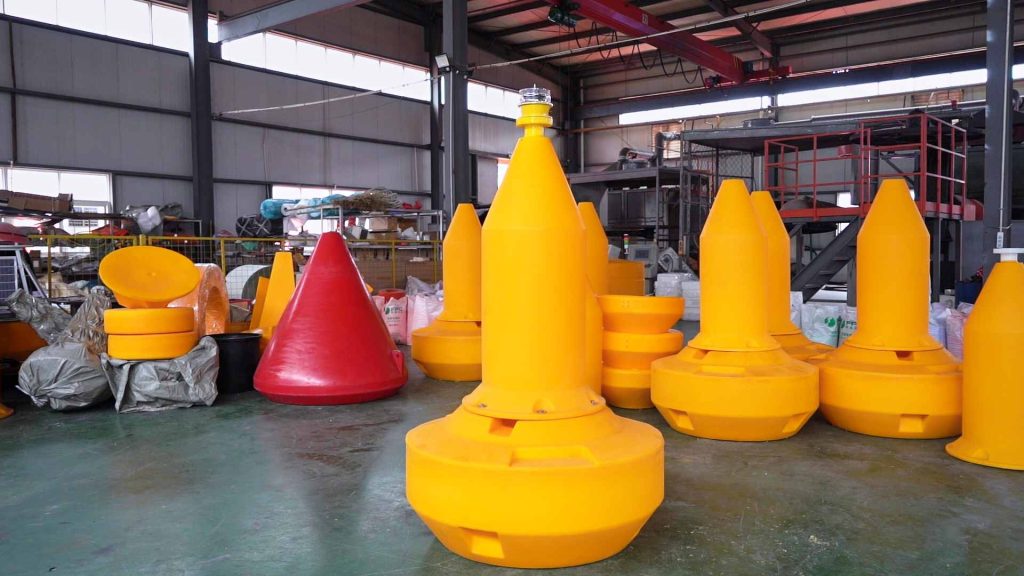
Compared to traditional steel buoys or thin-walled alternatives that suffer from corrosion, leakage, and high maintenance costs, we engineer our heavy-duty marine navigation buoys and standard channel marker buoys to deliver far superior impact survivability and lifetime value. Available in hull diameters from 0.6m to 3.0m, our factory integrates specialized navigation day markers into every design, creating an unsinkable structural architecture that guarantees reliable water vessel routing where other products fail under harsh offshore conditions.

9.5mm to 16mm Wall Thickness Seamless Polyethylene Hull

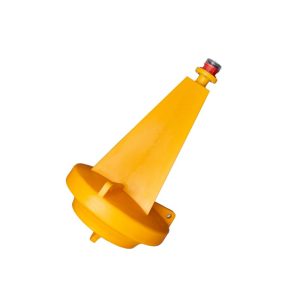
Unlike steel buoys that rust and dent upon impact, or low-grade plastic alternatives that crack, our industrial-grade boating markers and buoys utilize an ultra-thick, seamless rotomolded skin. It acts as a massive shock absorber—deforming under severe vessel collision to deflect the energy, and then immediately returning to its original shape without cracking or leaking.

Conventional buoys require frequent dry-docking for repainting due to salt spray corrosion and sun fading. We solve this by compounding premium, UV-stabilized maritime pigments directly inside the raw polyethylene matrix during molding. Our marine navigation markers ensure permanent, vibrant color recognition for all marine traffic, completely eliminating scraping and maintenance overheads.

While hollow buoys run the constant risk of filling with water and sinking from a minor puncture, our navigation aids feature a solid internal core of high-density, closed-cell polyurethane foam. Even if the outer shell is severely compromised by an extreme maritime accident, the 95% closed-cell structure completely repels water absorption, keeping our marine channel markers perfectly buoyant and operational.

Global Application Sectors for Our Marine Navigation Buoys

We design and engineer heavy-duty waterway buoys tailored strictly to the unique environmental demands of global marine traffic channels. Backed by field-proven deployment from major commercial shipping canals to inland river estuaries, our factory delivers high-visibility, maintenance-free solutions that optimize vessel routing across three primary navigational sectors where sustainable offshore hardware is required.

Marine Navigation

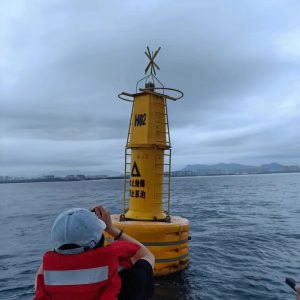
In this critical application, we focus on the complete modernization of active commercial shipping hubs and maritime port entrances. Our industrial channel marker buoys are specifically deployed to define strict port approach parameters, harbor limits, and turning basins, guaranteeing long-term structural reliability and unmissable daytime positioning under heavy vessel density where our clients require zero-maintenance infrastructure.

Inland Waterways

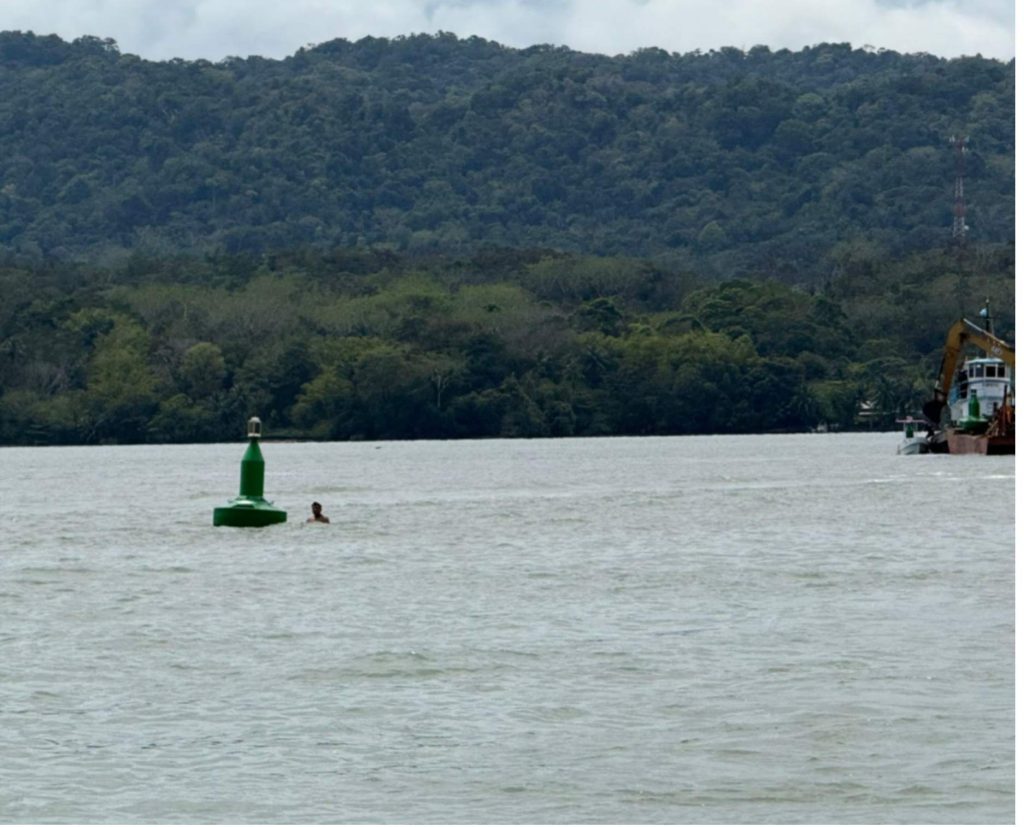
To tackle volatile river currents, fluctuating water levels, and floating debris impacts, we supply specialized hardware designed for extreme durability. Our custom-configured river buoys are strategically positioned along inland river networks and delta estuaries to delineate safe travel channels, allowing us to provide clear visual guidance that helps commercial watercraft safely avoid shoals and dangerous shallow waters.

Ports & Harbors

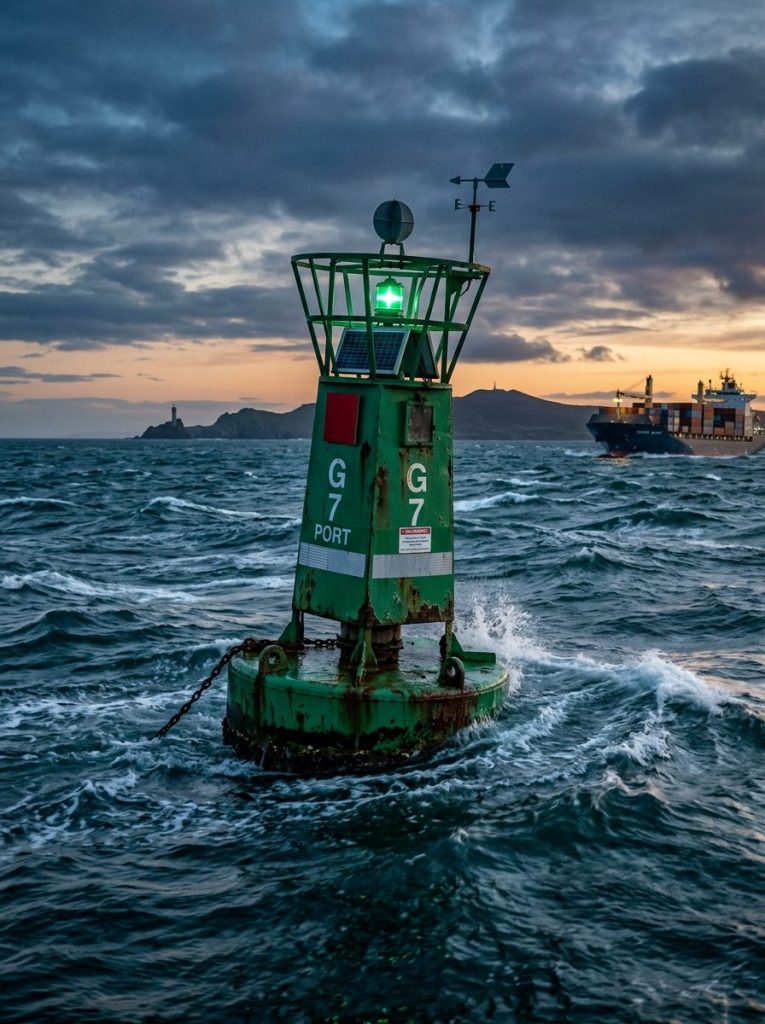
Engineered by our technical team for open-sea deployment, this scenario addresses the challenges of turbulent offshore wave forces and deep-water mooring requirements. By deploying our rugged marine navigation markers and heavy-duty nautical buoy arrays, we empower maritime operators to clearly define active coastal shipping lanes and establish dependable physical boundaries, successfully preventing large cargo vessels from entering restricted naval zones or recreational water spaces.

Proven Case Studies of Our Marine Markers and Buoys

We validate our engineering with over thousands of successful global maritime deployments. Our factory specializes in the end-to-end manufacturing of offshore and waterway buoy systems, ranging from standard 1200mm to heavy-duty 1500mm HDPE platforms. By integrating UV-stabilized, zero-corrosion hulls with IALA-compliant solar navigation lights, customized local signaling colors, and specialized radar reflectors, we have successfully replaced legacy steel structures across commercial ports and critical shipping corridors. Our field-proven setups deliver up to zero-maintenance overheads while securing high-traffic port operations day and night.

Central American Channel Marking Projects

Client Core Requirements

The client needed multiple small-to-medium floating markers to establish clear left and right channel boundaries for incoming vessels.

Critical Challenges

The client lacked professional technical expertise regarding proper on-site alignment and was highly uncertain about choosing the exact buoy dimension that could withstand local river estuary water velocities.

Our Customized Solutions

Engineering Consultation: We provided deep technical evaluations, recommending 3 distinct configurations (FB1200P, FB1200T, FB1500P) to perfectly fit their varying water conditions.

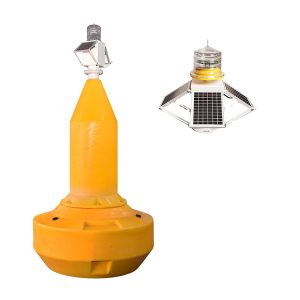
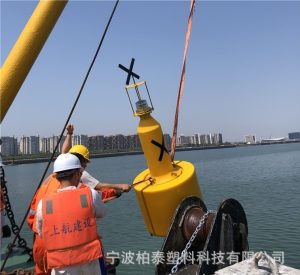
Custom Deployment: Our team customized 1500mm HDPE channel marker buoys integrated with solar-powered IALA standard navigation lights, successfully guiding passing vessels past hazardous shallow waters.

Southeast Asian Port Buoy Replacement Deliveries

Client Core Requirements

A high-traffic commercial port required a comprehensive upgrade to fully replace their aging, rusting traditional steel navigation infrastructure with a modern alternative.

Critical Challenges

The client demanded an exact, non-standard color customization for the buoy bodies to strictly match their localized channel marking regulations—a requirement standard suppliers couldn’t meet.

Our Customized Solutions

Material Upgrade: We deployed heavy-duty, UV-stabilized 1200mm waterway buoys to completely eliminate the client’s severe marine corrosion and rusting issues.

Color Optimization: Our factory fully re-formulated and adjusted the HDPE shell pigments to precisely match the client’s localized specifications, ensuring full regulatory compliance with zero-maintenance overheads.

Caribbean Shipping Channel Protection Projects

Client Core Requirements

The multi-functional port needed a rigid boundary segregation network to separate active commercial shipping lanes from coastal recreational water zones.

Critical Challenges

Heavy cargo ships faced constant risks of crossing into tourist areas, and the client had severe logistical anxieties regarding potential container detention charges and customs clearance delays during international transport.

Our Customized Solutions

Hardware Customization: Our engineering team designed a rugged nautical buoy network integrated with solar navigation lights, top marks, and specialized radar reflectors to facilitate active commercial radar tracking.

Logistics Protection: We provided real-time ocean freight monitoring and proactive supply-chain guidance, enabling the client to execute immediate port pick-up and successfully avoid expensive detention costs.

Our Engineering Services for Marine Navigation Buoys

We do not just deliver hardware; we provide the operational assurance that keeps global shipping channels open. For our 1200mm to 1500mm navigation buoy series, we maintain a rigorous quality control framework that exceeds IALA E-108 standards for structural integrity and visibility. To bridge the gap between manufacturing and field utility, we provide precision-engineered mounting interfaces and standardized assembly blueprints for all buoy systems, ensuring seamless integration with third-party navigational hardware. By combining this manufacturing precision with comprehensive lifecycle maintenance protocols, our team acts as an extension of your port’s engineering department, ensuring that every navigational asset remains compliant and fully functional throughout its entire service life.

Why Partner with Baitai for Navigation Buoys

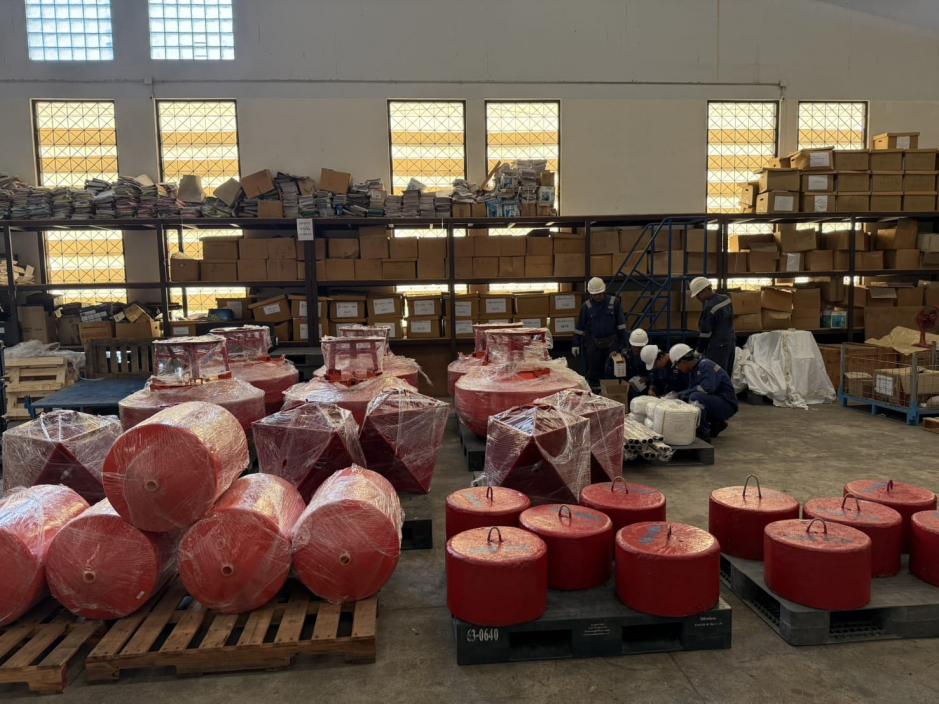
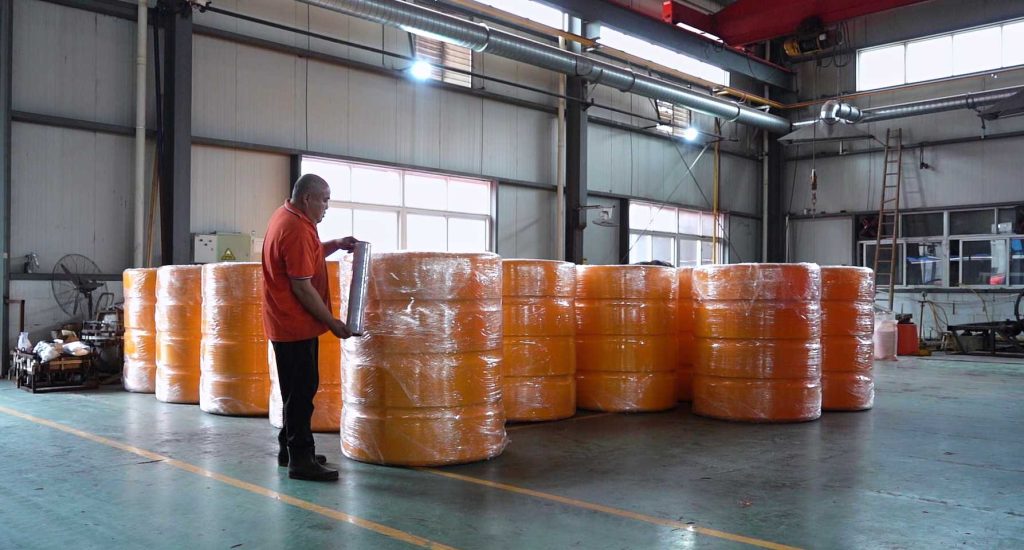
We transform high-density polyethylene (HDPE) into mission-critical maritime infrastructure through precision-controlled, high-volume manufacturing. Operating our own dedicated fabrication facility equipped with multi-axis, large-scale rotational molding technology, we maintain a certified annual capacity exceeding 5,000 engineering-grade units, ensuring stable supply chains for national port authorities and marine contractors alike. We manufacture every navigation buoy body leaving our production floor to exceed IALA E-108 standards for structural integrity and color-fastness, combining our advanced polymer science with mandatory 24-hour hydrostatic pressure testing to eliminate the operational risks associated with traditional maritime deployment.

Advanced Rotational Molding Technology for Seamless Hull Integrity

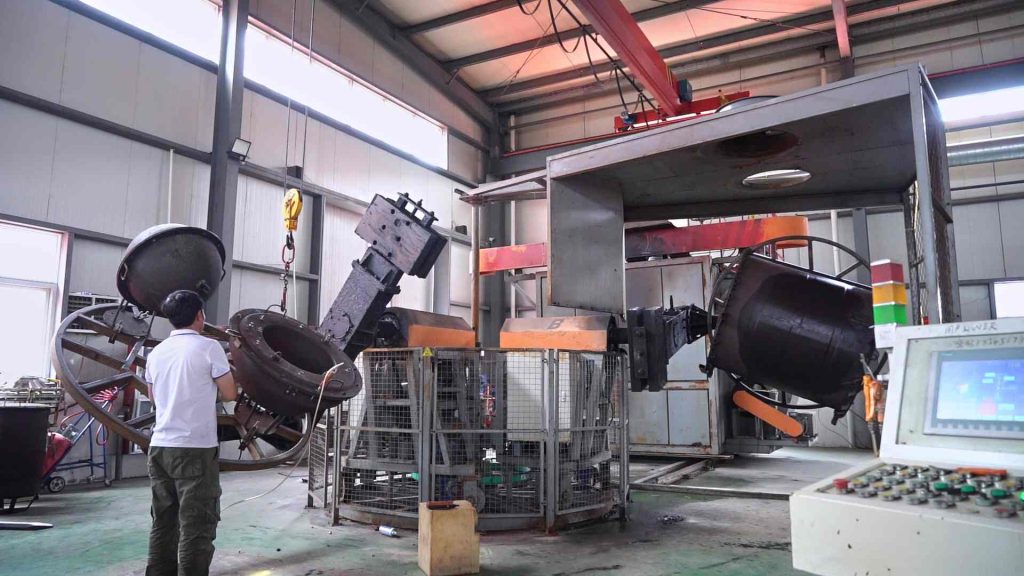
Our manufacturing core is defined by automated rotational molding technology, a specialized process that achieves what traditional welding and steel fabrication cannot: a completely seamless, stress-free HDPE buoy hull. By precisely calibrating the thermal cycle and polymer resin distribution within our heavy-duty molds, we achieve a highly uniform wall thickness across the entire structure, eliminating structural weak points. This seamless engineering ensures that our navigation buoys possess exceptional energy-absorption capabilities and high impact resistance, allowing the hull to deflect severe kinetic impacts from service vessels or shifting ice without puncturing, cracking, or losing buoyancy.

Rigorous Quality Control and Verified IALA Standardization

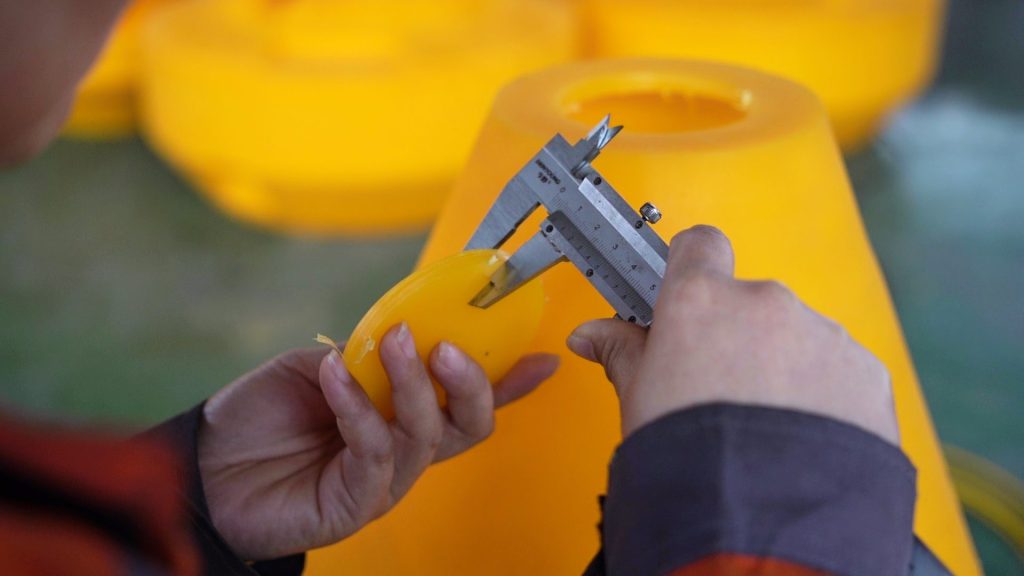
We treat regulatory compliance as a baseline engineered metric rather than a vague target. Every navigation buoy shell we produce is formulated using our premium UV-stabilized virgin polyethylene resin, ensuring that the critical high-visibility coloration remains within the strict chromaticity coordinates defined by IALA recommendations throughout its entire service life. To back this with empirical facts, our in-house quality control department subjects every production batch to ultrasonic wall-thickness scanning and material density analysis, verifying that the physical attributes of our platforms perfectly match international maritime safety specifications before shipping out to global port infrastructures.

Factory-Direct Mold Customization and Scalable Lead Times

Operating as a direct, vertical manufacturer gives us total control over product scaling, price stability, and delivery certainty. Because Baitai retains full in-house capabilities for our own mold development and tool design, we can rapidly engineer and modify custom buoy specifications—such as optimizing mounting interfaces for specific telemetry systems—without relying on third-party casting shops. This factory-direct integration allows us to significantly reduce production bottlenecks, maintaining a massive raw material buffer that guarantees dependable lead times as short as 4 weeks for high-volume procurement orders, ensuring your channel deployment schedules remain perfectly on time.

product knowledge and technical FAQ articles by Botai

Our technical team routinely compiles direct answers to the most frequent technical definitions, configuration sizing, and operational questions raised by project contractors and technical operations teams. This unified resource hub aggregates basic product explanations, material testing walkthroughs, routine maintenance protocols, and step-by-step assembly guides covering our entire manufacturing portfolio, engineering components, and specialized hardware. These articles address immediate queries regarding raw material performance, structural definitions, hardware compatibility, field installation steps, and long-term asset maintenance, providing clear procurement clarity to help you select, deploy, and manage the correct configuration for your project requirements.

news

What holds a floating dock in place?

A floating dock stays securely in place using highly specified systems of anchors, chains, pilings, or cables, selected based on water depth, bottom type, and local conditions to ensure stability. Securing a marine structure is a rigorous hydrodynamic challenge that requires counteracting kinetic energy—specifically wind shear, wave drag, and tidal
Read More »
news

How to maintain a floating dock?

You keep your floating dock in top shape by cleaning it often, checking for damage, and protecting it from the elements. Using quality products like Botai Floating Dock Systems helps your dock last longer. Regular care can extend dock life by many years, as shown below: Dock Type Lifespan (Years)

Read More »
news

What are the different types of mooring buoys?

You can see mooring buoys in lots of places. They are usually white with a blue band. There is a ring or hook to tie boats. These buoys hold boats in place without an anchor. Picking the right type keeps people safe. Look at how important things affect how well

Read More »
news

What is a dredge pipe in the ocean?

A dredge pipe helps move slurry in the ocean. Slurry is water, sand, silt, and gravel. Pipelines carry this mixture through the ocean. Dredge pipe floats keep the pipes above water. This stops the pipes from sinking. It also keeps the flow steady. This makes port dredging, sand mining, or

Read More »

FAQ About Our Navigation Buoy Engineering

How do your navigation buoys ensure long-term IALA compliance in open seas?

We engineer every marine navigation buoy body to strictly comply with and exceed international maritime visual signaling recommendations. Our in-house compounding process incorporates premium, masterbatch-pigmented polymers containing advanced hindered amine light stabilizers to ensure that each deployed marine navigation buoy hull maintains its exact chromaticity coordinates under continuous, high-salinity equatorial sun exposure. By performing rigorous accelerated weathering analysis and mandatory ultrasonic wall-thickness scanning on every production batch, we guarantee that your deployed marine marker buoy assets remain legally compliant and highly visible to vessel traffic throughout their entire service life.

We resolve the critical challenge of offshore list and pitch by engineering custom, hot-dip galvanized structural steel or heavy cast-iron counterweights directly into the lower ballast keel of each channel buoy. Our naval architects utilize advanced computational fluid dynamics to calculate the exact hydrodynamic buoyancy centers relative to operational displacement, ensuring that every marker buoy maintains a stable, vertical orientation even when subjected to intense 4-knot tidal currents or severe wave action. This precise stability engineering guarantees that the focal plane of your mounted marine lanterns remains within the optimal line-of-sight angle for incoming vessel traffic, eliminating the erratic tilting common in poorly balanced maritime navigation systems.

Yes, we have integrated heavy-duty, marine-grade stainless steel top-plate interfaces directly into the molded upper superstructure of the nautical buoy to accommodate global marine hardware standards. Our engineering design provides pre-molded, standardized bolt patterns that allow your technical teams to securely install solar panels, radar reflectors, AIS transponders, and LED marine lanterns without drilling through the primary flotation cell of the maritime buoy. This factory-direct integration ensures that all structural loads are evenly distributed across the entire platform, eliminating localized stress concentration and preventing water leakage around the electronic payloads of our deployed marine navigation buoys.

We eliminate the risk of catastrophic buoyancy loss through our proprietary dual-wall encapsulation matrix, which ensures that the structural survival of our marine markers and buoys does not rely solely on the outer skin layer. During our precision rotational molding process, we inject high-density, expanded closed-cell hydrophobic medium into the internal cavity of the channel marker buoys under strict thermal controls, bonding the matrix seamlessly to the inner walls without a single atmospheric void. If an extreme collision with a commercial vessel or heavy marine debris causes a severe structural puncture, our water-tight internal core completely rejects fluid absorption, guaranteeing that the damaged navigation buoys and markers retain their full flotation metrics and stay safely on station until maintenance teams arrive.

We eliminate the compounding maintenance expenses of traditional maritime infrastructure by replacing corrosive metals with our engineering-grade, high-impact thermoplastic material formulations. Our specialized waterway buoys require absolutely no sandblasting, structural welding repairs, or marine anti-corrosive recoating throughout their entire 10-plus-year operational lifecycles. Marine growth like barnacles and algae cannot strongly adhere to our slick, non-porous surfaces and can be rapidly cleared with a simple low-pressure water wash during routine service intervals, drastically reducing vessel deployment hours and operational maintenance budgets for port authorities worldwide.

Request a Technical Quote for Your Navigation Buoy Project

Contact Us