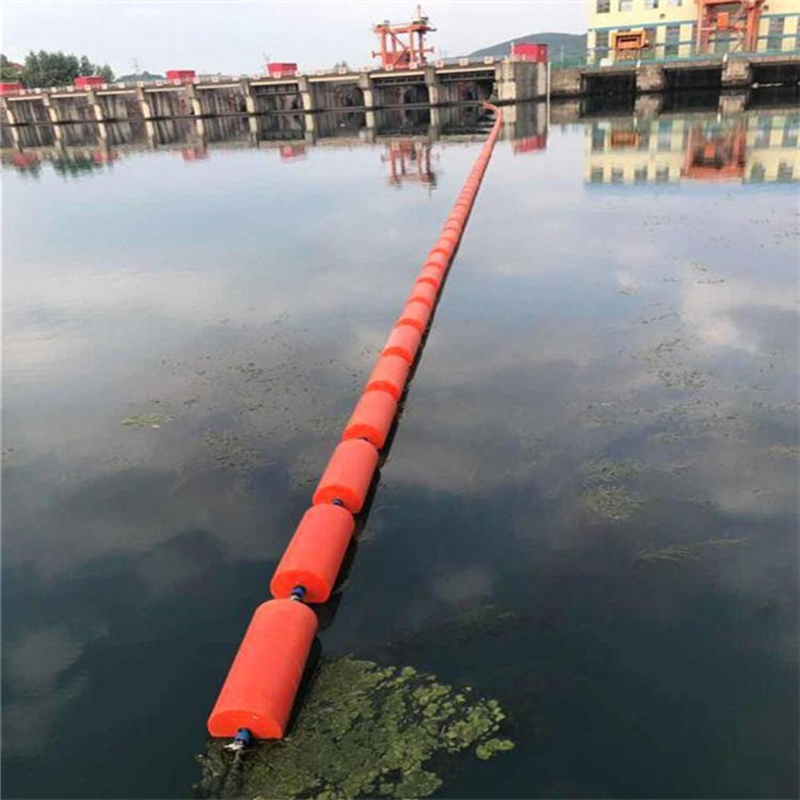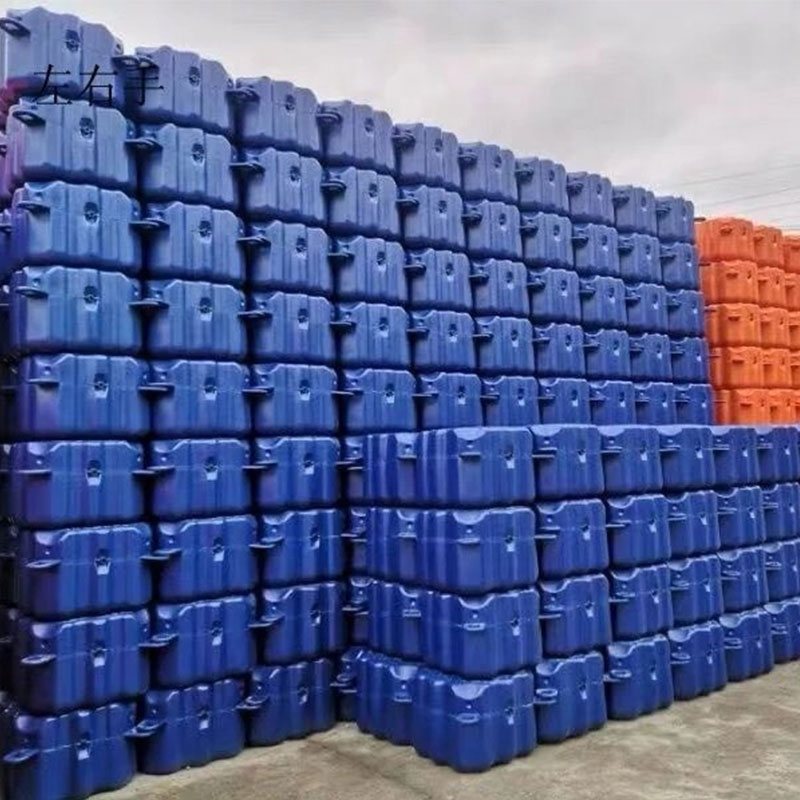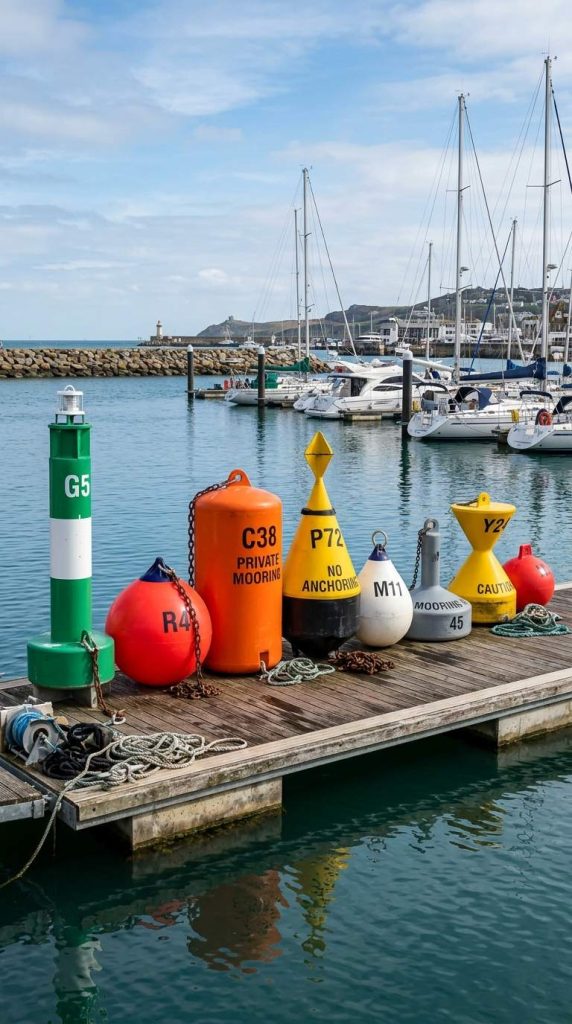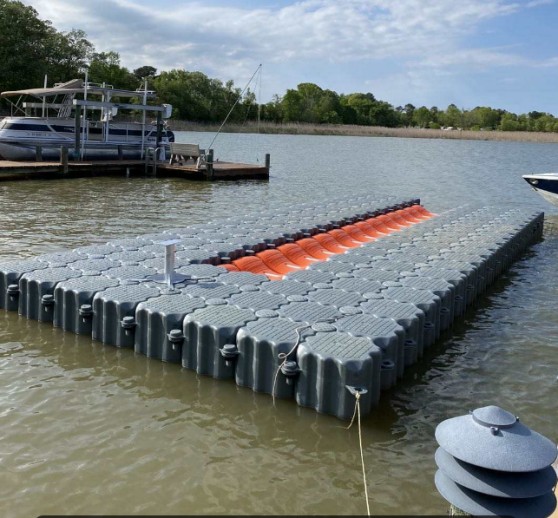

A water boom is an engineered floating barrier deployed across aquatic environments to intercept, contain, or divert surface pollutants like solid waste, organic debris, and hydrocarbons. As a primary countermeasure for surface contamination, water booms concentrate pollutants for efficient remediation. This technical guide outlines the hydrodynamic capabilities, material specifications, and recommended deployment strategies for heavy-industrial rotomolded barriers engineered for demanding marine environments.
Key Takeaways on Water Booms
- High Efficiency: Engineered water booms utilize a precise 4:6 freeboard-to-draft ratio to maintain up to 99.8% containment efficiency, even when subjected to flow rates of 4.5 m/s under ASTM F1093 testing environments.
- Industrial Durability: Manufactured from High-Density Polyethylene (HDPE) rather than standard PVC, these heavy-industrial rotomolded water booms resist chemical degradation and structural failure.
- Absolute Buoyancy: The internal cavity is fully injected with a 100% closed-cell polyurethane structure, ensuring the unit will not sink even if catastrophic impact occurs.
- Strategic Deployment: Proper deployment angles—ranging from perpendicular to cascaded overlapping—must be adapted to surface current velocities to prevent entrainment failure.
- Proven Integration: These barriers integrate seamlessly with municipal and heavy-industrial networks, operating reliably alongside dredging pipe floaters and water quality monitoring buoys.
Hydrodynamic Principles and Structural Mechanics of Water Booms
To maintain structural integrity and prevent containment failure, floating barrier systems must counteract dynamic fluid forces. The drag force exerted on the submerged skirt is dictated by fluid density, current velocity, and the submerged cross-sectional area.
- Hydrodynamic Design: Advanced intercepting floats utilize a calculated freeboard-to-draft ratio designed to optimize the drag coefficient and reduce vortex shedding in turbulent waters.
- Current Tolerance & Containment: In standard perpendicular deployments, rigid water booms effectively contain debris in surface velocities up to 0.75 m/s (approx. 1.5 knots). Beyond this threshold, hydrodynamic forces naturally pull debris under any barrier (entrainment). To counter this, specialized deployment angles are required for faster currents.
- Tensile Strength (ASTM F1093): Rather than using standard fabric, rigid heavy-duty models rely on steel-reinforced tension members connecting the floats. When tested under ASTM F1093 protocols for tensile strength, the structural joints are rated to withstand extreme loads, ensuring the boom remains intact even under heavy debris accumulation.
Material Science and Manufacturing of Water Booms
For permanent marine installations, light-duty PVC containment booms are susceptible to rapid degradation under continuous UV exposure and mechanical stress. Heavy-industrial applications require rigid engineered plastics. Leveraging 15 years of heavy-industrial manufacturing experience, Botai produces state-of-the-art water booms utilizing High-Density Polyethylene (HDPE).
- Seamless Construction: The rotational molding process yields a stress-free, robust shell that is virtually impervious to impact, abrasion, and chemical degradation.
- Closed-Cell Foam Core: The internal cavity is fully injected with a 100% closed-cell polyurethane structure. This ensures absolute reserve buoyancy; in the event of a catastrophic outer shell impact, water cannot migrate through the foam, preventing the unit from sinking.
- Marine Infrastructure Compatibility: These barriers are built to the same rigorous tolerances as our heavy-duty dredging pipe floaters and water quality monitoring buoys. Hardware is constructed from standardized 316-grade stainless steel to prevent galvanic corrosion.
- Quality Assurance: Production rigorously aligns with international standards. (Note: [Insert Link to Download ISO 9001 and ISO 14001 Certification PDFs])
Empirical Deployment Strategies for Water Booms

Proper deployment requires careful observation of water flow dynamics. Deploying a boom strictly perpendicular to a fast current will result in entrainment failure. The Technical Engineering Directorate recommends the following configurations for water booms:
- Currents < 0.75 m/s: A standard perpendicular deployment across calm waterways, slow rivers, or protected coves is effective for total containment.
- Currents 0.75 m/s – 1.5 m/s: Water booms should be deployed at a chevron angle (approximately 30 to 45 degrees to the bank). This gently deflects debris toward a low-velocity collection point rather than fighting the direct force of the current.
- Currents > 1.5 m/s: Utilize a cascaded overlapping deployment. Multiple water booms are placed in parallel series at acute angles to incrementally reduce surface velocity and guide debris to designated recovery zones.
Field Validation and Real-World Performance of Water Booms
To provide transparent, empirical evidence of these systems, the following data is extracted from the Estuary Zone B Remediation Network project.
- Operational Conditions: Deployed to protect sensitive shorelines during high-tide phases with complex surface velocities.
- Buoyancy Under Load: The closed-cell structure maintained steady reserve buoyancy, supporting debris loads exceeding 150 kg/m without submerging.
- Maintenance Efficiency: The smooth HDPE self-cleaning design successfully repelled organic sediment buildup, significantly reducing required maintenance man-hours compared to standard fabric booms. (Note for web placement: [Insert Link to Download Full Estuary Zone B Field Validation Report PDF])
Frequently Asked Questions (FAQ) About Water Booms
Why choose heavy-industrial rotomolded water booms over standard PVC options?
For permanent, heavy-duty applications, standard PVC degrades under continuous UV exposure and mechanical stress. Manufactured using HDPE, our water booms leverage 15 years of heavy-industrial manufacturing experience to deliver a seamless shell that resists impact and chemical degradation, drastically extending the product’s lifespan.
How do water booms maintain containment in fast-moving currents?
No boom can effectively contain debris perpendicular to a high-speed current due to the physics of water entrainment. However, by utilizing a chevron or cascaded overlapping deployment, operators can effectively deflect and manage debris even in currents exceeding 1.5 m/s.
Can these water booms integrate with other marine infrastructure?
Yes. These engineered floating barriers are designed for seamless integration into municipal and industrial marine networks. They easily deploy alongside dredging pipe floaters and water quality monitoring buoys, utilizing marine-grade stainless steel hardware.
What happens if the water booms suffer a catastrophic impact?
The internal cavity of the floats is filled with a 100% closed-cell polyurethane structure. Even if the outer shell is punctured by heavy marine traffic or massive debris, water cannot flood the interior, and the unit will retain its buoyancy.
About Botai Technical Engineering Directorate With a 15-year track record in heavy-industrial manufacturing, the Botai engineering team specializes in the design and production of high-durability marine buoyancy solutions, including intercepting barriers, dredging pipe floaters, and water quality monitoring buoys. Our facilities are ISO 9001 and ISO 14001 certified, ensuring strict compliance with global environmental and quality mandates.