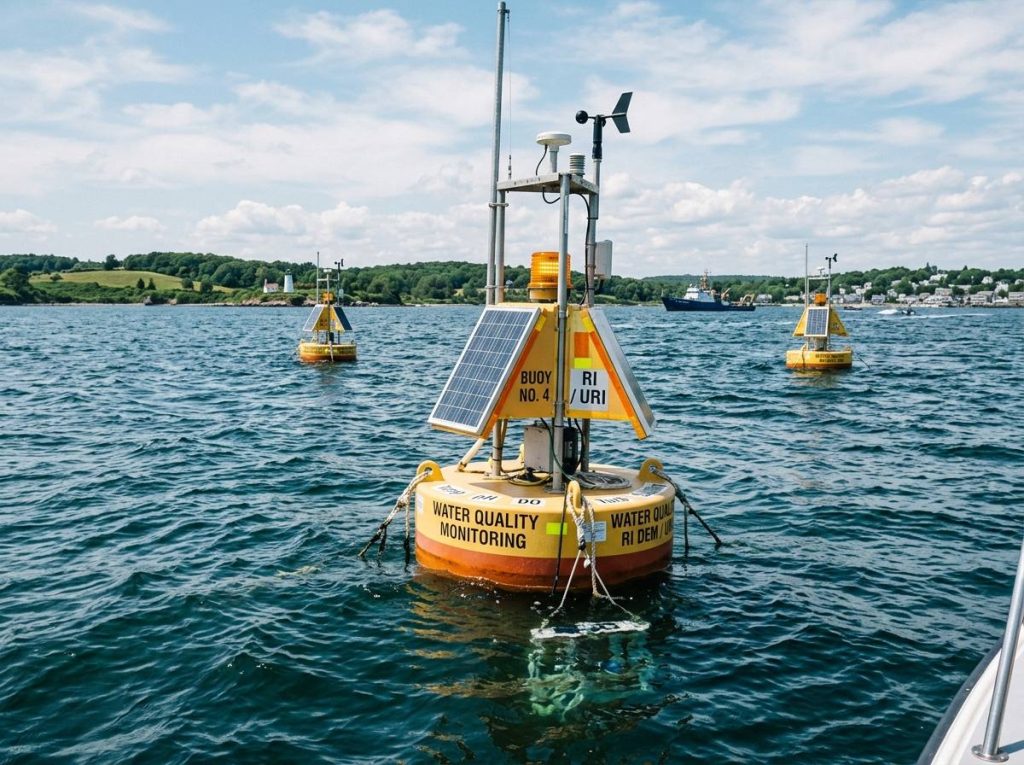
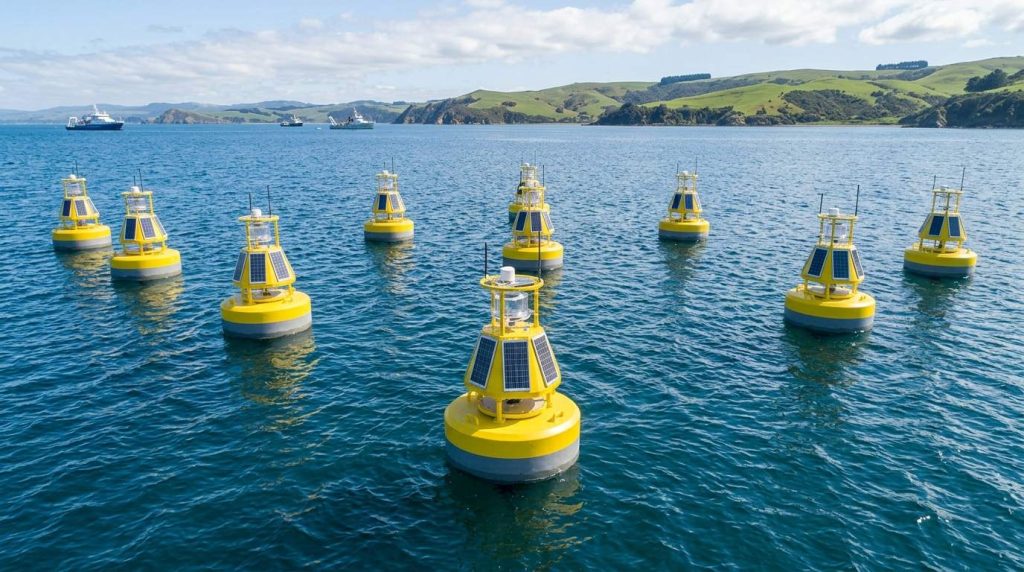
Water quality monitoring buoys are floating platforms equipped with sensors that collect water quality data from lakes, rivers, reservoirs, coastal waters, and other aquatic environments. Unlike manual sampling, which provides information from specific locations and times, buoy-based systems can collect measurements continuously and transmit them remotely.
These systems help researchers, environmental agencies, and water managers monitor changes in water conditions, identify potential pollution events, and track trends over time.
Key Takeaways
- Water quality monitoring buoys measure parameters such as temperature, pH, turbidity, dissolved oxygen, and total dissolved solids.
- Sensors collect data automatically and can transmit measurements to remote monitoring stations.
- Solar panels and backup batteries can support continuous operation in remote locations.
- Regular cleaning and calibration help maintain sensor accuracy and data quality.
- Common applications include environmental research, water resource management, coastal monitoring, and aquaculture.
What Is a Water Quality Monitoring Buoy?
Definition and Core Purpose
A water quality monitoring buoy is a floating monitoring platform that uses sensors to measure physical and chemical characteristics of water. Depending on the system, a buoy may monitor temperature, pH, turbidity, dissolved oxygen, salinity, conductivity, and other parameters.
The main purpose is to provide continuous or scheduled water quality measurements without requiring operators to collect samples manually each time. This makes buoys useful for monitoring changes that may occur between traditional sampling events.
Key Parameters Measured
The parameters measured depend on the sensor configuration and monitoring objectives. Common measurements include:
| Parameter | What It Indicates |
|---|---|
| Temperature | Water temperature and changes over time |
| pH | Acidity or alkalinity |
| Turbidity | Suspended particles and water clarity |
| Dissolved Oxygen (DO) | Oxygen available for aquatic organisms |
| Conductivity | Changes in dissolved ions and water composition |
| Total Dissolved Solids (TDS) | Approximate concentration of dissolved substances |
| Salinity | Salt concentration, especially in coastal and marine environments |
Some systems can also monitor algae-related indicators, nutrients, chlorophyll, or other parameters by adding compatible sensors.
How Do Water Quality Monitoring Buoys Work?
Sensors and Data Transmission
Sensors mounted on the buoy or connected through a submerged instrument assembly collect water quality measurements. Multiple sensors can be combined into a multiparameter sonde, allowing several characteristics to be measured at the same location.
The measurements are sent to a data logger, which records and organizes the sensor readings. Depending on the system and location, data can then be transmitted through cellular networks, Wi-Fi, radio, or other wireless communication methods.
Operators can use the transmitted data to view current conditions, identify unusual changes, and compare measurements over time. Sampling and transmission intervals vary by system, so a 15-minute interval should not be treated as a universal standard.
Power and Monitoring Systems
Most autonomous buoy systems need a reliable power source to operate sensors, data loggers, communication equipment, and other electronics.
Solar panels are commonly used to recharge onboard batteries during daylight hours. Backup batteries can then provide power during nighttime or periods of insufficient sunlight.
The required battery capacity depends on the sensor load, communication method, solar conditions, deployment location, and desired backup time. For this reason, power systems should be designed according to the specific monitoring requirements rather than using a single battery configuration for every buoy.
Where Are Water Quality Monitoring Buoys Used?
Environmental and Research Monitoring
Water quality monitoring buoys are widely used to collect long-term environmental data from lakes, rivers, reservoirs, estuaries, and coastal waters.
Researchers can use continuous measurements to study seasonal changes, dissolved oxygen levels, temperature variations, turbidity, and other water quality trends. Long-term datasets can also help identify changes associated with storms, droughts, pollution events, or algal blooms.
For water resource managers, remote monitoring can provide additional information between manual sampling events and help identify conditions that may require further investigation.
Coastal and Aquaculture Monitoring
In coastal and aquaculture environments, buoys can monitor parameters such as dissolved oxygen, temperature, salinity, and turbidity.
Aquaculture operators can use these measurements to observe changes in the water surrounding fish cages or shellfish areas. Rapid changes in dissolved oxygen or other conditions may indicate that further action or investigation is needed.
Coastal monitoring systems can also support the observation of sediment plumes, runoff, and other changes associated with environmental or human activity.
How Are Water Quality Monitoring Buoys Maintained?
Anti-Fouling and Sensor Care
Biofouling is one of the main challenges for long-term water quality monitoring. Algae, bacteria, and other organisms can accumulate on sensor surfaces and interfere with measurements.
Depending on the system, anti-fouling measures may include mechanical wipers, protective screens, copper components, or other sensor-specific solutions. The appropriate method depends on the sensor type, water conditions, and deployment duration.
Regular inspection and cleaning are still necessary because no anti-fouling method eliminates maintenance completely.
Routine Maintenance and Calibration
Sensors can experience measurement drift over time because of fouling, wear, environmental exposure, or changes in sensor performance. Routine calibration helps ensure that measurements remain within the required accuracy range.
Maintenance may include:
- Cleaning sensor surfaces and protective components
- Checking cables, connectors, and communication equipment
- Inspecting the solar power and battery system
- Calibrating sensors according to manufacturer requirements
- Comparing sensor readings with reference measurements when necessary
- Reviewing collected data for unusual values or unexpected changes
The maintenance interval should be based on the sensor type, water conditions, deployment period, and manufacturer’s recommendations rather than a single fixed schedule.
FAQ
What Do Water Quality Monitoring Buoys Measure?
They can measure temperature, pH, turbidity, dissolved oxygen, conductivity, salinity, and other water quality parameters depending on the installed sensors.
How Do Water Quality Monitoring Buoys Send Data?
Depending on the system and location, buoys can use cellular, Wi-Fi, radio, or other wireless communication technologies to transmit measurements to a remote monitoring platform.
Can Water Quality Monitoring Buoys Work at Night?
Yes. Systems equipped with solar panels typically use rechargeable batteries to provide power when there is insufficient sunlight.
How Often Do Water Quality Monitoring Buoys Need Maintenance?
There is no single maintenance interval for every system. Cleaning and calibration requirements depend on sensor type, water conditions, biofouling, deployment duration, and manufacturer recommendations.
Why Do Water Quality Monitoring Buoys Need Anti-Fouling?
Biofouling can cover sensor surfaces and interfere with measurements. Anti-fouling methods help reduce this problem and support more reliable long-term monitoring.
Conclusion
Water quality monitoring buoys combine floating platforms, water quality sensors, data logging, wireless communication, and autonomous power systems to collect measurements over extended periods. Their ability to monitor water conditions remotely makes them useful for environmental research, water resource management, coastal monitoring, and aquaculture.