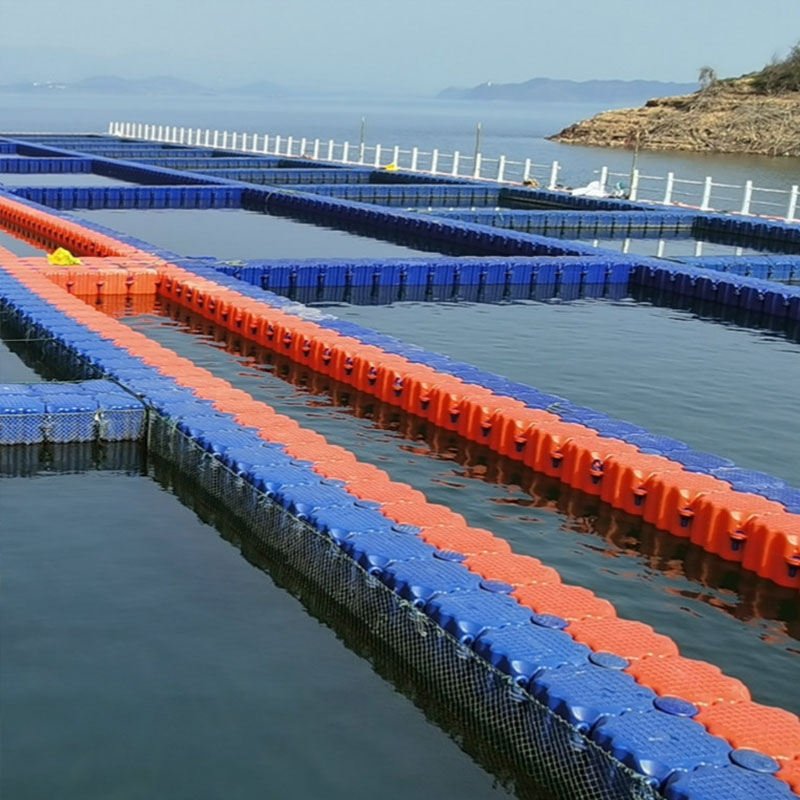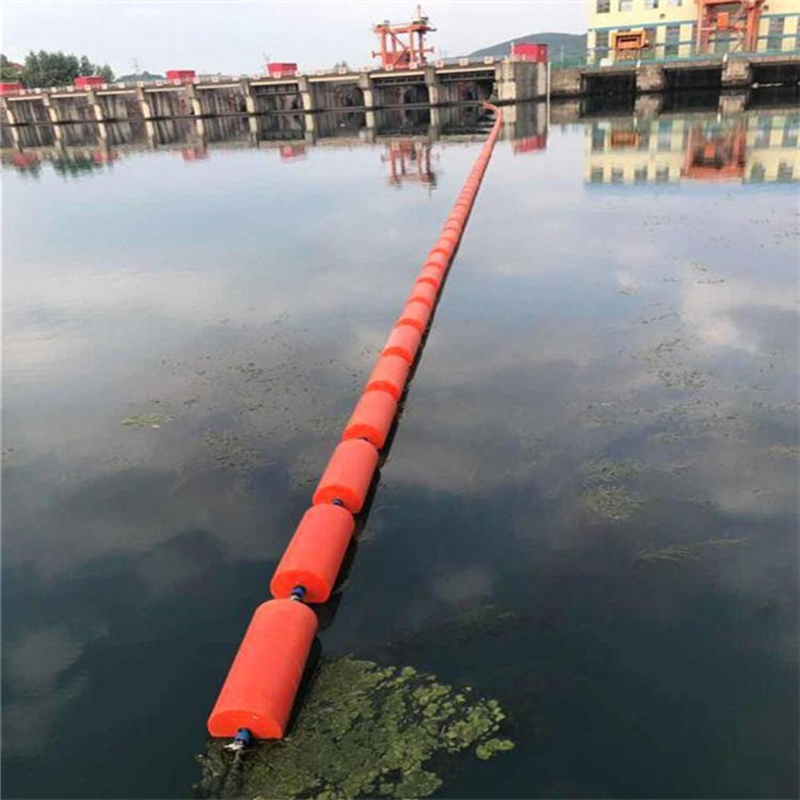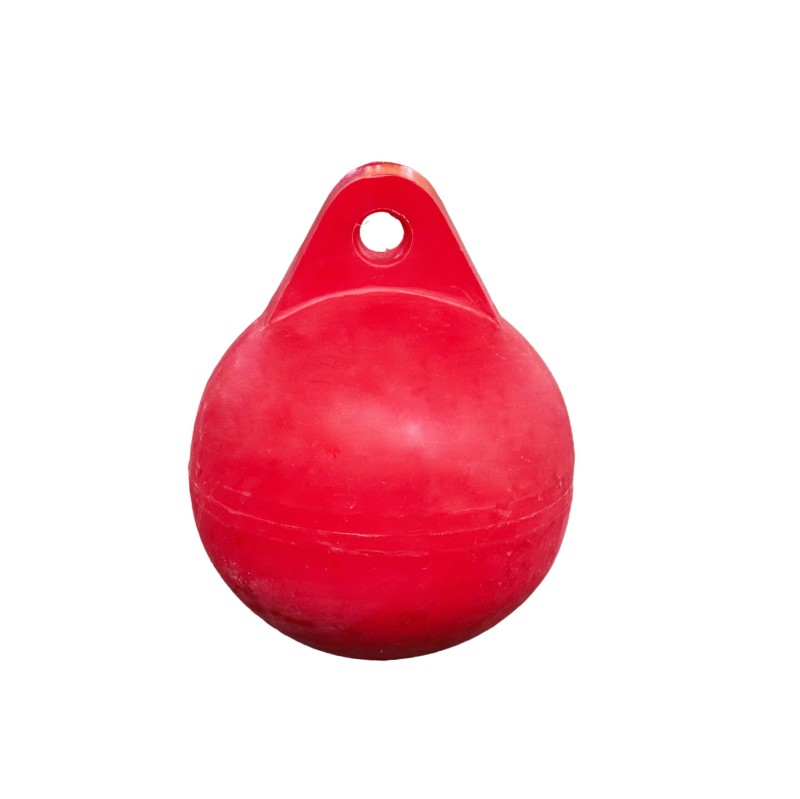

A buoy is a floating device used to mark waterways, support mooring systems, or collect information about water and weather conditions. Some buoys are anchored in place, while others are designed to move with currents or remain connected to marine equipment.
Buoys stay afloat because their overall weight and volume allow them to displace enough water to generate buoyant force. Their shape and weight distribution can also help them remain stable when exposed to waves, wind, and currents.
Key Takeaways
- A buoy is a floating device used for navigation, mooring, safety, or monitoring.
- Buoys float because they displace water and generate enough buoyant force to support their weight.
- A buoy’s average density, shape, and weight distribution affect how it floats.
- Ballast and hull design can help a buoy remain upright in waves and currents.
- Common buoy materials include polymers, foam, metal, and composite materials.
What Is a Buoy?
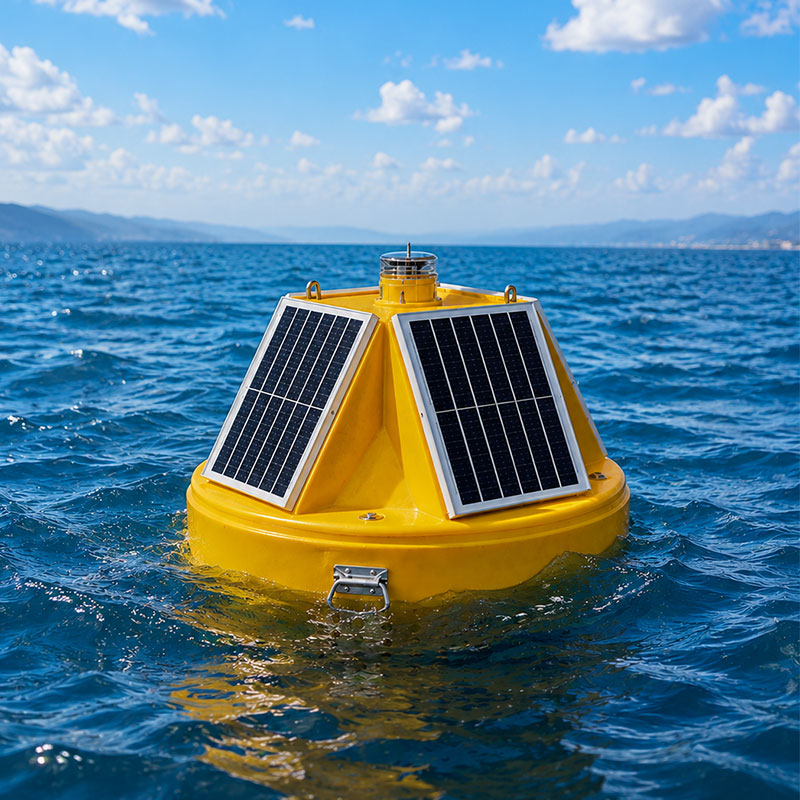
A buoy is a floating device designed for a specific marine or water-based purpose. Depending on its design, it may mark a navigation channel, identify a hazard, hold a boat or mooring line, support equipment, or carry sensors for environmental monitoring.
Some buoys are anchored to the seabed or connected to other structures, while others are designed to move with the water. Their size, shape, and construction depend on the conditions and function they are designed for.
Common Types of Buoys
Buoys can be grouped by their primary function:
| Buoy Type | Primary Use |
|---|---|
| Navigation Buoys | Mark channels, hazards, and other navigational information |
| Mooring Buoys | Provide a connection point for boats and mooring systems |
| Oceanographic Buoys | Collect water, weather, or environmental data |
| Marker Buoys | Identify designated areas, hazards, or boundaries |
| Support Buoys | Keep hoses, cables, or other equipment afloat |
Navigation buoys follow established buoyage systems that use combinations of colors, shapes, and markings to communicate information to boaters. The exact meaning of a color or marking can depend on the navigation system and region.
What Are Buoys Made Of?
Buoys are made from materials selected for buoyancy, strength, corrosion resistance, UV resistance, and the conditions where they will be used.
Common materials include:
- Polyethylene and other polymers: Lightweight, impact-resistant, and suitable for many marine applications. Rotomolded polymer shells are commonly used for floating equipment.
- Foam: Closed-cell foam can provide buoyancy and can be used as a core or internal flotation material.
- Steel and aluminum: Metal provides structural strength for larger or heavily loaded buoy systems. Steel generally requires corrosion protection in marine environments.
- Stainless steel: Used where corrosion resistance and durability are important.
- Composite and fiberglass materials: Offer a combination of strength, low weight, and corrosion resistance.
Some buoys combine several materials. For example, a polymer outer shell can protect a foam-filled interior, while metal components provide structural support or attachment points.
How Does a Buoy Float?
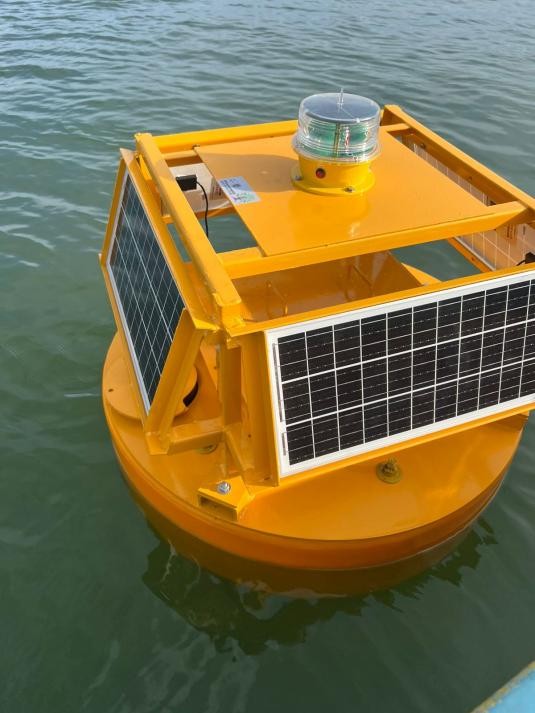
A buoy floats because the water around it produces an upward buoyant force. The amount of water displaced by the buoy determines how much upward force it can generate.
Buoyancy and Water Displacement
When a buoy enters the water, it pushes some water out of the way. This is called displacement. According to Archimedes’ principle, the buoyant force acting on an object equals the weight of the fluid it displaces.
A floating buoy reaches an equilibrium where its buoyant force supports its weight. If the buoy is loaded with additional equipment, it sinks deeper until it displaces enough additional water to balance the increased weight.
The buoyant force can be expressed as:
Fᵦ = ρVg
where:
- Fᵦ is buoyant force
- ρ is the density of the surrounding water
- V is the volume of displaced water
- g is gravitational acceleration
This principle also explains why a hollow metal structure can float. Its overall volume may be large enough to displace sufficient water even though the metal itself is denser than water.
How Density Affects Floating
Density is the amount of mass contained in a given volume. For a floating object, its average density is lower than the density of the surrounding fluid.
This is important because a buoy is not necessarily made entirely from a low-density material. A buoy may contain metal components, batteries, sensors, ballast, and other equipment while still having an average density that allows it to float.
As the average density of a floating buoy changes, the amount of the buoy below the waterline also changes. Adding weight generally causes the buoy to sit deeper in the water, while reducing weight allows it to rise.
Why Don’t Buoys Sink or Tip Over?
Floating is only part of a buoy’s design. A working buoy also needs enough stability to remain in a useful position when waves, wind, and currents act on it.
Ballast and Stability
Ballast is weight intentionally placed in a lower part of a buoy or floating structure. By positioning weight low in the structure, designers can lower its center of gravity and improve its resistance to tipping.
When a wave tilts a stable buoy, the distribution of buoyancy and weight can create a restoring or righting moment that helps the buoy return toward its normal position.
The amount and position of ballast depend on the buoy’s size, shape, operating conditions, and equipment load. A navigation buoy and an oceanographic monitoring buoy may therefore use very different stability designs.
Shape and Center of Gravity
Hull shape and weight distribution also affect stability. A buoy with a suitable shape and a low center of gravity can better resist rolling or excessive tilting.
The relationship between the center of gravity and center of buoyancy is particularly important. When a buoy is tilted, the position of the displaced water changes. A stable design creates a restoring moment that pushes the buoy back toward its equilibrium position.
Designers therefore consider buoyancy, ballast, hull shape, equipment placement, and expected wave conditions together rather than relying on a single feature.
FAQ
Can a Buoy Sink?
Yes. A buoy can sink if it takes on enough water, loses its flotation capacity, becomes overloaded, or suffers structural damage that changes its buoyancy.
What Keeps a Buoy Upright?
Ballast, hull shape, weight distribution, and the relationship between the center of gravity and center of buoyancy all contribute to stability.
Do All Buoys Stay in One Place?
No. Some buoys are anchored or moored to remain in a specific location, while others are designed to drift or move with currents.
Can a Metal Buoy Float?
Yes. A metal buoy can float when its overall structure displaces enough water to support its total weight. Hollow construction and internal volume can provide the required buoyancy.
Why Are Buoys Different Colors?
Navigation buoys use standardized colors, shapes, and markings to communicate information to boaters. The exact meaning depends on the applicable buoyage system and region.
Conclusion
A buoy is more than a floating marker. It is a purpose-built floating device that can support navigation, mooring, safety, or environmental monitoring.
Its ability to float comes from buoyancy and water displacement, while its ability to remain upright depends on shape, ballast, and weight distribution. Understanding these basic principles explains why buoys can remain on the water even while carrying equipment and facing waves, wind, and currents.