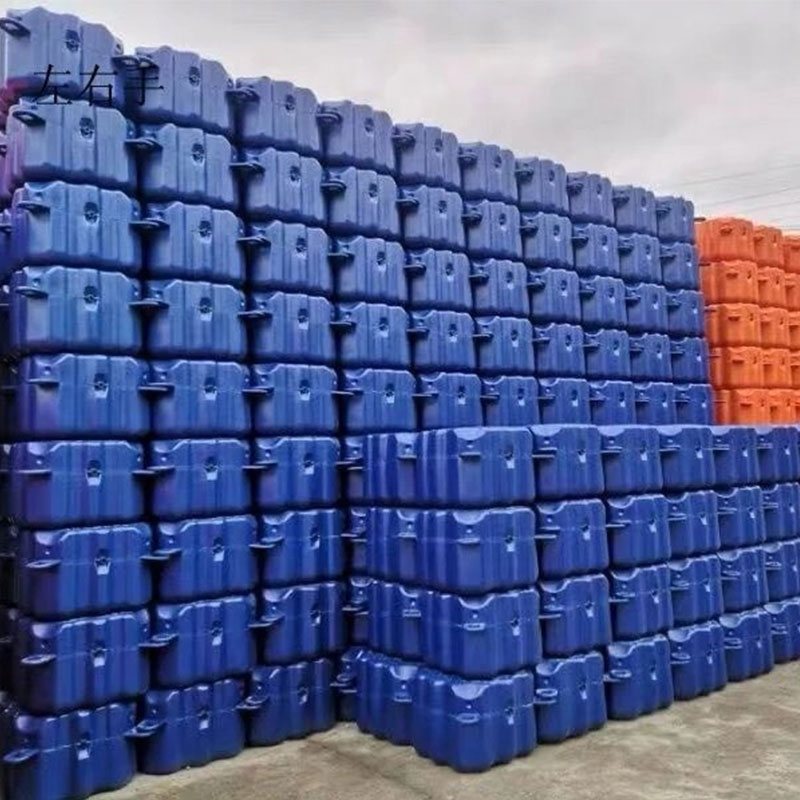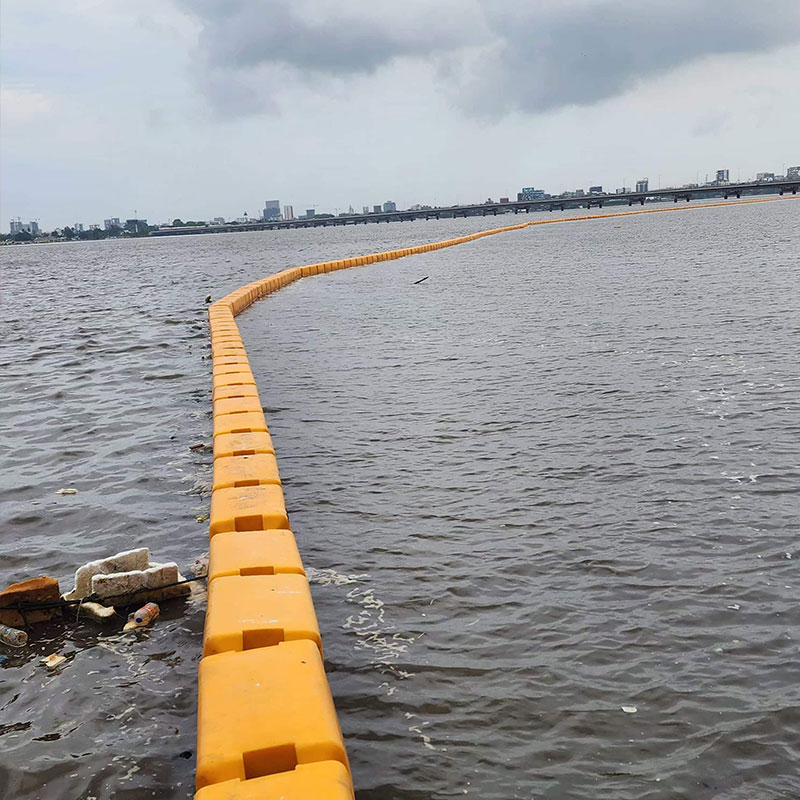
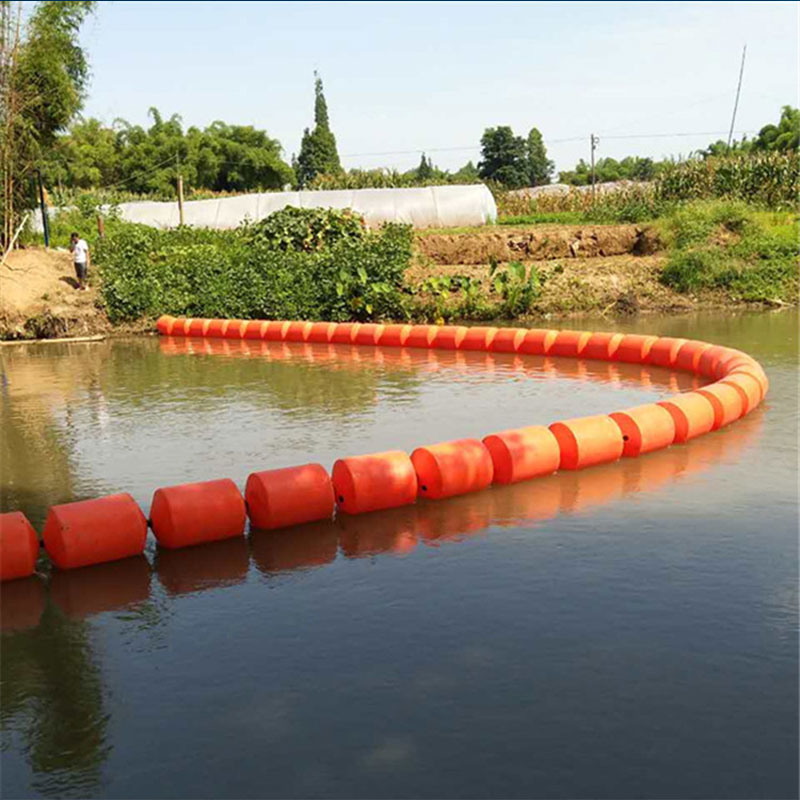
A floating trash boom is a surface-floating barrier engineered to trap floating debris in rivers, lakes, harbors, and oceans. It stretches across a waterway, catching plastic bottles, logs, and litter as water flows underneath — no personnel need to enter the water. Workers then remove accumulated waste from shore or a small work boat.
This simple, robust system protects water intakes, shorelines, infrastructure, and marine life by stopping debris before it drifts downstream or out to sea.
Key Takeaways
- Floating trash booms trap floating surface debris without putting workers in the water.
- Engineered freeboard-to-draft ratios prevent debris from slipping under or washing over the barrier, even in fast currents.
- They shield critical infrastructure including hydropower intakes, cooling water systems, and navigation locks.
- Regular debris removal and maintenance keep the system operating reliably over the long term.
- High-performance ocean plastic cleanup booms are designed to capture up to 99.8% of floating surface waste.
How Does a Floating Trash Boom Work?
Core Engineered Components
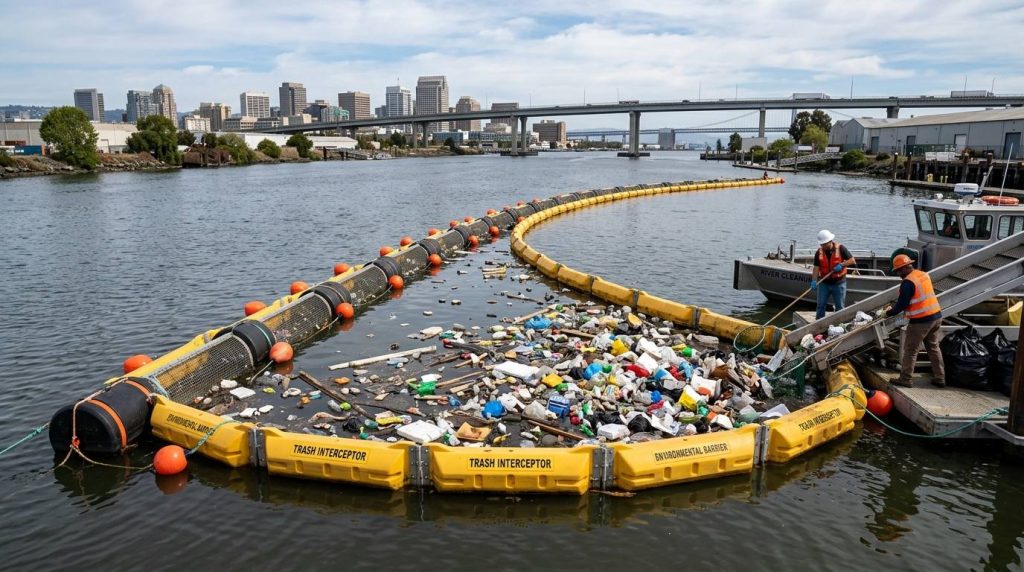
Every floating trash boom relies on five key parts that work as an integrated system:
- Buoyant barrier body: The main floating section uses a closed-cell foam interior to prevent water absorption and maintain consistent buoyancy. It is sized with a precise freeboard-to-draft ratio: the above-water freeboard stops debris from washing over the top, while the below-water draft prevents trash from slipping underneath, even in fast currents.
- Articulation joints: Heavy-duty multi-axis joints connect individual boom segments, allowing 180° vertical twist and ±30° pitching between units. This flexibility lets the boom follow wave motion up to 2.5 meters high, maintaining a zero-gap surface seal. It also reduces dynamic stress on shore anchors by over 60%, extending anchor service life.
- Collection skirt: A heavy-duty belting (typically 150-ounce or four-ply poly-nylon) hangs below the barrier to catch deeper-floating debris. The fabric resists tearing, abrasion, UV damage, and prolonged water immersion.
- Low-drag subsurface profile: A streamlined shape lets cross-currents pass smoothly, reducing sideways force on the boom. The geometry also sheds silt and sediment, preventing burial and maintaining draft clearance over years of deployment.
- Anchoring system: Secures the boom across the waterway, engineered to handle expected current forces and maximum debris loads.
Debris Collection Process
The natural current pushes floating debris toward the stretched barrier. The freeboard-to-draft ratio holds trash on the surface while water passes underneath. Debris accumulates along the boom line, concentrating in predictable zones for easy removal. Workers scoop waste from shore or a small work boat on a regular schedule.
The system’s buoyancy-to-weight ratio supports heavy debris piles without sinking. Even during flood events, the barrier maintains its position and trapping performance.
Where Floating Trash Booms Are Used
Rivers, Streams, and Hydropower Facilities
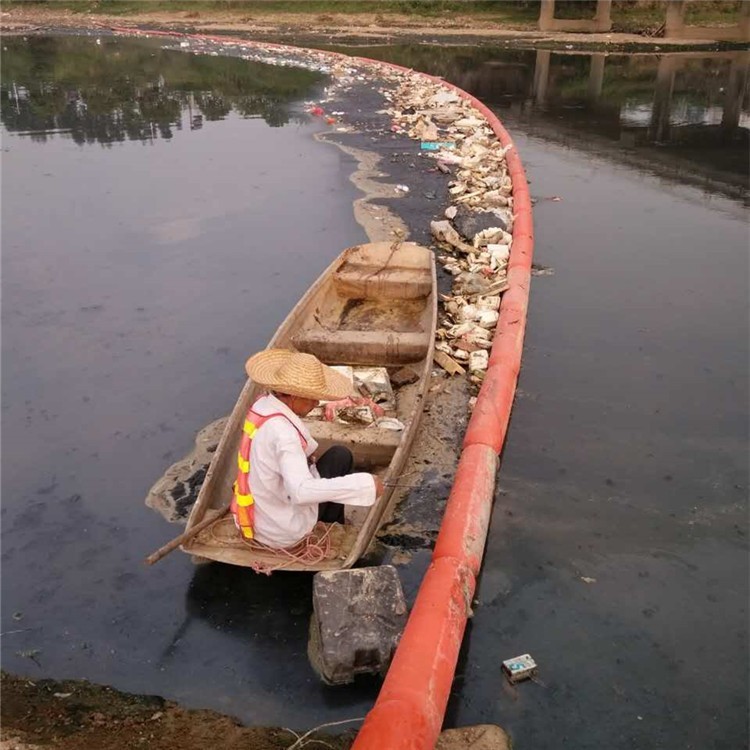
Rivers and streams are common locations for floating debris barriers because flowing water can carry logs, branches, plastics, and other debris downstream.
- Hydropower facilities: Booms can prevent floating debris from reaching hydroelectric intake structures and guide collected material toward designated removal areas. Appalachian Power, for example, installed a 1,200-foot debris boom at Leesville Dam for this purpose.
- River plastic collection: TrashBoom systems have also been used to intercept plastic waste in rivers. A Plastic Fischer system on Indonesia’s Citarum River has been reported to capture about 1 ton of plastic per week, while a system on India’s Varuna River had captured more than 11 tons by February 2022.
Lakes, Reservoirs, Harbors, and Coastal Waters
Floating trash booms can also protect water infrastructure and concentrate floating debris in larger or more sheltered waterways.
- Water intake protection: In Norland, Canada, a 20-meter PDB600 debris boom with a roller compensator was installed to prevent water-carried debris from reaching a municipal water intake screen while accommodating changing water levels.
- Harbor and shoreline protection: Booms can intercept floating debris before it reaches shorelines, port facilities, or other areas where manual cleanup is more difficult.
- Large-scale plastic collection: Specialized floating barrier systems have also been used for plastic collection in marine environments, although these systems are designed for specific ocean conditions and should not be treated as equivalent to standard river debris booms.
How Effective Are Floating Trash Booms
Core Strengths
- High capture efficiency: Well-designed systems trap up to 99.8% of floating surface debris.
- Heavy load capacity: Engineered buoyancy-to-weight ratios support large piles of debris before requiring emptying.
- Rough condition durability: Articulating joints maintain a tight surface seal through waves and flood events. Low-drag profiles resist silt buildup and preserve performance over years.
- Improved worker safety: Personnel never need to enter the water to collect debris.
Limitations & Considerations
- Regular maintenance required: Debris must be removed on a schedule matched to local litter volumes — daily to weekly depending on load. Excess buildup stresses the system and reduces effectiveness.
- Current speed limits: Standard designs perform best in moderate currents. At very high flow speeds, debris may be pushed over or under the barrier.
- Water depth requirements: The collection skirt requires sufficient depth to seal properly. In very shallow water, the skirt may drag on the bottom or fail to form a full seal.
- Wildlife risk: Animals can become entangled. Many modern designs include escape routes or deterrents to reduce risk, and operators should monitor and free trapped wildlife promptly.
- Proper sizing critical: The boom must span the full waterway width with no gaps. Anchoring points must be sized for expected current and debris loads to prevent failure during storms or floods.
FAQ
How often must crews empty a floating trash boom?
Removal schedules depend on local debris load. High-volume sites may require daily collection; lower-load locations only need weekly emptying. Regular removal prevents excess stress on the system and maintains trapping performance.
What current speeds can a floating trash boom handle?
Standard well-designed booms perform reliably in moderate currents. The engineered freeboard-to-draft ratio prevents underpass and overtopping in most conditions. Very high flow speeds can reduce trapping effectiveness.
How much debris can a floating trash boom hold?
Buoyancy-to-weight ratios support heavy debris loads per linear meter. Exact capacity depends on boom size and design. Workers remove accumulated waste from shore or a small work boat before loads exceed design limits.