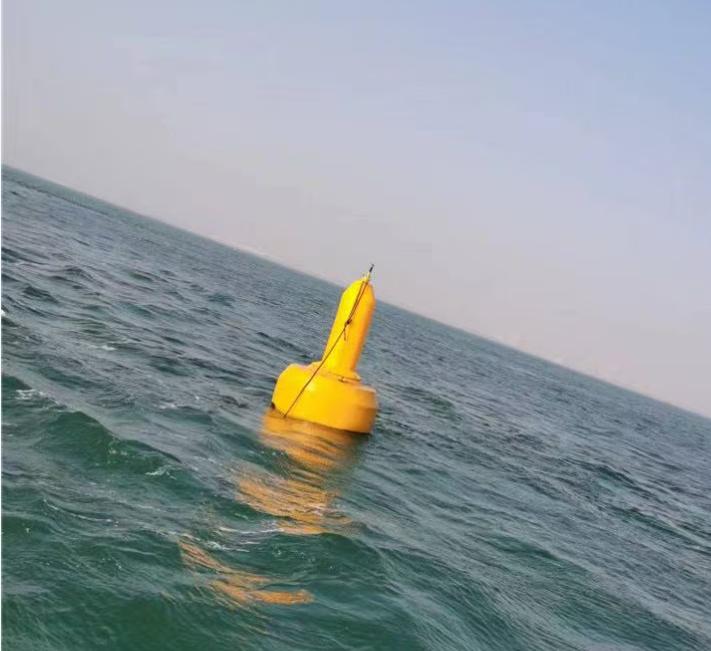
Most commercial marine buoys are manufactured using rotational molding (rotomolding) to create seamless, one-piece UV-stabilized polyethylene hulls. The production process follows clear stages: material preparation, mold heating and rotation, foam filling, hardware and graphic installation, and final quality inspection.
This rotomolding method is why modern HDPE buoys deliver exceptional puncture resistance and long service life in harsh saltwater and sun exposure.
Key Takeaways
- Most buoys are built via rotational molding, which creates a seamless, leak-proof one-piece plastic shell.
- UV-stabilized high-density polyethylene (HDPE) is the standard material, protecting against sun damage and corrosion.
- Closed-cell polyurethane foam fills the hull to maintain buoyancy even if the shell is punctured.
- Marine-grade hardware and high-visibility vinyl graphics are added after the hull is formed.
- Final quality testing and certification ensure buoys meet strength, buoyancy and safety standards.
Common Buoy Manufacturing Materials
Three materials dominate marine buoy production, each suited to different use cases. HDPE rotational molding is the most widely used for standard navigation and safety buoys.
| Material | Best Use Case | Core Advantage |
|---|---|---|
| HDPE (rotomolded) | Standard navigation buoys, safety line floats, channel markers | Seamless one-piece shell, UV-resistant, low maintenance |
| Steel | Large moored oceanographic buoys | High mass, extreme structural strength |
| Fiberglass | Sensor platforms and specialized instrument buoys | Custom complex shapes, smooth finish |
UV-Stabilized HDPE
High-molecular-weight UV-stabilized polyethylene is the industry standard for rotomolded buoys. UV inhibitors prevent sun damage and plastic degradation, so the hull retains its color and structural strength through years of direct open-water sun exposure.
For example, Botai IALA-standard navigation buoys use this material for port and channel marking applications, delivering long service life in harsh coastal conditions.
Step-by-Step Rotomolding Process for HDPE Buoys
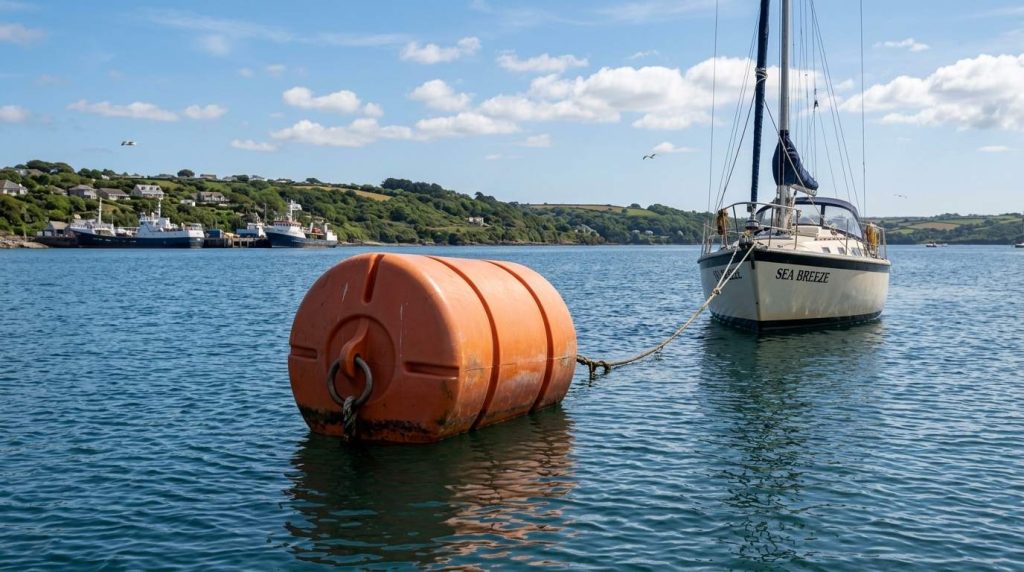
Rotational molding produces a uniform, seamless hull with no weak seams for water to penetrate. The process follows four core stages.
1. Material Preparation & Mold Loading
- Workers weigh out a measured amount of HDPE powder; the quantity determines the final wall thickness of the buoy.
- The steel mold cavity is cleaned and coated with a release agent.
- Mold halves are bolted together and mounted onto the rotomolding machine arm.
2. Heating & Dual-Axis Rotation
The loaded mold moves into a heated oven, where it spins continuously on two perpendicular axes. The tumbling action spreads melting resin evenly across the inner mold wall, layer by layer, until it forms a uniform, seamless shell.
Wall thickness is controlled by adjusting the powder load, oven temperature and cycle time. Botai uses advanced multi-axis rotomolding machinery for this stage to ensure consistent wall thickness across every hull.
3. Cooling & Demolding
Once the resin is fully fused, the mold moves to a cooling station while continuing to rotate. Slow, even cooling prevents warping and ensures the hull holds its shape. Once solidified, the mold is opened and the one-piece hull is removed.
4. Foam Filling & Internal Reinforcement
After demolding, workers inject closed-cell polyurethane foam into the hollow hull cavity. The foam bonds to the inner wall and fills the entire interior. Because each foam cell traps gas independently, the buoy retains buoyancy even if the outer hull is punctured — unlike an air-filled hull, which would flood and sink.
Heavy-duty buoys add internal ribbing or compartmentalized tanks for extra structural stiffness and reserve buoyancy.
Buoy Assembly and Quality Assurance
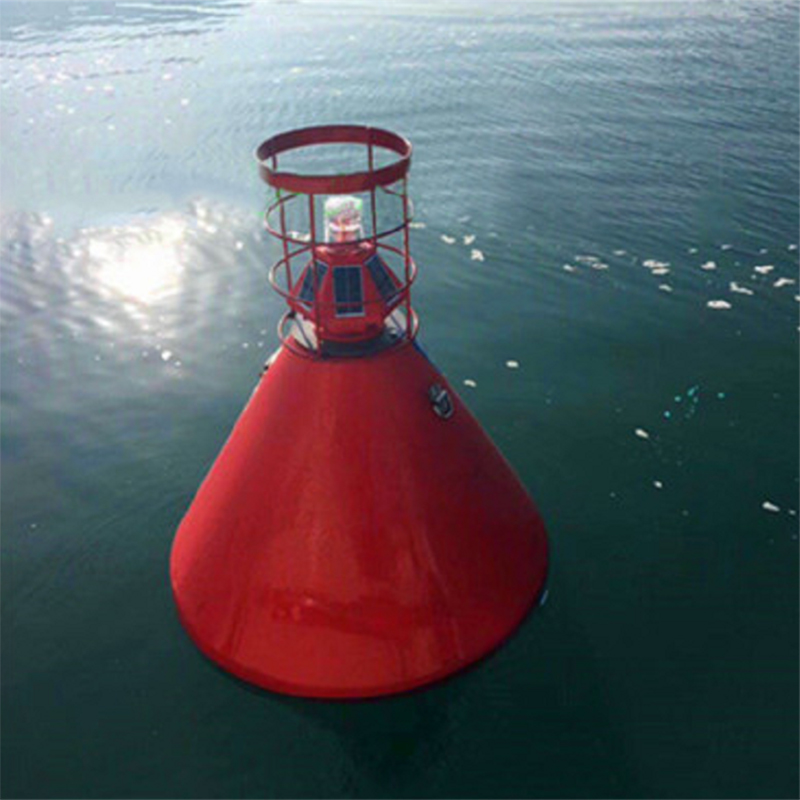
Hardware, Markings & Final Assembly
A bare hull is finished with functional and visibility components before shipping.
- Marine hardware: Lifting eyes, mooring points, and mounting plates for lights or sensors are installed with watertight sealed connections.
- High-visibility graphics: UV-resistant vinyl graphics are applied to the hull in standard channel marking colors. The fade-resistant film ensures the buoy remains visible from distance in poor weather.
- Functional components: Custom designs may include turntables, moonpools or sensor mounts for specialized applications.
Quality Testing & Certification
Every finished buoy undergoes inspection to verify performance in real marine conditions. Standard quality checks include:
- Wall thickness and hull integrity inspection
- Buoyancy and load capacity verification
- Hardware torque and watertight seal testing
- Graphic adhesion and color fastness checks
Reputable buoy manufacturers follow international quality standards. For example, Botai buoys are produced under ISO 9001:2015 and SGS certification, and meet IALA navigation aid standards. Test reports are available on request for full traceability.
FAQ
How long does a rotationally molded buoy last?
Service life depends on sun exposure, wave loads and maintenance. UV-stabilized polyethylene hulls retain their strength for many years with basic upkeep. Manufacturers can advise on inspection intervals for specific site conditions.
Why are buoys filled with foam instead of air?
Closed-cell foam maintains buoyancy even if the hull is punctured, because each cell holds gas independently. An air-filled hull would flood and lose buoyancy immediately after damage.
Can you order custom colors and fittings?
Yes. Manufacturers can apply custom vinyl graphics and install specialized hardware like lifting eyes, mooring points and sensor mounting plates. Custom mold development is also available for unique project requirements.
How do I choose a reliable buoy manufacturer?
Look for industry certifications, in-house rotomolding equipment, and compliance with relevant marine standards (such as IALA for navigation buoys). Request test reports and confirm the supplier offers custom molding and flexible order sizes.
Are concrete spar buoys right for every site?
No. Concrete spar buoys are designed for stable, long-service deep-water mooring and offshore wind applications. Rotomolded plastic buoys are the standard choice for navigation marks, safety lines and general coastal use.