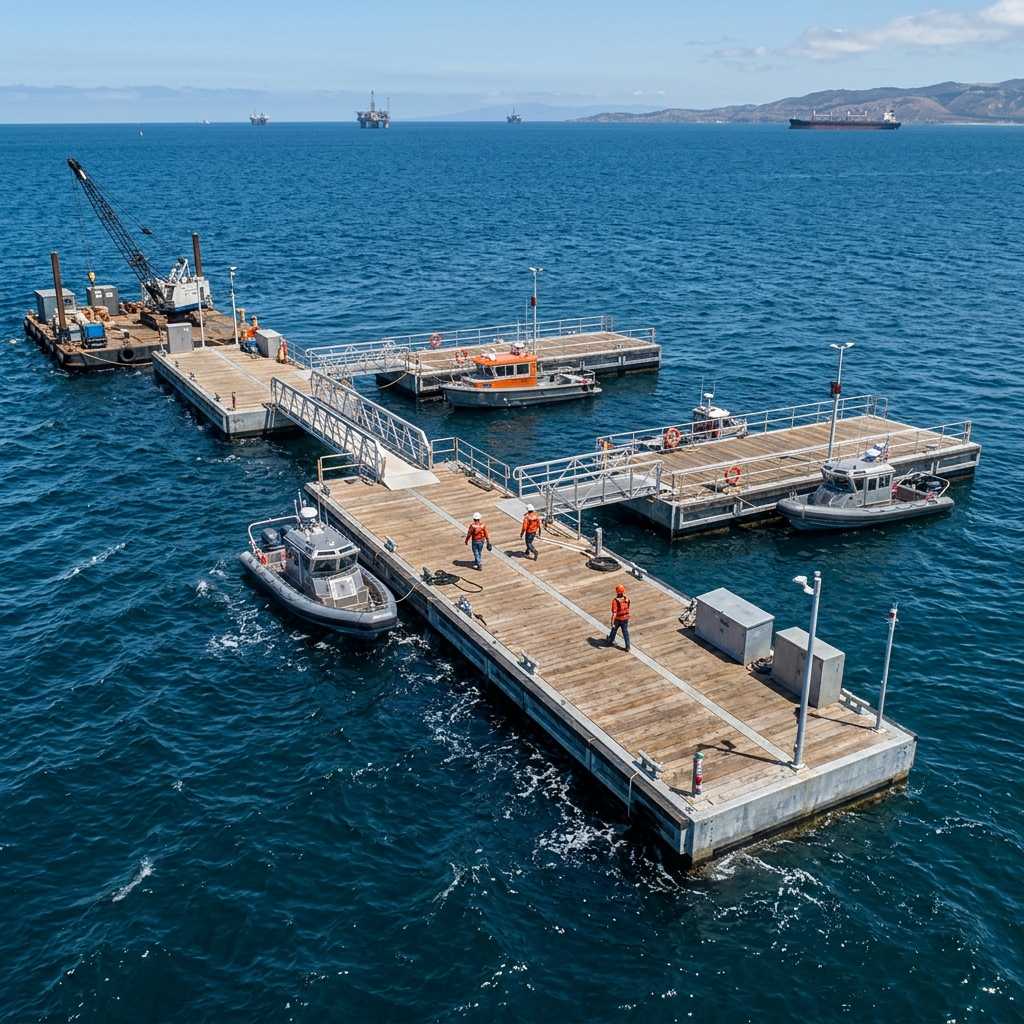
Floating docks are a worthwhile investment for most waterfront properties with fluctuating water levels, tides, or seasonal ice — but they are not the best fit for every site. Whether a floating dock makes sense depends on three core factors: upfront and long-term cost, structural performance, and site compatibility (water depth, level changes).
Key Takeaways
- Floating docks have a higher upfront cost than fixed docks, but last longer and require far less routine maintenance.
- They automatically adjust to changing water levels, making them ideal for tidal rivers and lakes with seasonal ice.
- Floating docks perform best in deep water with significant level fluctuations; they are rarely the best choice for shallow, stable ponds.
Floating Dock Cost: Upfront Price vs. Long-Term Value
Upfront Costs
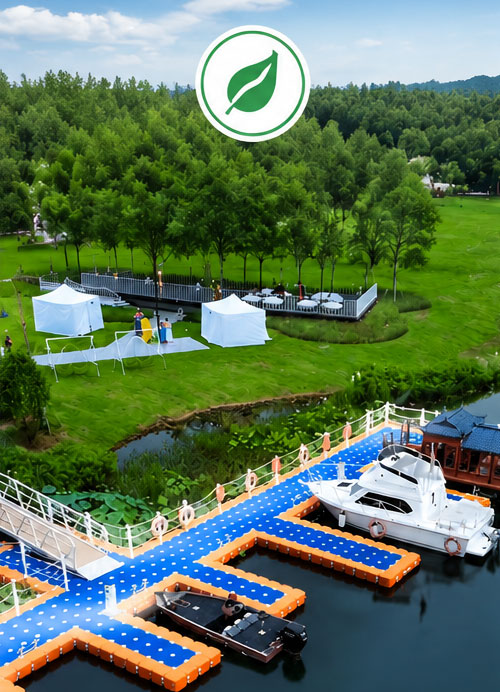
Floating docks typically cost more per square foot than fixed post docks, as they require buoyant modules, a deck frame and a specialized anchoring system. Entry pricing varies widely by size and use case:
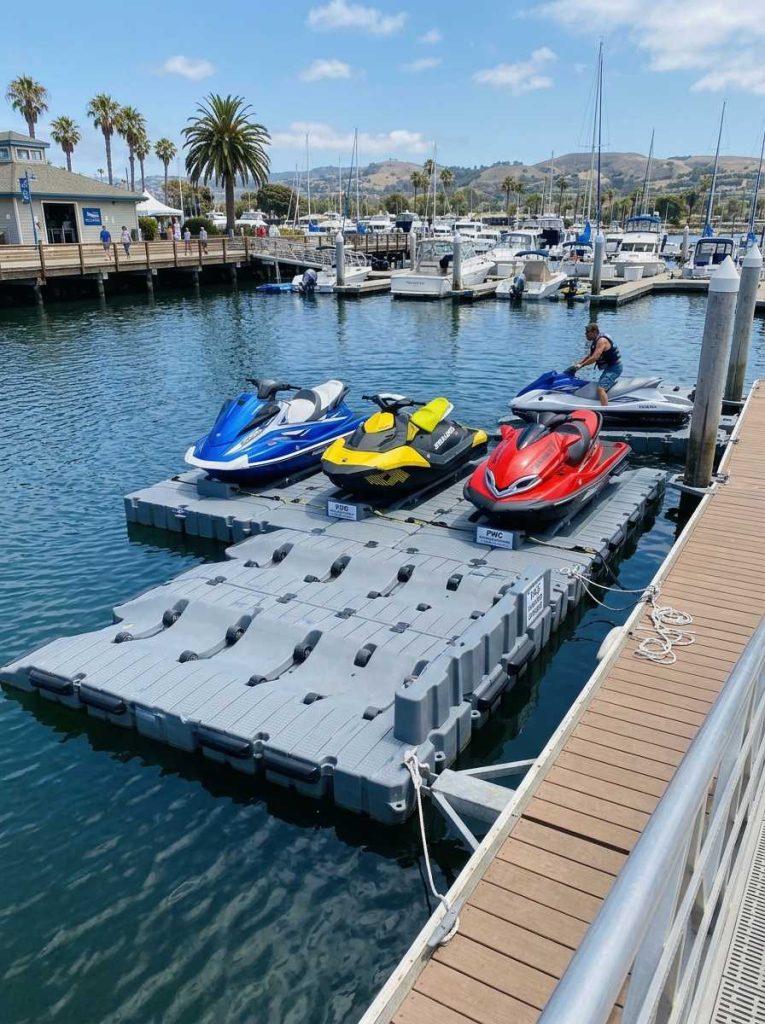
- Compact jet ski docks are the most affordable entry point, requiring few modules and simple anchoring.
- Full-size boat docks with reinforced mooring points carry a higher price tag for heavier load requirements.
Lifespan & Maintenance Costs
Well-built modular floating docks deliver very low long-term ownership costs. Quality rotomolded HDPE hulls are UV-stabilized, impact-resistant, and require only annual inspections and debris clearing. Encapsulated buoyancy chambers and corrosion-resistant hardware mean there is no painting, sealing or regular part replacement needed.
For comparison:
- Traditional wood-and-steel floating docks require regular sealing, painting and part replacement.
- Inflatable docks are low cost but only suitable for light, temporary use.
- Fixed post docks may have lower upfront cost, but pilings can be damaged by ice and shifting sediment, requiring repair or replacement over time.
Over decades of use, modular floating docks usually deliver lower total cost of ownership, thanks to longer service life and minimal maintenance.
Pros & Cons of Floating Docks
Key Advantages
- Adapts to changing water levels: The dock maintains a consistent height above the water surface through tides, seasonal fluctuations and drought. Boats stay at a usable boarding height, and anglers have a stable platform at any water level.
- Ice and weather resistance: Floating docks rise with ice formation and settle as it melts, avoiding the destructive lifting force that breaks fixed pilings.
- Stable load capacity: High-quality modular systems deliver consistent buoyancy and rigid connections. Botai floating dock systems, for example, have a 350 kg/㎡ buoyancy rating, with interlocking lugs providing ≥16 MPa shear strength for a firm, stable deck even under dynamic loads. UV-15 stabilized surfaces retain over 85% of their impact strength after 15,000 hours of sun exposure.
- Low environmental impact: They rest on the water surface with minimal bed disturbance, which often simplifies permitting compared to fixed piling docks.
Limitations
- Higher initial investment compared to basic fixed docks.
- Not ideal for extremely shallow water, where the dock could rest on the bottom at low levels.
- Very large open-ocean wave conditions require specialized heavy-duty engineering.
Where Floating Docks Work Best (and Where They Don’t)
Ideal Sites
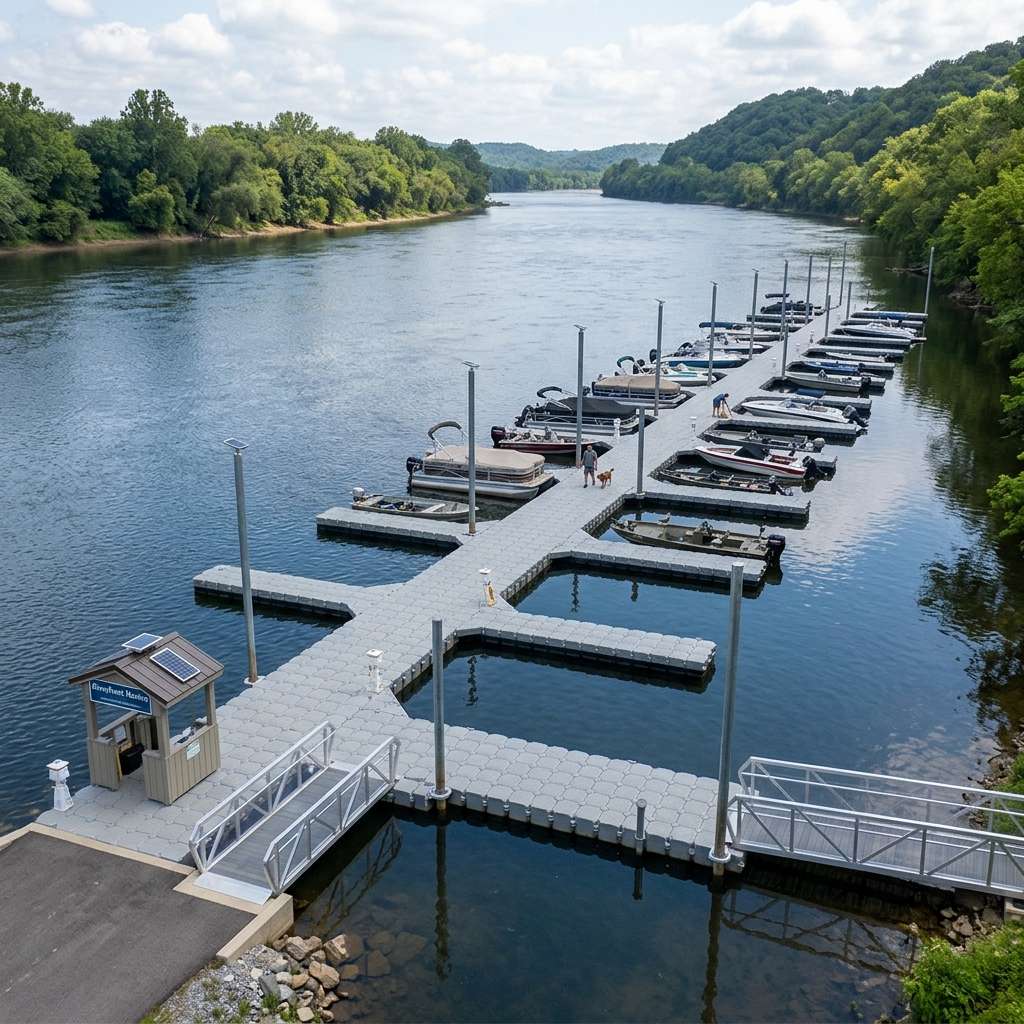
Floating docks deliver the most value in these conditions:
- Tidal rivers and coastal areas with large daily water level changes
- Lakes and regions with seasonal ice formation
- Deep water where installing fixed pilings is expensive or impractical
- Properties looking for low-maintenance, long-lasting waterfront access
They are also highly versatile for different uses: boat slips, jet ski launches, fishing platforms, kayak launches and industrial work platforms can all be built with modular systems.
Poor Fit Sites
- Very shallow, stable ponds with minimal level change, where fixed docks are cheaper and simpler
- Extremely exposed open ocean sites with constant large waves
Final Verdict: Are Floating Docks Worth It?
Floating docks are worth the cost if your site has significant water level changes, seasonal ice, or deep water where fixed docks are impractical or expensive. For shallow, stable ponds with little level fluctuation, a basic fixed dock will usually be more cost-effective. For temporary or very light use, an inflatable dock may be sufficient.
Ask yourself these 5 questions to decide:
- How deep is the water at your site?
- How much does the water level change seasonally or daily?
- What loads and activities will the dock need to support?
- What is your total budget, including long-term maintenance?
- What are your local permit and environmental rules?
For most tidal, icy or deep-water properties, the low maintenance and long lifespan of a modular floating dock make it the better long-term investment.
FAQ
How long does a floating dock last?
A well-built modular HDPE floating dock will last for many seasons with basic annual maintenance. Sealed buoyancy chambers, corrosion-resistant hardware and UV-stabilized plastic all contribute to a long service life. Annual connection checks and debris removal will extend the lifespan further.
Do floating docks work in saltwater and ice?
Yes, when properly engineered. Rust-resistant hardware is standard for saltwater sites. Because floating docks rise with ice and settle as it melts, they avoid the prying forces that damage fixed docks. Botai systems are engineered for tidal swings up to 5 meters, currents up to 3.5 m/s and wave heights up to 1.5 meters.
Can a homeowner install a floating dock without a contractor?
Small modular systems with interlocking lugs can be assembled by a handy homeowner for light use. Larger boat docks and systems requiring specialized anchoring usually need professional installation.
How do floating docks compare to inflatable docks?
Inflatable docks are low cost, lightweight and portable, but only suitable for light temporary use. Rigid modular floating docks have a firmer deck, higher load capacity and much longer service life, making them a better value for permanent waterfront access.
Is a small jet ski floating dock worth the price?
Yes. Compact jet ski docks are the lowest-cost entry point for floating dock systems, with minimal modules and simple anchoring. They are a great way to get stable, convenient water access without a large upfront investment.