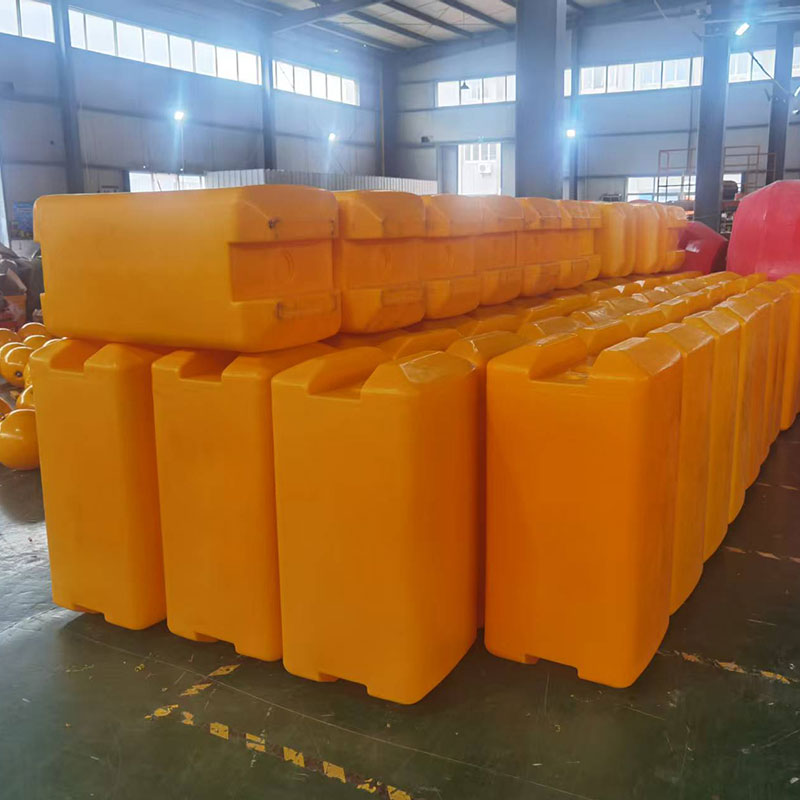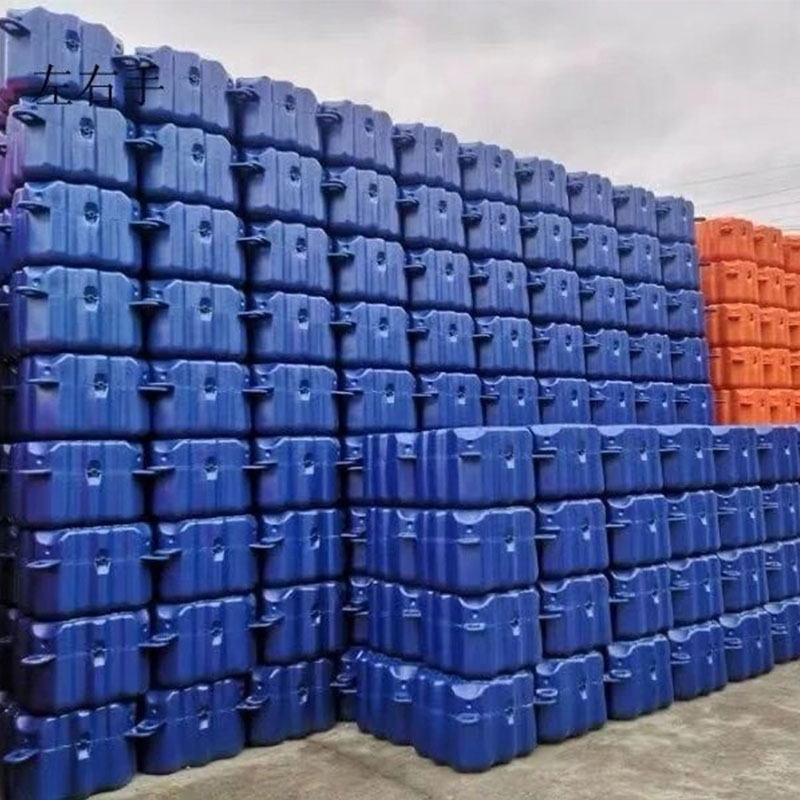
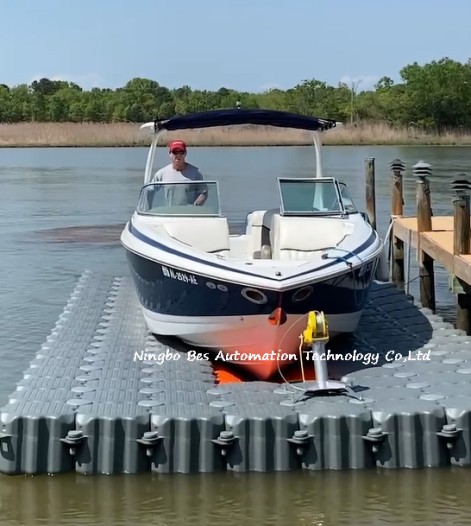
The number of floats required for a floating dock depends on two core variables: the total weight of the dock and its contents, and the buoyancy rating of each individual float. You can calculate the exact minimum count with a simple formula, then adjust for desired freeboard height, water conditions, and safety margin.
Key Takeaways
- Calculate total load by adding the dock’s own weight plus the weight of people, furniture and gear.
- Divide total load by the buoyancy rating of one float to get the minimum required float count.
- Choose your target freeboard (deck height above water) and add extra floats to maintain reserve buoyancy.
- Place floats at all four corners of the dock, with no more than 8 feet of spacing between supports.
- Add 1–2 extra floats as a safety margin for waves, shifting weight and dynamic water forces.
What Determines Floating Dock Float Requirements?
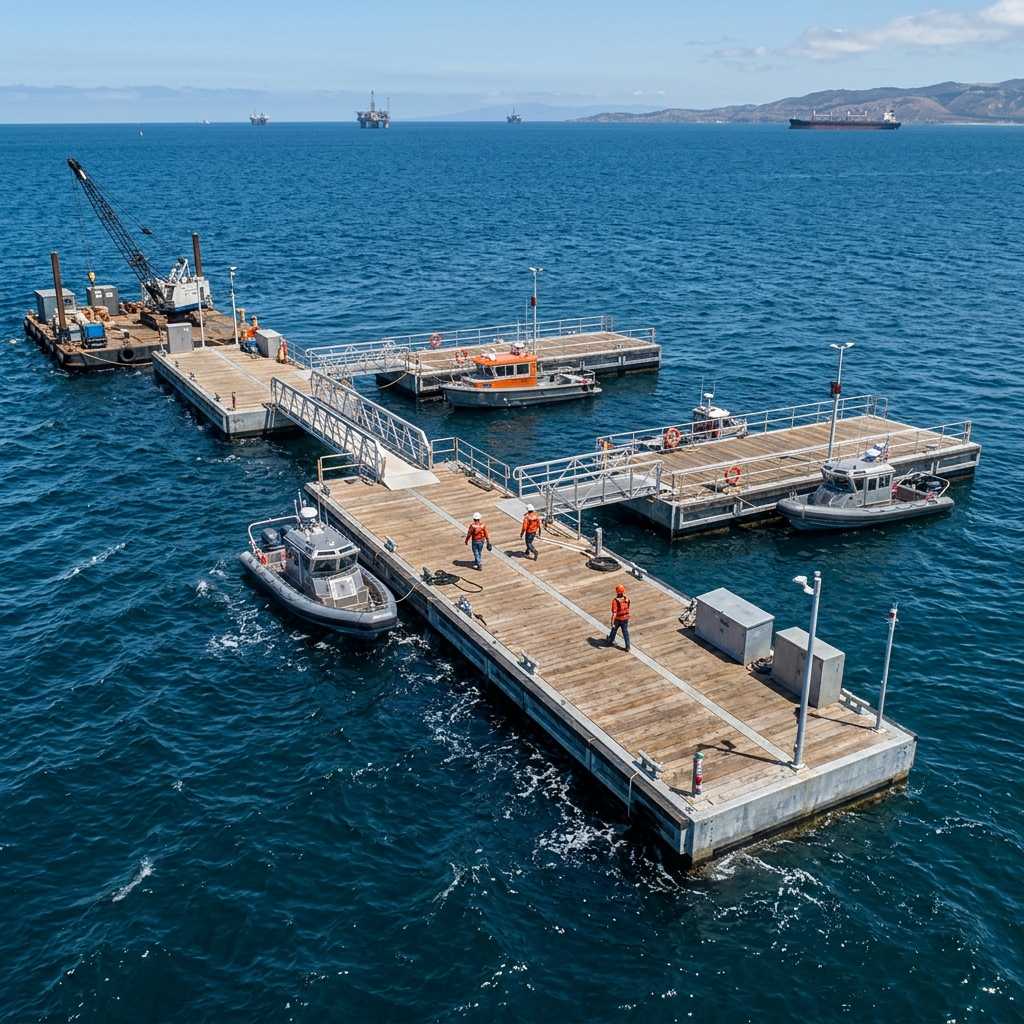
Three sets of factors shape how much flotation your dock needs.
Dock Size, Materials & Use Case
Larger deck areas require more flotation to support the extra structural weight. Decking material also matters: composite boards weigh more than aluminum or standard wood, and every cleat, bench, ladder or storage box adds to the total dead load.
Intended use drives live load estimates:
- A quiet fishing platform needs only modest support.
- A party deck with seating, coolers and multiple guests needs significantly more buoyancy.
- Docks built for boat berthing must handle hull weight and dynamic impact from docking.
Water Conditions
Calm lakes impose the lowest stress on a floating dock. Sites with strong currents, waves, tidal fluctuations or high wind add dynamic forces that require extra flotation for stability and consistent freeboard. Open marine or fast-river sites need a wider safety margin than sheltered inland locations.
Modular dock systems like Botai are engineered for site-specific conditions, with ratings for tidal fluctuations up to 6 meters, river currents up to 3.5 m/s, and open marine wave heights of 1.5 m. This lets builders match float capacity directly to the actual water environment.
How to Calculate Required Floating Dock Float Capacity
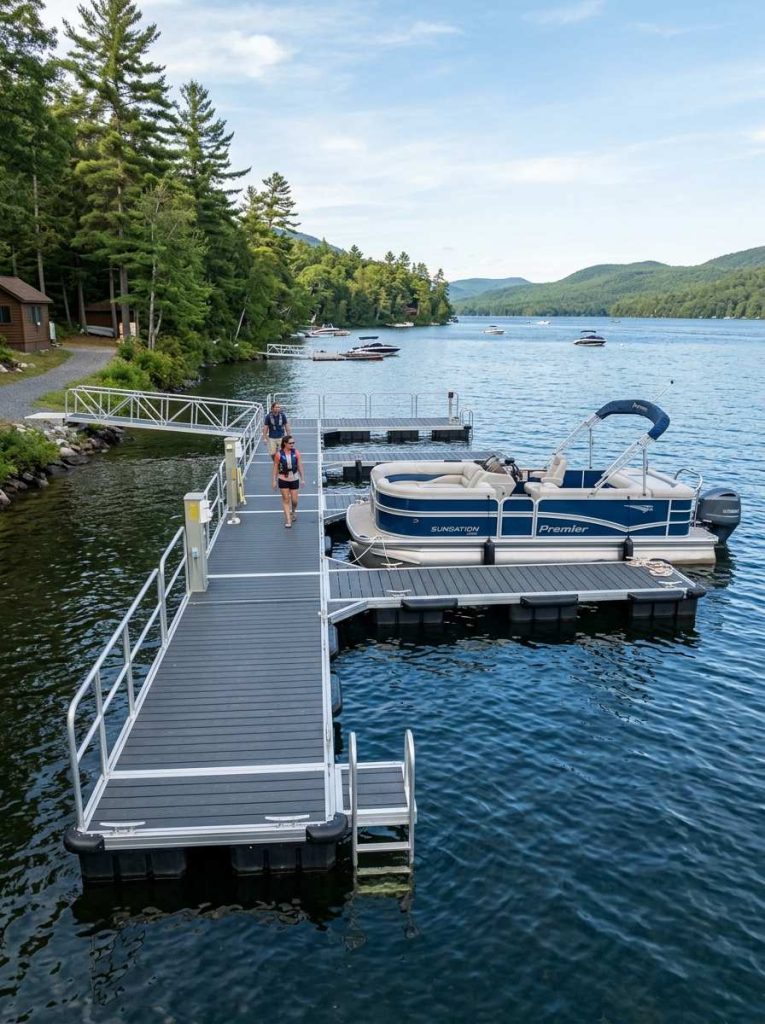
Step 1: Calculate Total Load
Total dock load is split into two categories:
- Dead load: The weight of the dock itself — frame, decking, floats, hardware and all permanently mounted accessories. Decking is usually the heaviest single component; aluminum framing weighs less than steel, while composite decking weighs more than wood.
- Live load: The variable weight of people, furniture, coolers, gear and boats on the dock. A standard rule of thumb is 30–50 lbs per square foot, selected based on expected use: light use on the low end, crowded gathering spaces on the high end.
Add dead load and live load together to get your total design weight.
Step 2: Understand Buoyancy Ratings
Each float has a published weight capacity rating, which describes how many pounds it can support at a given freeboard. The usable capacity is always lower than the maximum fully-submerged rating, because you need to keep part of the float above water for reserve buoyancy and wave absorption.
Step 3: The Core Sizing Formula
Use this simple formula to find your minimum float count:
Minimum number of floats = Total load ÷ Usable buoyancy rating per float
For example: a 2,300 lb total load paired with 400-lb rated floats requires a minimum of 6 floats (2300 ÷ 400 = 5.75, rounded up to the next whole number).
Quick Area Estimate
For a rough starting point, multiply your deck area in square feet by 25 to estimate total required flotation in pounds. For a 12×12 ft (144 sq ft) dock, this gives ~3,600 lbs of required flotation. Divide by your float rating to get a second reference count. Always verify the result with the full dead/live load calculation.
Step 4: Add a Safety Margin
Always round up to the next whole float, and add 1–2 extra floats for safety. This reserve compensates for uneven weight distribution, wave impact and unexpected live load.
Floating Dock Float Placement and Freeboard
Freeboard Height
Freeboard is the height of the dock deck above the waterline. Higher freeboard reduces usable capacity per float, because less of the float is submerged. Lower freeboard maximizes capacity but leaves less reserve for waves.
- General fishing docks: ~300–400 mm freeboard
- Kayak launch docks: ~150–200 mm freeboard
Select your target freeboard first, then use the corresponding usable buoyancy rating for your float model in the sizing formula.
Layout & Spacing Rules
Proper placement is just as important as total count for a stable, level dock:
- Install a float at every corner of the deck.
- Space additional floats no more than 8 feet apart along the length of the dock.
- Use a symmetrical layout to keep the deck level as weight shifts across the surface.
Interlocking modular systems like Botai use rotomolded polyethylene pontoons with connecting lugs that maintain joint integrity under concentrated loads, preventing deck twist from foot traffic or boat impacts.
FAQ
How do you estimate total load for a floating dock?
Add the dock’s own structural weight (frame, decking, hardware) to the estimated weight of people, furniture and gear. Live load is typically estimated at 30–50 lbs per square foot, selected based on expected use intensity.
Do extra floats make a dock safer?
Extra floats increase reserve buoyancy, helping the dock stay higher and more stable when weight shifts or in choppy water. Always maintain a symmetrical layout — an uneven float arrangement will create a low corner and trip hazard.
How far apart should floats be spaced under a dock?
Place floats at all four corners, with intermediate supports spaced no more than 8 feet apart. A symmetrical, evenly spaced layout keeps the deck level and distributes weight evenly. Match placement to expected traffic and heavy gear locations.
Does float type change how many you need?
No. Both air-filled and foam-filled floats are sized using the same total-load-to-buoyancy formula. The type only affects durability and installation handling, not the required quantity.
How do tides and currents affect float sizing?
Moving water and wave action add dynamic forces that calm water does not. Sites with strong currents, tidal swings or open waves require more (or larger) floats for stability. Botai modular systems are rated for specific tidal and current conditions to help builders match capacity to their site.