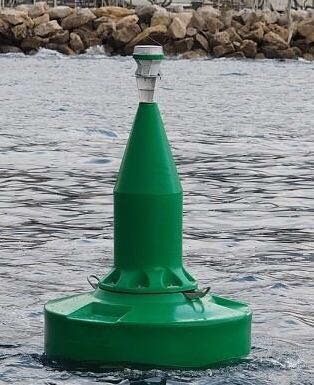
The core rule for navigating lateral channel markers is simple: when returning from sea, boaters keep red buoys on their starboard (right) side and green buoys on their port (left) side. The memory aid “red right returning” is the standard mnemonic used by recreational and professional boaters alike to stay in the safe, navigable channel.
Key Takeaways
- Red buoys are typically conical and even-numbered; green buoys are cylindrical (can-shaped) and odd-numbered.
- The rule reverses when heading out to sea: red buoys shift to port, green buoys shift to starboard.
- Always cross-reference buoys with nautical charts and check local navigation notices before departure.
The Lateral Buoy System & Red Right Returning

Lateral aids form the backbone of the U.S. Aids to Navigation System (USATONS). They mark the edges of navigable channels, rather than marking hazards directly, and show boaters where safe, deep water lies.
Port vs. Starboard Lateral Markers
Each channel has two matched lateral markers, one for each side:
| Attribute | Port-Hand Buoy | Starboard-Hand Buoy |
|---|---|---|
| Color | Green | Red |
| Typical shapes | Can, pillar, spar | Conical (nun buoy), pillar, spar |
| Topmark shape | Flat / square top | Cone-shaped top |
| Light color (if fitted) | Green | Red |
| Numbering | Odd numbers | Even numbers |
Applying the Red Right Return Rule
The “red right returning” rule applies when traveling inbound — upstream, toward port, or returning from open water. Red even-numbered marks sit on the starboard side of the channel, and green odd-numbered marks sit on the port side. Boat stay between the pair, like a car in a road lane.
The rule reverses when outbound (heading out to sea): red buoys move to the port side, and green buoys shift to starboard. This reversal catches many new boaters off guard, so it should always be reviewed before leaving harbor.
Numbers increase as you travel inland: a red “2” near the harbor entrance becomes red “4” farther upstream, then red “6” beyond that. The same pattern holds for green buoys on the opposite side.
Shape, Number & Light Identification Cues
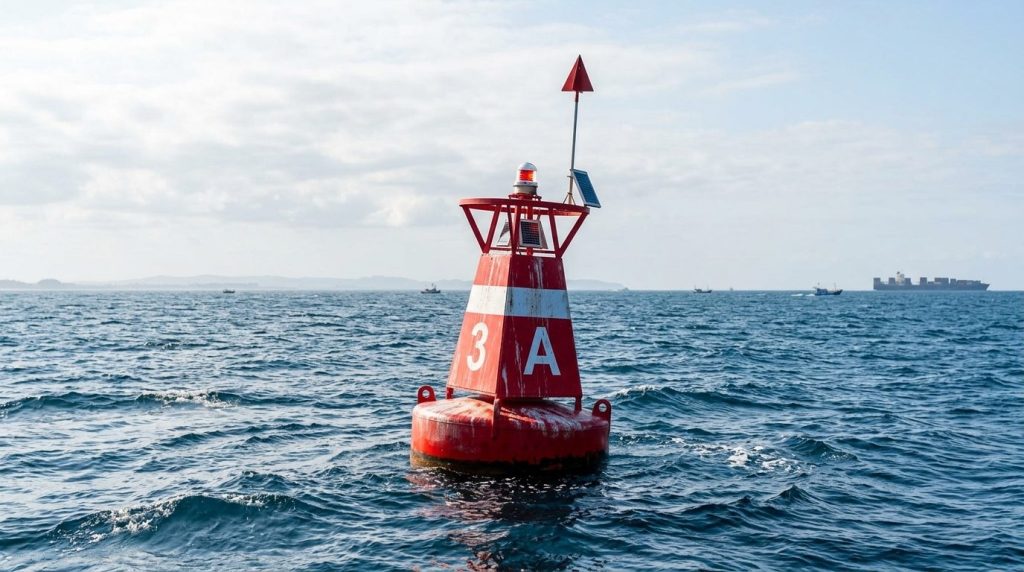
Color alone is not enough to identify markers reliably, especially in low light or fog. Navigation buoys use shape, numbering, and light patterns together to help boaters confirm which side of the channel they are seeing.
Shape Cues
Shape reinforces color coding for visibility in poor light:
- Starboard (red): Conical nun buoys and triangular daymarks
- Port (green): Cylindrical can buoys and square daymarks
Numbering Rules
Numbers run sequentially along the channel:
- Increase when traveling inbound (toward port)
- Decrease when traveling outbound (toward open water)
- Even numbers = red starboard markers; odd numbers = green port markers
Light Characteristics
Lighted buoys match their hull color (red light on red buoys, green light on green buoys) and flash in set rhythms, typically no more than 30 flashes per minute. The flash pattern and color let boaters identify marker type at night, even without seeing the full buoy.
On nautical charts, a notation like Fl G 4s 15ft 6M translates to: flashing green light, every 4 seconds, 15 feet above water, visible for 6 nautical miles.
Navigating Safely With Buoys
Cross-Reference With Nautical Charts
Charts show each buoy’s position, number, light characteristic, and shape. Always match what you see on the water to the chart to confirm you are in the correct channel. Note that chart symbols are schematic — they indicate type and position, not exact visual appearance.
Check Local Navigation Notices
Buoy positions and lights can change due to construction, dredging, storm damage, or maintenance. Always check the latest local notices to mariners before departure, rather than relying solely on printed charts.
FAQ
What does “red right returning” mean?
It is the standard mnemonic for lateral buoy navigation: when returning from sea (inbound), keep red buoys on your starboard (right) side and green buoys on your port (left) side to stay in the safe channel.
How do you tell a port-hand buoy from a starboard-hand buoy?
Port-hand buoys are green, usually cylindrical (can-shaped), and carry odd numbers. Starboard-hand buoys are red, usually conical (nun-shaped), and carry even numbers.
What happens to the rule when heading out to sea?
The rule reverses for outbound travel: red buoys move to the port side, and green buoys shift to the starboard side. Always review this before leaving the harbor.
Do lateral markers mark hazards?
No. Lateral markers define the edges of the safe, navigable channel. They do not mark hazards directly — boaters stay between the paired red and green markers.
What if a buoy looks different from my chart?
Local authorities may move or reconfigure buoys due to construction, dredging, or storm damage. Always check the latest navigation notices before departure, and prioritize what you see on the water over an outdated chart.