Approaching and using a mooring buoy follows a structured, step-by-step process: prepare conditions and crew, approach slowly against the dominant wind or current, secure the vessel with proper line handling, and depart carefully to avoid damage. The technique relies on controlled speed, clear crew roles, and double-checked connections — patience and practice produce smooth, stress-free mooring for boaters of all experience levels.
Key Takeaways
- Check wind and current direction before approaching, and plan your heading against the dominant force.
- Approach slowly, keeping the buoy within reach of a boat hook to avoid leaning overboard.
- Assign clear crew roles before starting the approach to prevent confusion and duplicate work.
- Secure the pick-up line to a bow cleat with a proper hitch, and double-check every connection.
- Depart slowly, and confirm the vessel and all gear are clear of the buoy and ground tackle.
Preparing to Approach the Buoy
Check Conditions & Inspect the Mooring Ball
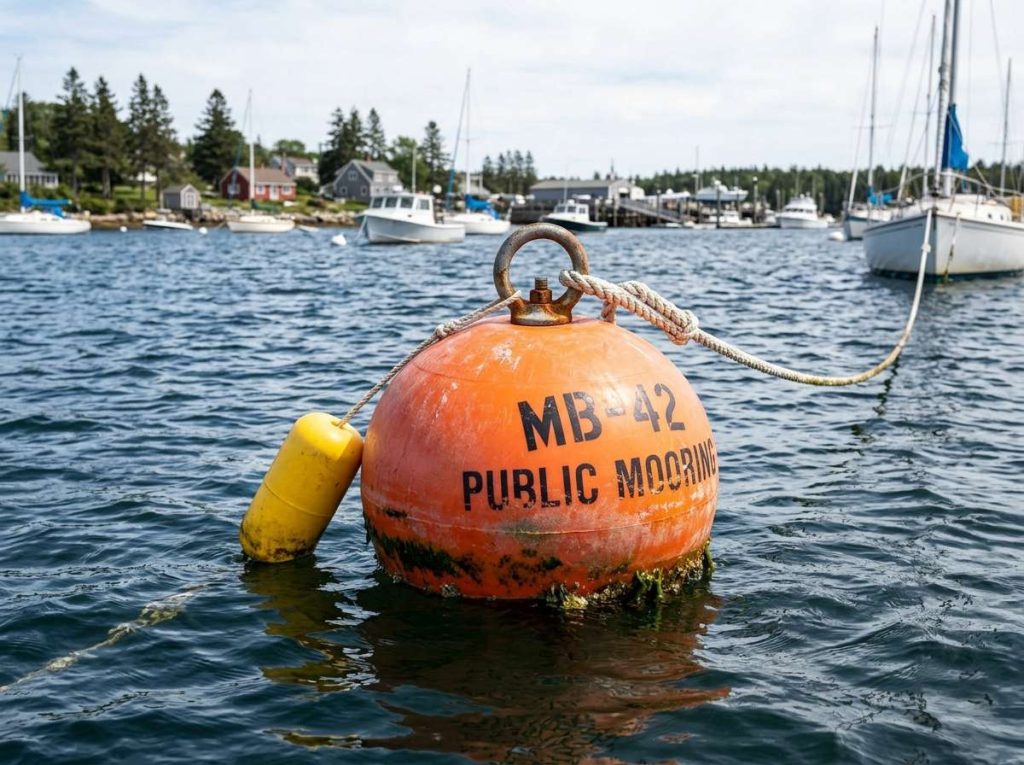
First, assess wind, current, and nearby vessel positions to identify the dominant force. Point the boat’s bow into whichever force (wind or current) is stronger to maintain control during the approach. Observe nearby boats’ angles relative to their buoys as a guide, and confirm maneuvering room with a slow circle around the field.
Before committing to the buoy, inspect the mooring ball and its hardware for signs of wear:
| Sign of Wear | Required Action |
|---|---|
| Cracks in the buoy housing | Clean and inspect; replace if structural damage is found |
| Marine growth on pickup lines | Clean growth or replace worn lines |
| Worn shackles, thimbles, or anchor hardware | Inspect, clean, and replace as needed |
Excessive weed growth indicates a long-unserviced mooring. Only commit to a buoy with sound, well-maintained hardware.
Brief the Crew & Stage Gear
Assign clear roles before beginning the approach to avoid confusion:
- Bow person: Calls distances, operates the boat hook, and handles the pick-up line.
- Helmsman: Controls speed and heading at minimum control speed.
- Signal crew: Uses arm signals to correct course if visibility is limited.
Keep a telescopic boat hook staged and ready at the bow — models extend from 1.2 m to 3 m to match vessel freeboard. Practice hook handling before the trip, as aiming requires a steady hand.
Approaching the Mooring Buoy Smoothly
Pick Your Approach Angle
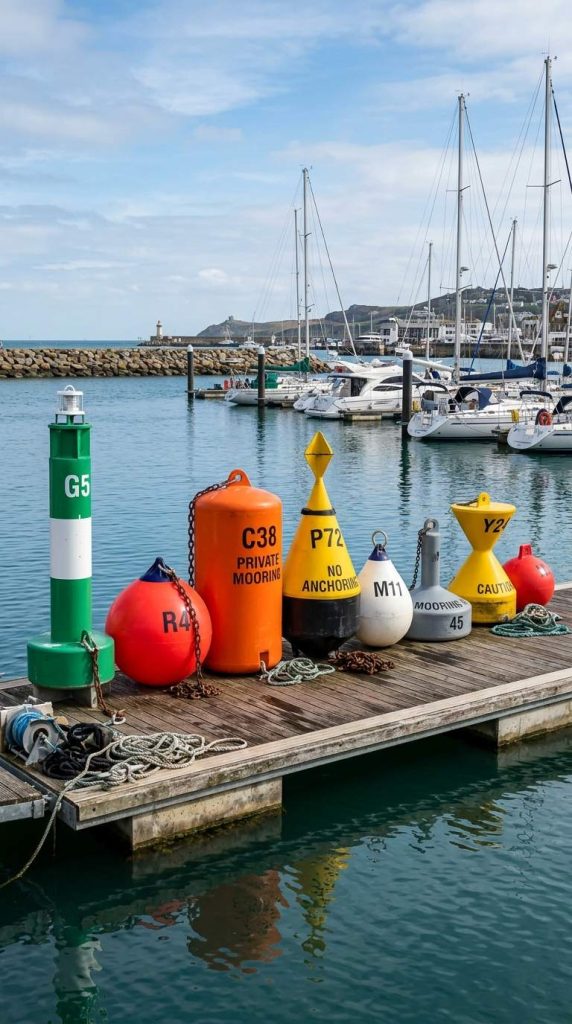
Set your approach angle before applying power. Position the boat downwind or down-current of the buoy first in clear water, then turn the bow into the stronger of wind or current. On breezy days, approach bow-to-wind; on strong tides, approach bow-into-current.
Hold the buoy slightly off to one side of the bow (not dead ahead) to preserve visibility. Scan constantly for other vessels in the mooring field.
Control Speed & Stop Within Hook Reach
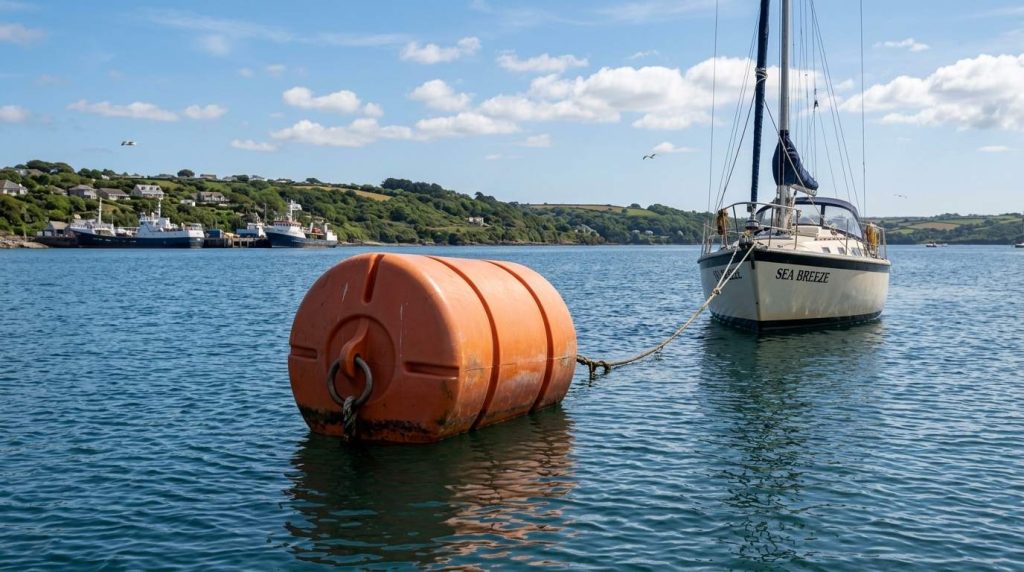
Coast in neutral and let speed bleed off as you near the buoy. Stop when the mooring ball sits beside the bow, within easy reach of the boat hook. Never lean over the rail to grab the line — use the telescopic hook to pull the pick-up line aboard.
If you miss the pass, circle calmly and set up again from the downwind/down-current position. Never rush, jam into reverse, or reach for the buoy while the boat is still moving. Strong wind or current shortens your maneuvering window, so be ready to cleat the line fast once you have it.
Securing the Boat to the Mooring Ball
Tying Off Properly
Start the hitch at the bow cleat farthest from your hand, then wrap the line the same way around the opposite horn. Follow with at least two figure-8 crossovers to prevent jamming under load. For longer stays, add a locking half hitch.
For extra redundancy, use a bridle arrangement running between two bow cleats, or run a second line through a separate chock. Avoid looping a single line through both chocks, as this causes swing and chafe that frays rope quickly.
Double-Check & Avoid Common Mistakes
Check tension on all lines — they should feel snug, not stretched tight. Banjo-tight lines transfer shock loads to cleats and can crack gelcoat. Inspect every rub point for chafe, and walk the lines periodically to catch wear early. In tidal waters, recheck tension after a few hours, as water level changes can alter line load.
Common mistakes to avoid:
- Approaching too fast or from the wrong angle
- Skipping the pre-approach crew briefing
- Ignoring buoy hardware inspection
- Leaving the engine in gear while securing lines
- Grabbing the buoy while the boat is still moving
Departing the Mooring Safely
To leave, start by slowly pulling up to the buoy to release the pendant and confirm all personnel and gear are clear. Drift back slowly to clear the buoy and its ground tackle at low speed, to avoid damaging nearby vessels or mooring hardware.
Have the crew relay distance if the skipper cannot see the buoy from the helm. Once clear, there is no need for backing maneuvers.
FAQ
How close should a boat get to the mooring ball?
Stop when the buoy sits beside the bow, within easy reach of a boat hook. Telescopic hooks extend reach so the crew never needs to lean over the rail. The bow person uses the hook to pull the pick-up line aboard.
What should the crew do if the first pass misses?
A missed pass is normal. Circle calmly and set up again from the downwind or down-current position. Never rush, force reverse, or reach for the buoy while the boat is moving.
How many lines should hold the boat to a mooring ball?
One properly rigged line on a bow cleat is sufficient for calm conditions. Most skippers add a second redundant line through a separate chock, or use a bridle to spread load across two cleats.
When should the crew inspect the mooring ball and its hardware?
Inspect the buoy and all hardware before committing to the mooring. Cracks, marine growth, and worn hardware all signal trouble. Saltwater accelerates wear, so inspection is even more critical in coastal waters.
Can one person pick up a mooring ball alone?
One person can handle a mooring ball in calm conditions, controlling speed, stopping within hook reach, and tying off at the bow. A second crew member makes the process easier and safer, especially in wind or current.